Rail

Security Bill Reaches R3.7B as Transnet Battles persistent Rail Vandalism


By: OrePulse
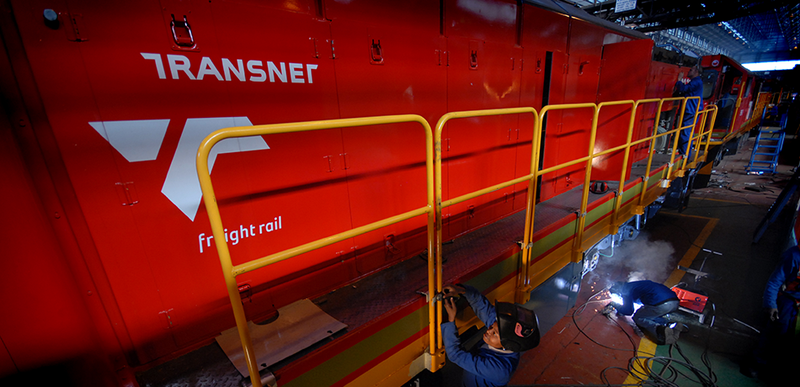
Theft and vandalism cost South Africa's state-owned freight rail and ports operator, Transnet, close to R2 billion in the 2025/26 financial year, even as recorded incidents fell 7% to about 5,870, according to FreightNews.
The losses came despite Transnet spending R3.7 billion on security during the period, FreightNews reported. The company's total capital expenditure for the year reached R23.3 billion, with roughly 85% directed toward replacing and refurbishing existing assets and the remaining 15% toward expansion projects.
Rail volumes rose 4.9% during the year, climbing from 160.1 million tonnes to 167.9 million tonnes, though the figure fell short of Transnet's 180-million-tonne target, the report said.
Group Chief Executive Michelle Phillips said responding to infrastructure attacks continues to divert personnel and resources away from normal operations, and that Transnet would keep investing in security technology while working with law-enforcement authorities to address the problem, FreightNews reported. Chief Financial Officer Nosipho Maphumulo described the security spending as "a necessary investment," while suggesting that partnerships to reduce security costs would benefit both Transnet and its customers.
The persistence of theft and vandalism as a near-R2-billion drag on Transnet's finances, even amid a decline in the raw number of incidents, points to rising costs per incident or a shift toward more damaging forms of infrastructure crime — a trend that continues to complicate the state-owned company's efforts to restore freight rail volumes to targeted levels. Transnet has faced years of underperformance on its rail network, driven by a combination of ageing infrastructure, maintenance backlogs and criminal interference with cables, rail lines and other assets. The latest results suggest that despite heavier security investment, the financial toll of infrastructure crime remains a significant constraint on the freight and ports operator's turnaround plans.
With capital spending still weighted heavily toward replacing and refurbishing existing assets rather than expansion, Transnet's ability to close the gap between actual and targeted rail volumes will likely continue to depend in part on how effectively it can curb theft and vandalism losses, rather than on new capacity alone.
Infrastructure crime has been a persistent challenge for Transnet in recent years, with cable theft and vandalism repeatedly cited by the company as a factor limiting its rail and ports performance. The R3.7 billion security bill for the year represents a substantial share of Transnet's overall spending, and Maphumulo's comments suggest the company is looking to partnerships — potentially with private security providers, law enforcement or other stakeholders — as a way to bring those costs down over time rather than relying solely on internal security budgets.
The 4.9% rise in rail volumes, while still below target, suggests some recovery is under way at the freight operator, which has struggled in recent years with operational performance well below historical levels. Whether that recovery can be sustained will likely depend heavily on Transnet's ability to keep infrastructure crime losses from eroding returns on its R23.3 billion annual capital programme.
Articles similaires
South Africa's Transnet to invest $7 billion in ra...
22 oct., 2025 08:17
AD Ports unit to run UAE-Oman freight rail service...
27 oct., 2025 08:54
Morocco’s Transport Minister Promises Railway Netw...
29 oct., 2025 11:22
Angola seeks $4.5 billion for rail link to Zambia’...
31 oct., 2025 08:03
How digital tools are powering the Middle East’s r...
06 nov., 2025 09:14
Jordan, Syria and Turkey move ahead with plans to ...
10 nov., 2025 10:14
Siemens unveils Velaro High-Speed train at TransME...
10 nov., 2025 12:10
Why partner with UD Trucks South Africa for the Ni...
12 nov., 2025 09:07
Hitachi Rail to modernise Egypt’s oldest tramway i...
13 nov., 2025 11:00