Energy Markets

Oil prices rise 0.42 percent to $83.90 as Hormuz reopening remains uncertain



Oil prices moved higher on Monday as traders reassessed expectations for a quick reopening of the Strait of Hormuz, with Iran maintaining that several conditions must be fulfilled even as negotiations with Oman over new shipping lanes approach their final stage.
Brent crude futures gained 0.42 percent to $83.90 per barrel by 09:16 UAE time. U.S. West Texas Intermediate crude futures rose 0.31 percent to $78.42 per barrel.
The increase followed a steep retreat during the previous week. Both benchmarks had fallen more than 7 percent as markets became increasingly optimistic that discussions between Iran and Oman could pave the way for commercial shipping to resume more freely through one of the world’s most important energy corridors.
Those expectations were tempered over the weekend after Tehran said progress on maritime arrangements would not automatically translate into an immediate reopening.
Reopening still conditional
Iran said on Sunday that an agreement with Oman governing new shipping lanes through the Strait of Hormuz had entered its “final stages.”
However, Iranian Foreign Minister Abbas Araqchi said the waterway would remain restricted until the United States met additional Iranian conditions. These included compensation for damage resulting from U.S. attacks on Iran.
The proposed Iran-Oman agreement would establish the shipping lanes to be used if commercial traffic resumes without current restrictions.
Araqchi also said Iran and the United States were not conducting direct negotiations. Tehran would not begin talks while it considered Washington to be violating an interim agreement signed in June, although messages were continuing through intermediaries.
The sequencing leaves oil markets facing considerable uncertainty. Progress on shipping arrangements reduces one source of risk, but the unresolved U.S.-Iran conditions mean traders still cannot assume that unrestricted tanker traffic will return quickly.
Prices face opposing forces
Sugandha Sachdeva, founder of New Delhi-based research firm SS WealthStreet, said crude prices were being pulled in opposite directions.
The prospect of progress on Hormuz is putting downward pressure on prices, while Iran’s conditions for reopening the route continue to preserve a geopolitical risk premium.
She said meaningful progress toward unrestricted shipping could weigh on crude prices.
Conversely, a breakdown in the process or another interruption to regional supply could quickly rebuild the risk premium that pushed prices sharply higher earlier in the conflict.
That sensitivity was evident in last week’s move. A more than 7 percent decline in both major benchmarks showed how quickly traders adjusted positions when the probability of renewed tanker flows appeared to increase.
Monday’s rebound indicated that markets were again placing greater weight on the conditions still standing between negotiations and actual unrestricted shipping.
Jazan attack adds risk
Fresh concerns also emerged from Saudi Arabia after Yemen’s Houthis said they had attacked Saudi Aramco’s Jazan refinery on Sunday.
Saudi Arabia’s energy ministry said a fire broke out at the facility but was extinguished without injuries. The ministry did not provide a cause for the incident. The Jazan refinery in southwestern Saudi Arabia has capacity to process around 400,000 barrels of crude per day.
The incident occurred two days after Saudi Arabia entered a new defense arrangement with Turkey and Pakistan amid increased regional instability.
The Reuters report did not state that refinery production had been materially disrupted, so the incident should not be interpreted as confirmation of lost Saudi refining capacity.
Its significance for oil markets instead lies in the additional supply risk it introduces at a time when traders are already focused heavily on the safety and reliability of regional energy infrastructure.
Tanker risks persist
The United Arab Emirates has also reported continuing threats to commercial shipping through the Strait of Hormuz. ADNOC said on Friday that 15 of its vessels had been attacked while passing through the strait since the conflict began. The attacks illustrate why an agreement on shipping lanes may not immediately restore normal market conditions.
Shipowners, cargo companies and insurers must assess whether routes are sufficiently safe, while operators must consider crew protection, insurance coverage and the possibility of further disruption.
The International Maritime Organization said in June that it had confirmed 46 attacks on international shipping in and around Hormuz since February 28, with 14 seafarer fatalities recorded by that point.
Any sustained improvement in security could therefore influence more than physical oil availability. It could also affect freight rates, insurance premiums and the willingness of tanker operators to return vessels to the route.
Hormuz remains critical
The scale of the market reaction reflects how much oil normally moves through the narrow waterway between Iran and Oman.
The U.S. Energy Information Administration estimated that 20.9 million barrels per day of petroleum and other liquids passed through the Strait of Hormuz during the first half of 2025. That was equivalent to roughly 20 percent of global petroleum consumption and about one-quarter of worldwide maritime oil trade.
Hormuz links the Gulf with the Gulf of Oman and Arabian Sea and can accommodate the world’s largest crude tankers.
Its importance comes not only from the volume it handles but also from the limited ability to replace it.
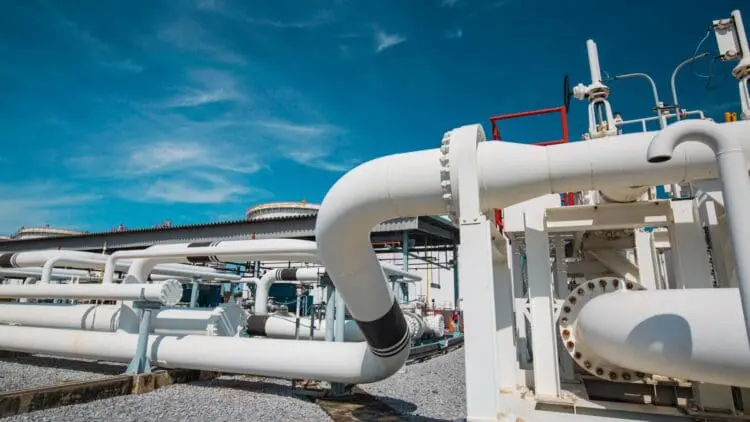
Major oil producers can bypass some of the route through pipelines, but existing alternatives cannot handle anything close to normal Hormuz volumes.
Bypass capacity limited
Saudi Aramco’s East-West pipeline and the UAE’s Abu Dhabi crude pipeline together can provide approximately 4.7 million barrels per day of capacity that bypasses the strait, according to the EIA.
That represents less than one-quarter of the 20.9 million barrels per day that crossed Hormuz during the first half of 2025.
The difference explains why even partial disruption can have a disproportionately large effect on world supply.
Alternative pipelines can keep some exports moving, particularly from Saudi Arabia and the UAE, but they cannot fully substitute for tanker traffic through Hormuz.
Closing or heavily restricting the route can therefore force producers to reduce output when storage fills and export options become insufficient.
The EIA estimated that flows through Hormuz had already declined to 14.6 million barrels per day during the first quarter of 2026, compared with more than 20 million barrels per day during the corresponding period of 2025.
Supply recovery fragile
The latest International Energy Agency oil market report shows how strongly the conflict has already affected global production.
World oil supply rebounded by 4.1 million barrels per day in June to 98.8 million barrels per day as some flows through Hormuz resumed and Gulf producers restored part of their curtailed output.
However, global production remained approximately 9.4 million barrels per day below pre-war levels.
The IEA expects world supply to average 102.6 million barrels per day in 2026, representing a decline of approximately 3.7 million barrels per day from the previous year.
Importantly, that forecast depends on a relatively rapid easing of regional disruption.
The renewed uncertainty highlighted by Monday’s market therefore matters directly to the forecast. A slower normalization of tanker traffic could delay the restoration of Gulf production and keep inventories tighter than anticipated.
Demand took hit
The disruption has affected consumption as well as supply.
The IEA expects global oil demand to decline by approximately 1 million barrels per day during 2026 after high prices, shortages and reduced availability weakened consumption, particularly during the second quarter.
The agency estimated that annual demand contracted by 4.8 million barrels per day during Q2.
It expects that decline to ease to 1.7 million barrels per day in Q3 before consumption returns to annual growth of 1.2 million barrels per day in the fourth quarter.
Demand growth is then projected to rebound by 2 million barrels per day in 2027.
These figures illustrate the counterweight to geopolitical supply pressure.
Extremely high oil and fuel prices can eventually weaken consumption, helping rebalance the market even when available supply is constrained.
Forecasts face new risk
The EIA’s July outlook had assumed that increased Hormuz traffic following a June agreement would allow global oil production and trade to recover toward pre-conflict levels.
It projected Brent crude to average $82 per barrel across 2026, including approximately $74 in the third quarter and $70 in the fourth. Brent was forecast to fall further to an average of $65 in 2027 as global inventories rebuilt.
However, the forecast was completed on July 1, before the renewed uncertainty reflected in the latest Reuters report.
It should therefore not be treated as an updated prediction incorporating the conditions Iran announced over the weekend or the latest attacks on regional energy infrastructure.
The EIA is scheduled to publish its next Short-Term Energy Outlook on August 11, which should provide a more current assessment of the effect of recent developments on supply, inventories and crude prices.
Market watches shipping
The most important signal for crude markets may ultimately be physical tanker movements rather than diplomatic announcements alone.
An Iran-Oman agreement can establish the framework for new lanes, but the impact on supply will depend on whether ships actually return, insurance conditions improve and producers can restore exports.
A sustained increase in traffic would give Gulf producers more capacity to move crude and petroleum products onto world markets. That could accelerate the rebuilding of inventories and put downward pressure on Brent and WTI. Continued restrictions would have the opposite effect.
Related Articles

Renewable Energy Storage Market 2025 Forecast - La...
21 Oct, 2025 07:12
Solar power mistake in South Africa costs homeowne...
21 Oct, 2025 07:54
An Investor’s Guide to Africa...
21 Oct, 2025 09:47
Doha Strike Shakes Global Energy Assumptions...
22 Oct, 2025 13:01
GCC and Russia Deepening ties in a multipolar Midd...
23 Oct, 2025 11:59
Tesla prepares first steps into Africa with Morocc...
23 Oct, 2025 13:29
Off-Grid Solar Energy Market to grow at 17.42 GW b...
23 Oct, 2025 13:39
Petroleum Institute Urges Early Take Off of Africa...
23 Oct, 2025 13:45
Algeria inks $5.4 billion energy pact with Saudi M...
23 Oct, 2025 14:03