Energy Markets

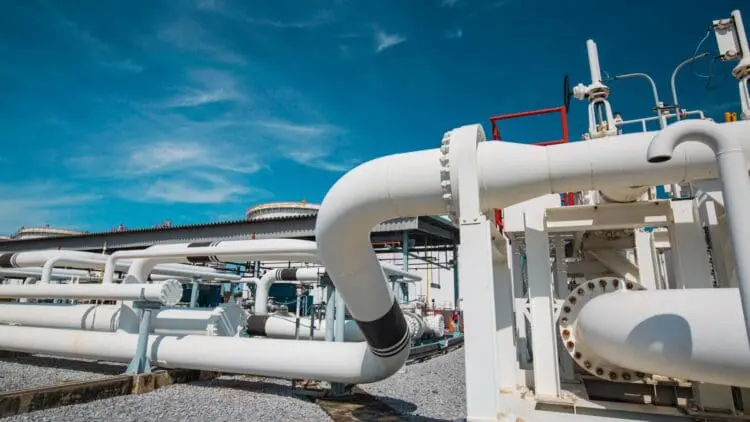
Oil prices fall below 80$ as U.S. and Iran sign deal to reopen Strait of Hormuz



Oil prices declined on Thursday after the United States and Iran reached a temporary agreement aimed at ending the conflict, reopening the Strait of Hormuz and lifting U.S. sanctions on Iranian oil exports, easing what had been considered the most significant disruption to global energy supplies in history.
As of 4:09 GMT, Brent crude futures dropped $1.37, or 1.72 percent, to $78.18 per barrel, while U.S. West Texas Intermediate (WTI) crude fell $1.46, or 1.90 percent, to $75.33 per barrel.
Hormuz traffic to rise back to full capacity within 30 days
Oil prices extended their losses, giving back gains recorded on Wednesday after U.S. President Donald Trump warned that military strikes on Iran could resume if the country’s leaders “don’t behave.”
Under the 14-point memorandum, the two sides will enter a 60-day negotiation period during which Iran will permit toll-free transit through the Strait of Hormuz, one of the world’s most critical oil and gas shipping routes. The agreement also stipulates that traffic through the waterway will be restored to full capacity within 30 days.
“WTI Crude Oil finished lower overnight at $75.01 (-2.10 percent), hitting a fifteen-week low of $74.09 before locking in its fifth straight session of declines. The sell-off extended as energy markets continued to aggressively price in a faster-than-expected return of Iranian barrels,” said Tony Sycamore, Analyst at IG.
The preliminary deal leaves several of the most contentious issues unresolved, including Iran’s nuclear program, while also obligating the United States and its allies to develop a $300 billion financing package to support Iran’s reconstruction and economic recovery.
“WTI is currently testing a critical band of support sitting between $75.00 (the 200-week moving average) and $73.50 (the 200-day moving average). Crude oil absolutely needs to hold this support zone on a sustained basis to trigger a rebound back towards $80.00 and to avoid a deeper slide towards $70.00,” Sycamore added.
IEA warns of 5.05 million bpd surplus in 2027
Should the deal be fully implemented and the Strait of Hormuz reopen, the current supply crunch could give way to a substantial oil surplus in 2027. The International Energy Agency (IEA) warned on Wednesday that global supply is expected to exceed demand by 5.05 million barrels per day next year, driven largely by the return of Middle Eastern crude to international markets, according to its latest monthly market report.
Oil prices also fell as the U.S. Federal Reserve noted that it is increasingly considering whether higher interest rates may be needed later this year to contain inflationary pressures, a move that could weigh on economic activity and, in turn, curb oil demand.
Updated projections released on Wednesday showed that nine of the Fed’s 19 policymakers now expect at least one rate increase before year-end, marking a notable shift from three months ago when none anticipated the need for tighter monetary policy.
Related Articles

Renewable Energy Storage Market 2025 Forecast - La...
21 Oct, 2025 07:12
Solar power mistake in South Africa costs homeowne...
21 Oct, 2025 07:54
An Investor’s Guide to Africa...
21 Oct, 2025 09:47
Doha Strike Shakes Global Energy Assumptions...
22 Oct, 2025 13:01
GCC and Russia Deepening ties in a multipolar Midd...
23 Oct, 2025 11:59
Tesla prepares first steps into Africa with Morocc...
23 Oct, 2025 13:29
Off-Grid Solar Energy Market to grow at 17.42 GW b...
23 Oct, 2025 13:39
Petroleum Institute Urges Early Take Off of Africa...
23 Oct, 2025 13:45
Algeria inks $5.4 billion energy pact with Saudi M...
23 Oct, 2025 14:03