Energy Other

Oil giants hoard $56bn profit windfall from Iran war


The world’s biggest energy companies have held back on big increases in investment and shareholder payouts, despite making an extra $56 billion in the second quarter as the US-Iran war pushed up crude prices.
Eleven of the largest oil companies – including Shell, Chevron, TotalEnergies and Equinor – made a combined $121 billion in profits between April and June.
This was up 85 percent from $65 billion a year earlier, according to an AGBI analysis.
Brent crude averaged $103.28 a barrel during the quarter, based on US Energy Information Administration data. This is 52 percent higher than in the same three months of 2025.
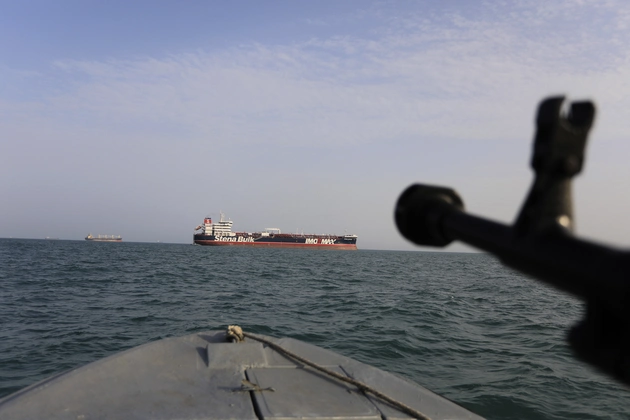
Crude rose as the Strait of Hormuz, a critical chokepoint for oil supplies, came to a virtual standstill for months following attacks on tankers.
But the jump in oil company earnings has not been matched broadly by similar increases in dividends – including one-off payments – or share buybacks, a tax-efficient means of returning cash to shareholders.
US group ExxonMobil, which reported profits more than doubling in the second quarter, paid a dividend of $1.03 per share for the three-month period, up from $0.99 in 2025.
Saudi Arabia’s state-backed oil group Aramco increased its dividend by just 3.5 percent to $22 billion.
Italy’s Eni and Spain’s Repsol announced larger share buybacks, but average increases across the sector were modest compared with the profit increase.
Analysts said the decision not to hand extra cash to investors suggested oil companies were reluctant to make long-term commitments based on profits boosted by the conflict.
“The main takeaway from this earnings season is that oil majors appear to be prioritising long- term strategic positioning over short-term shareholder rewards,” said Hamza Dweik, head of trading for the Middle East and North Africa at Saxo Bank.
“Even though combined profits among the largest international energy companies rose sharply year on year, most chose not to respond with equally dramatic increases in dividends or buybacks.”
Tiago Lacerda of online broker Axi added: “Boards that lived through the busts of 2015 and 2020 are treating this as a cash event rather than a growth signal, which is a fairly clear statement about how long they expect elevated prices to last.
“Management teams are signalling, through capital allocation rather than words, that they regard the current price spike as conflict-driven and therefore temporary.”
The Strait of Hormuz, through which a fifth of global oil supply usually passes, has been severely disrupted since the war began on February 28.
Brent averaged $117.29 a barrel in April and $107.14 in May, before falling to $85.40 in June as hopes grew of a deal between the US and Iran. A preliminary agreement was signed on June 18 but subsequently collapsed.
Prices never hit the highs of $200 a barrel that some experts had predicted, partly because China slashed imports and dipped into its stockpiles.
Oil prices continue to seesaw, however, as markets react to the easing and reigniting of geopolitical tensions.
Brent crude swung back to $90 a barrel on Tuesday as hopes of an imminent deal to reopen Hormuz faded after US President Donald Trump demanded war compensation from Iran.
No translation into bigger Gulf commitments
Some companies used money earned in the second quarter to strengthen their finances, with Chevron cutting debt by $8.4 billion during the three months.
“Stronger balance sheets are not automatically precursors to higher investment; in the current cycle, they are functioning as insurance against the next downturn,” Lacerda said.
The assumption that the conflict will stabilise makes it less likely that there will be sweeping investment in Gulf countries, said Vijay Valecha, chief investment officer at Century Financial.
“This quarter’s windfall is not translating into bigger Gulf commitments because the profit surge is largely war-driven,” he said.
“Most of the extra cash is going into paying down debt and keeping payouts steady.”
Valecha said international majors were more likely to remain partners in projects already underway than embark immediately on major new investments.
He pointed to the UAE looking to increase oil and gas production and expand its liquefied natural gas and refining industries, which create opportunities for international companies.
Gulf states are also repairing energy infrastructure damaged by Iranian missile and drone attacks.
Related Articles
Kuwaiti oilfield comes onstream officially after 1...
22 Sep, 2025 12:56
African Energy Week (AEW) 2025: Unlocking the Pote...
22 Sep, 2025 13:22
South Africa warns illegal car imports threaten ne...
23 Sep, 2025 06:31
South Africa Confronts EU Carbon Border Mechanism...
23 Sep, 2025 12:33
South Africa, China Deepen Investment Ties in Key ...
24 Sep, 2025 07:35
Raysut Cement’s Expansion into Libya and North Afr...
24 Sep, 2025 07:40
Nextchem opens regional office in Abu Dhabi...
24 Sep, 2025 08:10
Ghanaian students win top honours in IAEA’s Female...
24 Sep, 2025 09:32
Key Sectors Linking Mauritania and Gambia...
24 Sep, 2025 09:40