Rail

Kenya's SGR Posts First Annual Profit as Freight, Riders Rise


By: OrePulse
TotalEnergies and Nigerian independent AMNI International Petroleum Development Company have taken a final investment decision on an $800 million offshore gas project off Nigeria's coast, unlocking a field that had sat undeveloped for more than five decades since its discovery.
The Ima gas field, spanning Oil Mining Leases 112 and 117 in shallow waters near Bonny Island in Rivers State, was first discovered in 1973 but left undeveloped for more than 50 years before the partners committed to bringing it into production. TotalEnergies will operate the project with a 40 percent stake, while AMNI holds the remaining 60 percent. [uncertain]: the $800 million figure attached to the decision differs from TotalEnergies' own reference to an investment of more than $600 million, and the two companies did not reconcile the difference in their public statements.
First gas from Ima is targeted for 2028, with the field expected to reach a plateau output of 350 million cubic feet of gas per day, equivalent to more than 60,000 barrels of oil equivalent daily. A single offshore platform will anchor the development, connected to Nigeria LNG's plant by a pipeline roughly 22 kilometers long. The design calls for the platform to draw its power from onshore electricity rather than on-site generation, and the project is intended to operate without routine flaring.
The gas is earmarked to supply roughly one-third of the feedstock Nigeria LNG needs for its Train 7 expansion, a project meant to lift the plant's total liquefaction capacity from 22 million tonnes to 30 million tonnes a year. That link makes Ima one of the more consequential upstream developments feeding Nigeria's LNG export ambitions, since Train 7's ramp-up depends in part on new gas volumes reaching the plant on schedule.
Nigerian President Bola Tinubu highlighted the decision as evidence of the impact of his administration's sector reforms, saying: "We are seeing the result. AMNI International and TotalEnergies have taken an $800 million Final Investment Decision to develop the Ima Gas Field, discovered in 1973 and left underground for more than 50 years." Nicolas Terraz, TotalEnergies' president of exploration and production, framed the project as proof of the company's ability to bring new supply online affordably, saying the field "demonstrates again our ability to unlock new low-cost and low-emissions gas resources, following the incentives introduced by the Nigerian Government."
The companies said Nigerian firms would carry out most of the construction work, with four major contract packages assigned to local companies, and that more than 60 percent of the project's workforce would come from communities near the development. The partners also pointed to plans for permanent methane-monitoring systems as part of the project's environmental design, alongside the shore-powered platform and no-routine-flaring approach.
The scale of the field's dormancy is itself part of the story: a discovery made in 1973 sat without a path to market for more than 50 years while successive operators weighed whether it could be developed economically. That it has now reached a final investment decision, structured as a 40-60 split between a major international operator and a Nigerian independent, is the outcome both Tinubu and Terraz tied directly to government incentive programs aimed at making this kind of long-stranded gas discovery commercially viable. Ima's advance suggests at least one previously dormant discovery has cleared that bar. However, the project's actual delivery of first gas by 2028, and its contribution to Train 7's expanded capacity, will not be confirmed until construction is complete.
Ima's contribution, an estimated one-third of the feed gas the expanded Train 7 plant will need, makes it one of the upstream projects Nigeria LNG is counting on to deliver on schedule if the expansion is to reach its full 30-million-tonne capacity. Neither company detailed contingency plans should the 2028 first-gas target slip, and neither disclosed interim production milestones ahead of that date.
Articles similaires
South Africa Unveils Transport Overhaul to Reverse...
03 mars, 2026 08:11
Congo Turns to Satellite Technology to Modernize S...
09 mars, 2026 08:49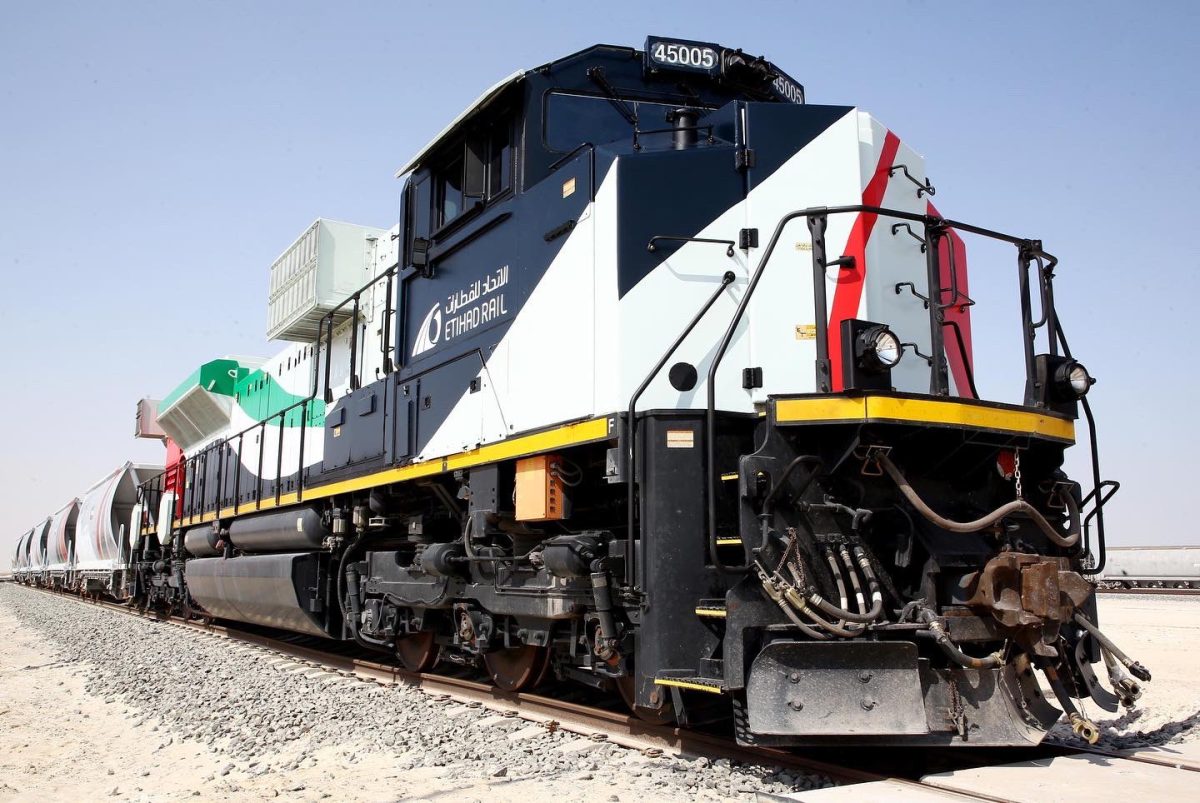
Etihad Rail Freight transports over 459,000 tonnes...
11 mars, 2026 11:28
Saudi cargo trains expand service due to Hormuz cl...
24 mars, 2026 11:11
Trains through Angola's Lobito critical mineral co...
13 avr., 2026 08:09
Riyadh expands logistics rail network with five ne...
13 avr., 2026 12:36
Jordan, UAE formalize $2.3bn rail deal as project ...
16 avr., 2026 11:59
Hafeet Rail hits 40 percent completion on UAE-Oman...
22 avr., 2026 07:29
Algeria sees big gains from trans-Africa rail proj...
28 avr., 2026 11:07