Logistic Other

Egypt is trying to build a logistics footprint in East Africa — but will the plan work?


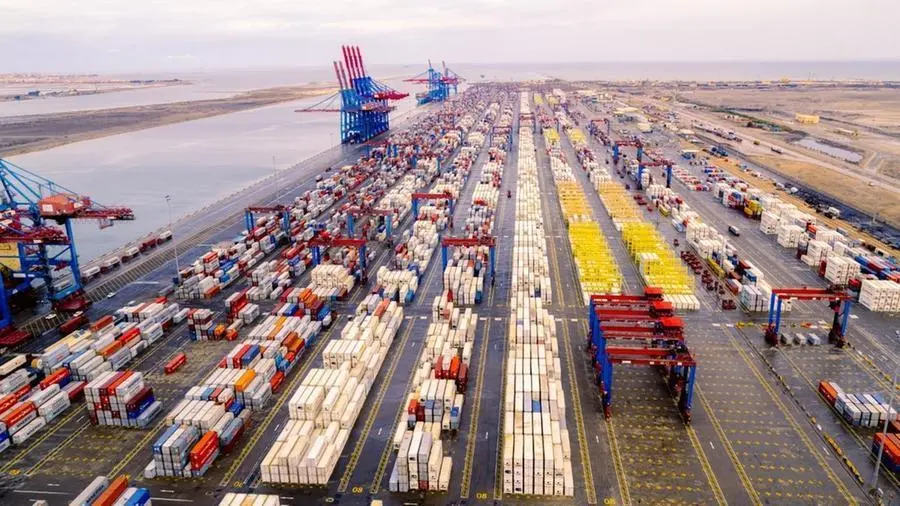
Egypt is positioning itself inside one of the world’s most consequential trade corridors, aiming to secure a foothold in the network of Red Sea and East African ports that link Asian manufacturing to African and European markets.
The corridor runs through a handful of chokepoints: Djibouti handles more than 90%oflandlocked Ethiopia’s trade by volume as of 2024 — a role Eritrea’s Massawa and Assab ports played before a conflict that upended bilateral relations. Kenya anchors the Indian Ocean end of the same network, serving Uganda, Rwanda, and South Sudan, among others.
The bigger picture: The ports at the center of Egypt's East Africa push are a key part of China’s Belt and Road Initiative (BRI) — a decade-long campaign to fund and build ports, rail, and roads linking China’s factories to overseas markets. State-owned China Merchants Group bought a 23.5% stake in the Port of Djibouti in 2013 and went on to build Doraleh's multipurpose terminal. Eritrea signed on to the BRI in 2021, and Chinese firms have since been upgrading the port of Massawa and building the road linking it to Assab. That’s what elevates this corridor from a regional East African network into a working leg of the Asia-Europe trade route.
Egypt's maritime pact with Eritrea and its foothold at Djibouti's Doraleh Port put it in direct contact with that Asia-Europe route. Whether this adds up to a deliberate strategy or a set of opportunistic responses to congestion and openings elsewhere in the region is the question we put to shipping, port, and trade sources tracking Egypt’s moves.
“Egypt's expansion into East African ports is about the Red Sea crisis first and the Belt and Road corridor second,” Wolfgang Lehmacher, former head of supply chain and transport industries at the World Economic Forum, tells EnterpriseAM. Egypt’s moves into Djibouti, Berenice, and Safaga reflect the country using BRI-built infrastructure to reinforce its own corridor power and security doctrine in a strained sea lane, he says.
“Egypt is using BRI as first-mover capital to build redundancy,” Lehmacher says — a portfolio of Asia-Europe options anchored in Djibouti, Berenice, and Safaga, rather than a wager on any single route. “Chokepoints are no longer just passages but levers of power,” Lehmacher says, adding that BRI-linked investment is elevating Egypt “from a ‘transit state’ to a corridor architect for China, Europe, and the wider Global South.”
The state’s opening bid
The Customs Authority’s decision to extend its ACI transit exemption to Kenya, Tanzania, Uganda, Rwanda, Djibouti, and Ethiopia is the clearest regulatory signal yet. The measure removes pre-registration requirements for transit cargo whose final destination lies outside Egypt, making Egyptian ports easier to use as throughput nodes for cargo moving across East African trade routes. The exemption was originally introduced in March for Gulf-bound transit cargo moving through Nuweiba, Ain Sokhna, and Safaga — naming six East African countries in the extension is a different order of ambition.
The state has paired that regulatory push with a physical one — and Canal Trust Ship Services now exists to answer the remaining question: which East African route it will serve. The joint venture between Canal Shipping Agencies and Trust Trading and Transport Company is mandated to run specialized commercial vessels carrying livestock and Egyptian goods between Egyptian and East African ports. It will also handle ship agency services, customs clearance, inland transport, storage, and coordination with port, customs, veterinary, and regulatory authorities. Safaga is set to be the first port of call, with other Red Sea ports to follow.
Egypt’s bid for a foothold has accelerated over the past few months. It inked a maritime pact with Eritrea — launching a direct Red Sea cargo route between the two — and secured a multi-purpose terminal at Djibouti’s Doraleh Port. It has also been marketing Berenice Port on the southern Red Sea coast as a logistics and economic zone gateway for new investors since at least 2024.
The private sector’s wager
Orascom Investment Holding is planning to take advantage of this deepening corridor with its Egypt-Kenya trade platform Outrovato, scheduled to begin operating next year. The company has onboarded around 200 Egyptian factories and is targeting USD 30-60 mn in Egypt-Kenya trade — roughly 5-10% of current bilateral volumes — focusing on food, building materials, furniture, fertilizers, and plastics. The platform’s target is to reach 500 manufacturers and businesses within the first two years of operation.
Jeddah’s strain, Cairo’s gain
The strongest opening isn't one Cairo created — it's the bottleneck next door. Transshipment for East Africa-bound cargo has traditionally run through Jeddah, but the port has been straining under pressure linked to Strait of Hormuz uncertainty, with vessels waiting two weeks or more for berths as trucking shortages and inland container yard constraints back up the supply chain, Finmar Group Project Director Ahmed Mouselhy tells us.
That congestion is opening a door Egypt hasn’t walked through yet. Containers arriving from Asia could be discharged at Egypt’s Red Sea terminals and redistributed across East Africa on smaller vessels — the same model Jeddah has used for years, Mouselhy says. Shipping lines are already showing concrete interest, driven by Egypt’s available yard capacity and the broader industry push toward supply chain resilience after the Hormuz disruptions.
BUT- Direct trade between Egypt and East Africa won’t get shipping lines to commit on their own — bilateral volumes aren’t large enough and freight rates on the route have historically been too depressed to make the service profitable for shipowners, Mouselhy says. Building that role requires the whole industry to move together, not just one ministry.
We are already seeing what this demand looks like beyond standard shipping containers. Egyptian manufacturers like Elsewedy Electric have had to use specialized heavy-lift vessels to move massive components into Tanzania’s Julius Nyerere Dam via the Dar es Salaam Port before hauling them overland, Mouselhy says. Finmar is now coordinating with terminal operators to lay the groundwork for a more permanent logistics corridor, a move Mouselhy says is being directly accelerated by the government’s recent transit waivers.
Our take: The mechanics aren’t inherently one-directional. A terminal built to handle Asian cargo headed into East Africa is just as capable of handling Asian cargo headed to Europe — another way for Egypt to utilize the corridor for its own throughput, not just a service it’s building for someone else’s trade.
The longer shot: The Nile
The inland complement to the maritime push is moving more slowly, but in the same direction. The cabinet has greenlit a contract with Austrian firm Frequentis to deploy a River Information System along the Nile — hardwiring vessels with real-time navigation tools for 24-hour commercial operations — with a long-term government target of lifting the Nile’s share of cargo movements to 10% by 2038. A single river barge carries the equivalent of 40 trucks, and the Frequentis system is the first serious digital infrastructure investment aimed at making the Nile a commercial logistics backbone rather than a scenic waterway.
Our take:If the Red Sea ports become the corridor’s redistribution point, the Nile is the bid for the inland leg — carrying cargo deeper into landlocked Africa once it’s already ashore.
However, turning the Nile into a working cargo route means overcoming physical breaks in the river — dead zones, cataracts, and dams that sever the waterway into disconnected stretches — that no vessel can cross without major engineering. Experts say the link would need deep feasibility studies before any of it moves forward.
What to watch: “Over the next three to five years, whether Egypt converts this crisis-era logistics redesign into durable economic influence or watches competing routes erode its centrality as global shipping fragments into a map of contested, increasingly optional sea lanes,” Lehmacher notes.
Related Articles
South African table grape industry and Transnova A...
22 Oct, 2025 08:25
Spiro Raises US$100 Million in Africa’s Largest-Ev...
22 Oct, 2025 09:33
NXN and SAEED unite within Sharjah’s logistics sec...
24 Oct, 2025 07:48
TAHA Unveils HortiMarket A Digital Platform Revolu...
24 Oct, 2025 08:21
Chinese technology takes center stage at Ghana's t...
27 Oct, 2025 09:17
Kenya Airways flies first African route, from Nair...
27 Oct, 2025 09:23
Madbouly inaugurates $85mln DP World's logistics p...
27 Oct, 2025 12:56
Airbus cargo outlook shows 3.3% annual growth and ...
28 Oct, 2025 08:21
Nominations now open for the Logistics Saudi Award...
28 Oct, 2025 08:27