Energy Other

Drilling companies see promise in post-war energy build-out


Three of the world’s largest oilfield service companies said the Middle East conflict hit their first-quarter operations, but a global push for energy security and diversification could open up new opportunities once hostilities subside.
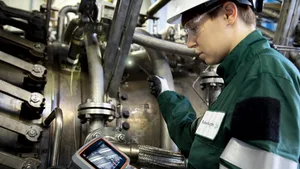
Baker Hughes, SLB and Halliburton provide engineering support across the oil and gas industry, including equipment for drilling, rig maintenance and technology. All reported their Q1 earnings last week.
Baker Hughes said a strong first three months of the year in its industrial and energy technology unit offset the impact of the US-Israeli war against Iran on its oilfield services and equipment division, whose revenue fell 7 percent year on year.
Chief financial officer Ahmed Moghali said on the company’s earnings call on Friday that the conflict is especially undermining product sales in the Middle East because of the logistical challenges to import and export there.
Baker Hughes was awarded a contract from QatarEnergy in the first quarter for equipment at two new mega trains – liquefied natural gas plants – at its North Field expansion project, the company said in its latest financial disclosure.
A gradual increase in activity in the Middle East is expected in the second half of 2026, provided the conflict concludes by June and the Strait of Hormuz reopens shortly after that, according to chairman and CEO Lorenzo Simonelli.
“In the near term, we anticipate greater emphasis on optimising production from existing wells,” Simonelli said.
Once things stabilise, a “meaningful increase in remediation and intervention work as previously shut-in wells are brought back online” should drive measured growth in regional activity, he said.
Focus on energy security
Meanwhile, the Iran conflict is driving structural changes in global energy markets, with governments and industry prioritising energy security and the diversification of energy routes and sources.
Stakeholders are already talking about building new pipelines to divert Gulf oil and gas exports away from Hormuz, accelerating the push towards decarbonisation and renewables, and exploring new fossil-fuel projects outside the region.
“Importantly, this is not just about adding supply – it is about building a more resilient energy system that supports industrial outcomes,” Simonelli said.
“That means greater redundancy, more diversified infrastructure and less reliance on single, large-scale assets.”
This rebound in demand is expected to allow Baker Hughes to exceed its target for industrial and energy technology orders by 2028, according to Simonelli.
First quarter Middle East and Asia revenue at SLB, which was previously known as Schlumberger, fell 13 percent year on year following the halt of liquefied natural gas output and exports from Qatar, along with shut-ins in Iraq and in offshore rigs regionally, the company said on Friday.
Its chief executive officer Olivier Le Peuch called it a “challenging start [to] the year,” but said countries globally will be driven to speed up “efforts to diversify supply, strengthen domestic resource development and rebuild strategic and commercial inventories”.
“Together, these dynamics are expected to support a constructive macro environment for upstream investment over the coming years,” Le Peuch said on a call with analysts.
SLB still managed to win new contracts to develop, operate and otherwise support large projects in Kuwait, Oman, Qatar and the UAE in the first quarter.
In its quarterly results, Halliburton posted flat year-on-year revenues as global operations counterbalanced a 13 percent decline in Middle East and Asia activities driven by the war and reduced demand for its services in Saudi Arabia and Qatar.
Jeffrey Miller, the company’s president and CEO, predicted on an earnings call that the Iran conflict will have meaningful and long-lasting repercussions.
“First, energy security is no longer simply a talking point,” he said. “It demands action by every nation to ensure a reliable supply of oil and gas.”
This will boost investment in localised new developments in countries that have reservoirs and fast track efforts to secure different suppliers in those that do not, Miller said.
Bringing oil and gas inventories back up will be a years-long process that will lead to “meaningful incremental demand”, he said.
“In my view, that supports a durably stronger commodity environment and a far more constructive backdrop for upstream investment and oilfield services activity.”
Related Articles
Kuwaiti oilfield comes onstream officially after 1...
22 Sep, 2025 12:56
African Energy Week (AEW) 2025: Unlocking the Pote...
22 Sep, 2025 13:22
South Africa warns illegal car imports threaten ne...
23 Sep, 2025 06:31
South Africa Confronts EU Carbon Border Mechanism...
23 Sep, 2025 12:33
South Africa, China Deepen Investment Ties in Key ...
24 Sep, 2025 07:35
Raysut Cement’s Expansion into Libya and North Afr...
24 Sep, 2025 07:40
Nextchem opens regional office in Abu Dhabi...
24 Sep, 2025 08:10
Ghanaian students win top honours in IAEA’s Female...
24 Sep, 2025 09:32
Key Sectors Linking Mauritania and Gambia...
24 Sep, 2025 09:40