Energy Other

DBSA eyes bigger energy sector role as Africa seeks bankable infrastructure projects


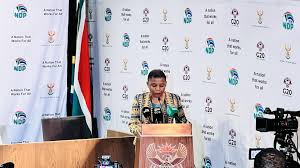
DBSA programmes group executive Dr Phindile Masangane and DBSA chief investment officer Greg Fyfe each highlight that the institution aims to use the forum to deepen engagement with policymakers, investors and project developers across Africa.
Masangane adds that energy remains one of the DBSA’s core focus areas along with transport and logistics, ICT and water infrastructure.
“We have just come out of a difficult past of loadshedding. However, what we have now is electricity, which is sufficient for our own use, but we do not have enough power to increase economic growth.
“Therefore, as the DBSA, we want to scale up our investment in energy so that there is enough to attract intensive energy users and ensure we have security of supply. We also want to share with forum delegates the approach that we are taking to scale up our energy infrastructure developments,” Masangane highlights.
Referring to South Africa’s gas supply challenges, she warns that gas imported from Mozambique is expected to become constrained from about 2028, with interim measures potentially extending supply certainty until 2030.
Meanwhile, the DBSA is increasingly focused on renewable-energy financing and transmission infrastructure expansion, particularly as grid limitations in the Northern, Western and Eastern Cape continue to constrain new renewable energy generation projects.
Moreover, the DBSA is undertaking ongoing work on blended finance mechanisms, and a proposed Credit Guarantee Vehicle (CGV) is being developed alongside South Africa’s National Treasury and multilateral development institution the World Bank Group to support infrastructure procurement programmes and unlock additional renewable-energy investments.
Structured with an initial target capitalisation of about $500-million, the CGV will, once operational, provide credit guarantees to enhance the bankability of qualifying infrastructure projects.
Fyfe highlights that the DBSA provides a full value chain offering for all infrastructure projects, including but not limited to energy projects. “We provide funding support from the early preparation phase right up to the financial close of projects. This value chain support is underpinned by a philosophy of sustainability – financial, socioeconomic and environmental,” he says.
Fyfe also stresses the importance of financial sustainability in ensuring that projects continue to deliver on socioeconomic and environmental protections.
“South Africa has a deep and liquid financial market spanning bank and institutional sources of capital. To access this liquidity, developers require projects to be financially sustainable, underpinned by legislative, regulatory, legal and cash flow certainty.
“The DBSA often provides the necessary ‘bridge’ to this capital through early-stage equity finance, higher risk ‘gap’ financing, support for black economic empowerment funding tranches and the provision of very long dated patient senior debt capital,” Fyfe adds.
He also points to the DBSA’s involvement in helping to establish South Africa’s Independent Power Producer Office, which has successfully awarded more than 15.5 GW of projects to preferred bidders and attracted a total investment of about R298-billion to date.
One of the biggest obstacles to energy infrastructure developments across South Africa and the rest of the continent remains a lack of bankable projects. Many projects fail during the early-stage feasibility phase owing to limited technical capacity.
The DBSA recently reviewed how it supports early-stage project development and enhanced both the financing product as well as created an advisory service. “The DBSA is working hard to develop a robust pipeline of bankable projects. We do this through offering funding and technical assistance through developing, alongside the project sponsors, bankable feasibility studies.
“We believe robust and credible feasibility study work is the key success factor in facilitating access to private sector funding for these projects in the market.”
Meanwhile, energy remains key to critical minerals beneficiation as the transformation of raw ores such as lithium, cobalt and platinum into refined, high-value battery materials requires immense, uninterrupted power.
“The board and the organisation are very clear that a sound critical minerals strategy can be an extremely valuable catalyst for growth on the continent provided that it is not done on a purely extractive basis,” Fyfe says.
He adds that the DBSA will focus primarily on financing enabling infrastructure linked to mining developments rather than early-stage exploration activities.
Together, these insights underscore the DBSA’s view that Africa’s long-term economic growth, industrialisation and energy security depend not only on mobilising large-scale finance, but also on building a strong pipeline of bankable infrastructure projects.
Beyond the AEF, the DBSA will continue advocating for the need for African countries to expand logistics and transmission networks, strengthen institutional capacity and ensure that the continent captures greater socioeconomic value from its energy resources through inclusive and sustainable development.
Related Articles
Kuwaiti oilfield comes onstream officially after 1...
22 Sep, 2025 12:56
African Energy Week (AEW) 2025: Unlocking the Pote...
22 Sep, 2025 13:22
South Africa warns illegal car imports threaten ne...
23 Sep, 2025 06:31
South Africa Confronts EU Carbon Border Mechanism...
23 Sep, 2025 12:33
South Africa, China Deepen Investment Ties in Key ...
24 Sep, 2025 07:35
Raysut Cement’s Expansion into Libya and North Afr...
24 Sep, 2025 07:40
Nextchem opens regional office in Abu Dhabi...
24 Sep, 2025 08:10
Ghanaian students win top honours in IAEA’s Female...
24 Sep, 2025 09:32
Key Sectors Linking Mauritania and Gambia...
24 Sep, 2025 09:40