Sea

Bypassing Hormuz: The strategic export advantage of the UAE and Saudi Arabia


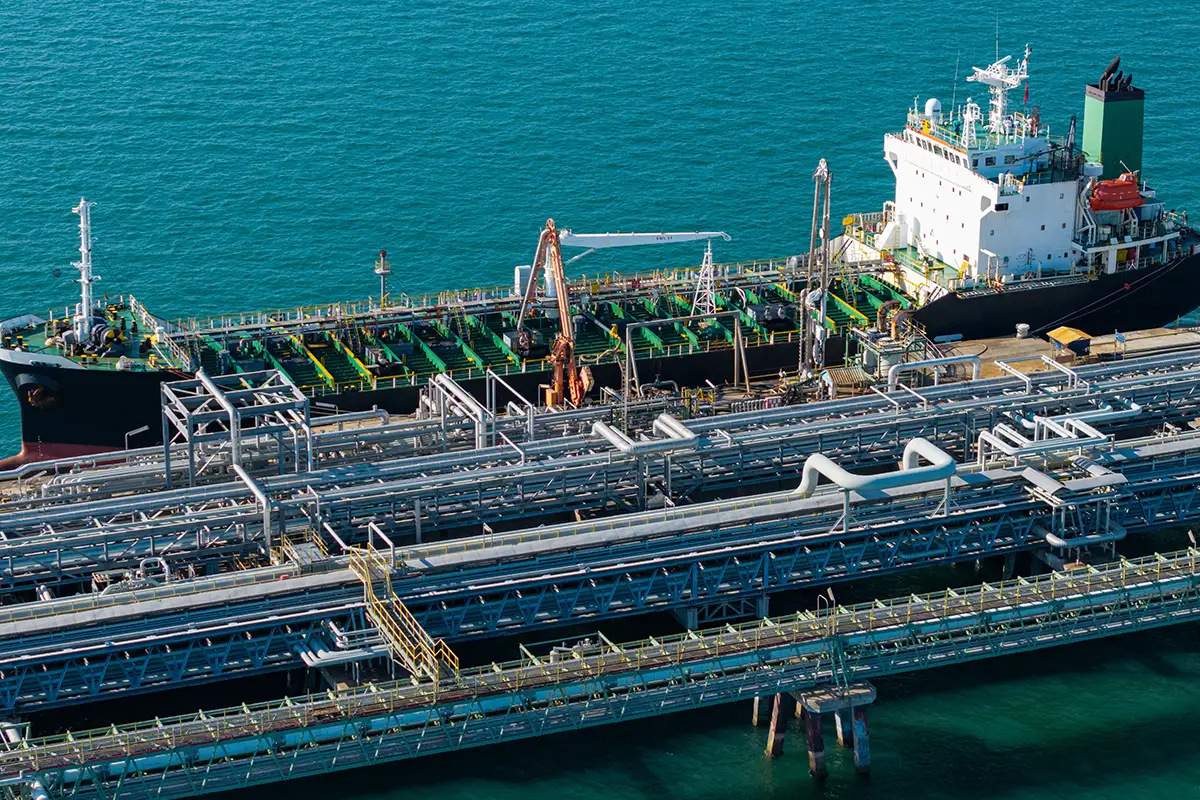
The UAE and Saudi Arabia are better positioned than most Gulf producers to continue exporting oil even as the Strait of Hormuz is effectively closed. That is because they have invested in alternative infrastructure. Moreover, they have diversified export routes and overseas storage networks that provide limited but meaningful resilience.
While these measures cannot fully offset the disruption caused by the closure of the world’s most important oil chokepoint, they allow both countries to maintain partial export flows at a time when their oil exporting neighbors are severely constrained.
Strategic facilities
The key structural advantage lies in bypass pipelines that allow crude to reach terminals outside the Gulf. Saudi Arabia operates the East–West pipeline, which connects oil processing facilities in the Eastern Province to export terminals at Yanbu on the Red Sea. This infrastructure allows Saudi Aramco to redirect crude that would normally load at Gulf terminals such as Ras Tanura to the Red Sea instead.
In practice, this means cargoes can still reach global markets without passing through Hormuz. Aramco has already offered customers the option of loading cargoes at Yanbu rather than entering the Gulf. This illustrates how this contingency plan can be activated during crises.
Even under normal conditions, Yanbu exports hundreds of thousands of barrels per day. Increasing shipments to around 2 million b/d is considered feasible. Additionally, there is a possibility of pushing closer to 3 million b/d if necessary, though it isn’t clear if that level can be sustained.
This capability does not eliminate the impact of the closure. Saudi Arabia exported roughly 7 million barrels per day of crude before the crisis, so a large share of its exports would still be disrupted. However, the pipeline ensures that a substantial portion of Saudi production can still reach markets. Most other Gulf producers cannot replicate this ability.
Iraq, Kuwait, Qatar and Bahrain rely almost entirely on Gulf terminals and therefore have no practical alternative export route except through the Strait of Hormuz. Iraq has some capacity to export some crude through the northern pipeline system to the Turkish terminal of Ceyhan. But that is just a fraction of its total exports, which averaged 3.34 million b/d in February.
The ADCOP advantage
The UAE has a similar advantage through the Abu Dhabi Crude Oil Pipeline (ADCOP), which carries crude from inland fields to the port of Fujairah on the Gulf of Oman. Because Fujairah lies outside the Strait of Hormuz, tankers loading there do not need to enter the Gulf. The pipeline can deliver up to about 1.8 million b/d of Murban crude to the terminal. This provides a significant outlet for UAE production during disruptions.
In normal circumstances, around 1 million b/d is exported from Fujairah. However, the system can potentially operate at full capacity during emergencies.
Unlike Saudi Arabia’s bypass pipeline, the UAE’s system has the additional advantage that the crude transported through it is largely intended for export rather than domestic refining or utilities.
As a result, almost all the pipeline’s capacity can theoretically be directed toward international markets. This makes the Fujairah route one of the most effective Hormuz bypass options available anywhere in the region.
Storage and logistical networks
Beyond pipelines, both countries benefit from extensive storage and logistical networks that enhance their export flexibility. Saudi Arabia maintains strategic storage at Yanbu. Moreover, it also holds stocks in international hubs such as Egypt’s SUMED pipeline system. This allows cargoes to be staged closer to end markets.
The UAE, meanwhile, has built large commercial storage facilities at Fujairah and maintains inventories abroad that can be used to supply customers during disruptions. These inventories help smooth deliveries even if production or shipping schedules are temporarily disrupted.
Operational flexibility
Another important factor is scale and operational flexibility. Saudi Arabia and the UAE hold most of the Gulf’s spare production capacity. This means they have the ability to adjust output and supply chains more easily than smaller producers. In a crisis scenario, they can redirect flows between refineries, storage sites and export terminals to prioritize key customers or markets.
While the closure of Hormuz effectively removes the region’s spare production capacity from global balances if oil cannot be exported, the existence of alternative outlets means Saudi Arabia and the UAE can still partially utilize their capacity.
However, these advantages should not be overstated. Both bypass systems face limitations that constrain their effectiveness. Pipeline capacity is far lower than total export volumes, meaning a significant share of production would still be stranded.
In Saudi Arabia’s case, domestic refineries and utilities also rely on crude delivered through the East–West pipeline, reducing the amount available for export. Storage limitations and logistical challenges — such as segregating different crude grades — can also complicate large-scale rerouting of exports.
Security concerns
Security risks also remain. The Red Sea route used by Saudi exports requires tankers to pass through the Bab el-Mandeb chokepoint, where shipping could face threats from Houthi rebels in Yemen. Meanwhile, the UAE’s Fujairah terminal itself has come under drone attack. This highlights the vulnerability of critical infrastructure during conflict.
Even with these constraints, the comparative advantage of Saudi Arabia and the UAE is clear. Most Gulf producers have no export routes that bypass Hormuz, leaving them entirely dependent on the strait remaining open.
By contrast, Saudi Arabia and the UAE have spent decades developing alternative pipelines, terminals and storage facilities. They did this specifically to mitigate this risk.
While these systems cannot fully replace Gulf export capacity, they allow both countries to maintain a significant flow of crude to global markets during disruptions. Consequently, this makes them far better positioned than their regional peers in a prolonged closure of the Strait of Hormuz.
Related Articles

Transport & Logistics in Action – Connecting the M...
22 Oct, 2025 08:40
Appeal made for cargo harmonization across the SSA...
22 Oct, 2025 08:46
4 deals signed between Turkiye, Kuwait...
22 Oct, 2025 13:31
Beit Logistics invests $10.50mln to develop Safaga...
23 Oct, 2025 12:18
Khalifa Port rises to 39th position in Lloyd’s Lis...
23 Oct, 2025 12:24
ASCELA awarded Africa Logistics Zone Development P...
23 Oct, 2025 12:49
FG begins procurement for port modernization proje...
23 Oct, 2025 12:56
NZF delay extends unlevel playing field for EU por...
27 Oct, 2025 09:30
DP World Launches $85 Million Logistics Hub in Egy...
27 Oct, 2025 10:48