المعادن الأساسية

Tight Supply, Flat Prices and Africa’s Opportunity


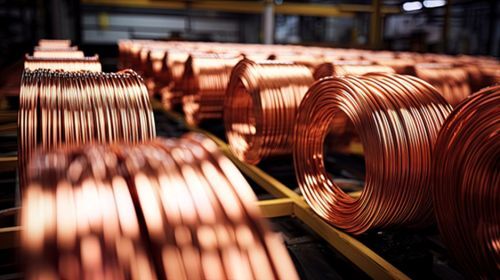
PT Freeport Indonesia has cut its 2026 production target to 700 million pounds, down from a goal of 1 billion pounds announced earlier this year. The revision, disclosed to the press last week, adds to growing uncertainty surrounding a significant share of global copper supply amid sulfuric acid shortages. So far, however, those disruptions have not triggered another surge in copper prices.
The reduction in Grasberg’s production target reflects delays in restoring operations at the site, which was hit in September 2025 by a deadly mudslide that forced an immediate halt to extraction. The mine has since operated below capacity, with full operations now expected to resume in early 2028 instead of the previously anticipated end of 2027.
A Market Running Out of Momentum?
The latest setback comes as global copper supply is already under pressure from disruptions to sulfur shipments through the Strait of Hormuz. Copper producers that rely on sulfuric acid to extract metal from oxide ores account for roughly 20% of global copper output. The Democratic Republic of Congo and Zambia have lost access to part of their sulfuric acid supply, while Chile, the world’s leading copper producer, also faces tighter availability because of Chinese export restrictions on the chemical.
Despite the supply disruptions, copper prices have failed to rally further. In January 2026, the red metal briefly climbed above $14,000 per ton after first crossing the $12,000 mark in December 2025. The rally was driven by production stoppages at Grasberg and at Ivanhoe Mines’ Kamoa-Kakula mine in the DRC, a rush by U.S. buyers to secure refined copper ahead of potential tariffs, and speculative trading activity.
Since late February, when the first strikes on Iran triggered the closure of the strait, prices have moved only marginally. The three-month copper contract on the London Metal Exchange rose from $13,343 per ton at the time to $13,573 by May 8, a modest increase largely supported by underlying market fundamentals.
The International Copper Study Group (ICSG) has revised down its forecast for global mine production growth in 2026, from 2.3% to 1.6%. At the same time, the organization now expects a surplus of around 96,000 tons in the global refined copper market this year, compared with a deficit of 150,000 tons projected last October. The war in Iran, which has weakened the global economic outlook, also prompted the ICSG to lower its demand growth forecast from 2.1% to 1.6%.
Tighter supply and softer demand are therefore offsetting each other, limiting the usual impact of production disruptions on prices.
Africa: Between Opportunity and Vulnerability
For African producers, the current state of the global copper market presents both opportunities and risks. The World Bank expects copper prices to rise by an average of 21% in 2026, which would mark a yearly record, before declining by roughly 8% in 2027 as supply disruptions ease.
The DRC, Africa’s largest producer, and Zambia, its closest rival, where copper accounts for about 70% of export revenues, are among the countries best positioned to benefit from elevated prices.
The sulfuric acid shortage nevertheless exposes the limits of that advantage. Mines using leaching processes are directly vulnerable to supply disruptions. In the event of prolonged shortages, higher prices may only compensate for lower production volumes.
The broader question for the market is whether persistent supply constraints or weakening demand caused by geopolitical and economic uncertainty will ultimately dominate.
مقالات ذات صلة

Iran conflict disrupts China's Middle East steel e...
03 مارس, 2026 08:26
Emirates Global Aluminium's annual profit rises as...
03 مارس, 2026 08:42
Tumas Uranium Project technically ready for develo...
03 مارس, 2026 11:56
PDAC: Secure uranium sources key to fixing supply ...
04 مارس, 2026 10:42
DRC Mining Week Returns to Africa’s Largest Copper...
04 مارس, 2026 11:38
URU begins ground-based geophysical programme at S...
05 مارس, 2026 07:48
MMG eyes copper deals as profit more than triples...
05 مارس, 2026 08:46
Atomic Eagle increases uranium resources by 24% at...
06 مارس, 2026 09:10
Iron-ore extends rally on surging energy, rising f...
09 مارس, 2026 08:08