Mining Other

Angola mining sector: diamonds, gold & critical minerals


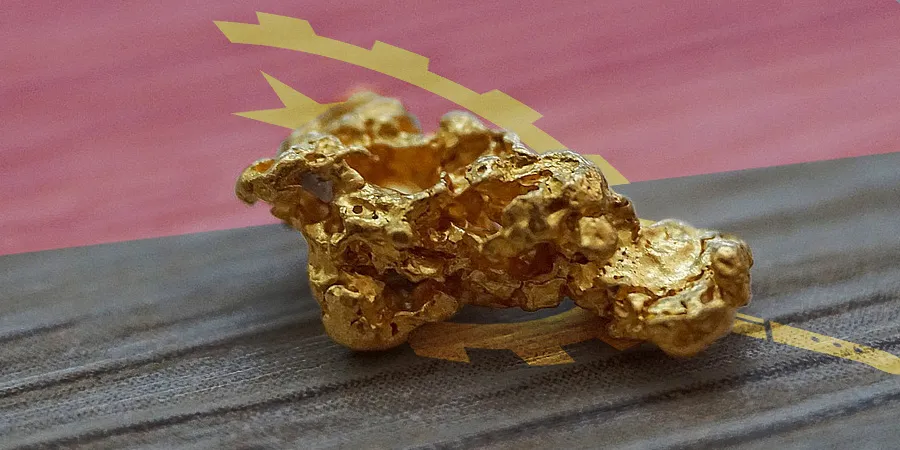
Angola is quietly reshaping its mining sector into a more transparent engine for growth. Fresh capital is moving into diamonds, gold, and critical minerals. A new digital registry is set to give investors clearer sight of risk and reward.
Diamonds anchor the story
Angola has reinforced its position as a top-tier diamond producer. It is also beginning to shift from raw exports towards value addition and stronger governance. Angola produced roughly 15.2 million carats of diamonds in 2025, according to Kimberley Process statistics. Total value reached approximately US$1.81 billion. Those figures placed Angola behind only Russia and Botswana by both volume and value.
Diamond policy is evolving alongside output. President João Lourenço has pursued a sustained campaign to reform the sector. The goal is to move away from opaque sales arrangements. Officials are pushing to expand cutting, polishing, and jewellery manufacturing inside Angola — building on a dedicated diamond hub launched earlier this decade.
Domestic processing capacity is set to increase further. The government opened additional cutting factories in Saurimo and is advancing a new regulatory regime to formalise semi-industrial operations and strengthen traceability. The Ministry of Mineral Resources, Oil and Gas has linked these steps to broader institutional reforms, including the restructuring of state firms Endiama and Sodiam. These changes separate the roles of concession, regulation, and operation — reducing political risk premiums for long-term capital.
Angola is steadily turning diamonds from a political asset into an investable industrial value chain.
Critical minerals, gold, and fertilisers: who is betting on Angola?
Angola’s pitch to investors now extends well beyond diamonds. Critical minerals projects are emerging along a corridor connecting Huambo and Benguela provinces, close to existing logistics infrastructure.
Australian company Connected Minerals is finalising an 80% stake acquisition in Frontier Group CRM. That entity holds exploration rights over the Bailundo carbonatite project in Huambo province, which is prospective for niobium and rare earths. Shareholders approved the transaction in July 2026. Bailundo sits near the Longonjo rare earths project, also backed by international investors and targeting commercial production later this decade. This emerging cluster positions Angola as a complementary rare earths source outside China.
Canadian-listed Newfoundland Discovery agreed to acquire Orenoxe Holdings. This gives it staged earn-in rights over the Ganda gold–rare earth project in Benguela province. The licence area covers roughly 786 square kilometres and lies about 60 kilometres from Longonjo, per company disclosures. These projects remain in exploration. They do widen Angola’s exposure to energy-transition metals.
Gold is moving up the agenda too. Angola plans to commission its first dedicated gold refinery in Luanda’s Viana Industrial Park by end-2026. Financed by Endiama, the facility is designed to process up to 25 kilograms of gold per day and will include the country’s first public assay office. Angola already has 49 active gold prospecting projects and four in production, representing more than US$120 million of combined investment, per government data.
Minbos Resources adds another angle. The company is advancing construction at the Cabinda Phosphate Project, with structural steel fabrication under way and a mining contractor selection in progress. Minbos expects construction and dry commissioning to complete in 2027, backed by over US$21 million in funding commitments through placements and finance facilities. A domestic phosphate industry supports both export earnings and agricultural productivity.
What does the digital mining registry mean for investors?
Governance is catching up with this expansion. Angola’s government plans to launch a public digital mining registry and publish the national geological map online. The initiative — announced by Secretary of State for Mineral Resources Jânio Victor — aims to strengthen transparency and lower information costs for prospective entrants.
For investors, the Angola mining sector now offers a clearer mix of yield and optionality. Diamonds provide established cash flow. Critical minerals, gold refining, and fertilisers offer medium-term growth and diversification. The key variables to watch are the rollout of the digital mining registry, the pace of capital deployment into Bailundo and Ganda, and whether regulatory reforms continue to narrow the gap between Angola’s resource potential and its realised risk-adjusted returns.
Related Articles
Endeavour announces transaction in own shares...
10 Sep, 2024 07:27
Ivanhoe Mines Announces MOU with Government of Zam...
10 Sep, 2024 12:24
Feasibility Study on Lumwana Super Pit Expansion E...
12 Sep, 2024 14:21
Endeavour achieves commercial production at BIOX e...
13 Sep, 2024 08:20
Roscan Gold Announces Changes to the Board of Dire...
16 Sep, 2024 10:40
Minerals Council pays tribute to Pravin Gordhan...
16 Sep, 2024 12:17
Notification of an acquisition of beneficial inter...
18 Sep, 2024 08:39
Newmont on track to get at least $2 billion from a...
18 Sep, 2024 10:49
UAE firm plans to invest $500m in Tanzania...
19 Sep, 2024 08:37