مجالات التعدين الأخرى

Flow-through can advance South African exploration, says Minerals Council economist


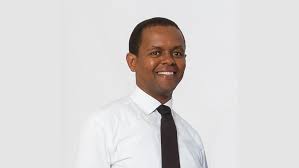
A slide with words to that effect was prominently displayed during the presentation of Minerals Council South Africa acting chief economist Bongani Motsa at the Junior and Emerging Miners Desk webinar on Friday, March 27.
Flow-through shares really form the foundation of the strong growth of junior mining in Canada, VBKOM Consulting CEO Dr Manie Kriel added during the same webinar, which was covered by Mining Weekly.
Canada’s Toronto Stock Exchange has 880 junior listings, compared with only 12 on South Africa’s Johannesburg Stock Exchange.
Flow-through shares, used primarily in Canada's mining sector, allow companies to renounce tax deductions for exploration expenses to investors, who deduct these expenses from their own taxable income, effectively lowering investment risk and allowing firms to raise capital at a premium.
“Our view is that flow-through shares with an incentive scheme could bridge the financing gap for exploration in South Africa. All we're looking for is just about R8-billion a year,” Motsa reported, as he displayed a slide which read, “12J did not catalyse exploration!”.
This was a reference by Motsa to Section 12J of the South African Income Tax Act, which was introduced in 2009 to stimulate investment in risky economic activities and also provide funding for exploration; “and let me just tell you that it never did attract exploration funding”, and was discontinued in 2021 for not delivering sufficient economic benefit relative to its tax expenditure.
“So, our view is that there must be a specific mineral exploration instrument that will unleash exploration as well as unleash the sector's potential.” said Motsa, while displaying this assertion in coloured type: “The flow-through shares incentive scheme will solve our problems.”
Regarding how the decline in exploration spend affected employment, he said that while there was no direct correlation between exploration expenditure and employment in mining, the reality was that exploration would result in new mines, “and when there are new mines, there will be an expansion in employment”.
No greenfield exploration
The absence of greenfield exploration – exploration from scratch and not exploration tied to existing mining operations – was flagged as a major concern.
Greenfield exploration is mineral exploration conducted in previously unexplored or undeveloped, ‘virgin’ areas, but predominating in South Africa is brownfield exploration near existing mines.
Interestingly, modern data analytics and mineral systems innovation is lowering the risk and cost of greenfield exploration.
“I must really emphasise the point that greenfield exploration is a leading indicator to the formation or establishment of new mines. When you establish new mines, you're going to employ more people, and that has not been happening.
"How investors view South Africa does matter and the overall Fraser Institute investment attractiveness index in 2025 ranked South Africa at a very low fitfy-seventh compared with other jurisdictions.
“What we should aim for is the top quartile as it relates to how investors view us as a country in relation to investment in mining because in terms of mineral endowment, we score high, so investors see a potential in us as an endowed country. We have a diversified portfolio of mineral reserves, so we are up there, but policy factors are holding us back,” Motsa emphasised.
“Given our mineral endowment, we have underperformed as a country. Mining, as a sector, continues to shrink, even though we have these reserves. It is smaller than what it was in 1994.
“Exploration is mainly to extend life-of-mine and greenfield exploration fails to feature and that needs attention and recommended are flow-through shares to close the exploration funding gap.
“Perceptions do matter and policy factors and issues must be steadily addressed,” Motsa urged.
The Australian Stock Exchange has 720 juniors and the London Stock Exchange 180 juniors and although the dozen on the Johannesburg Stock Exchange is an improvement on 2019 figures, capital raising for junior mining projects was not necessarily done in South Africa, Kriel pointed out.
Displaying a relevant slide, he added: “You can see stock markets where you want to raise capital are probably Toronto and Australia, and just as a matter of interest, in 2026 of the [Investing in African] Mining Indaba in Cape Town attracted about 12 000 attendees, the PDAC in Canada that took place about to a couple of weeks after Indaba attracted 32 000 attendees.
“That also speaks to the quantum of interest in Canada, and the big difference, I think, is that the Canadian government, way back in previous decades, introduced the flow-through share scheme that Bongani has alluded to, and that really forms the foundation of the strong growth in terms of junior mining in Canada.”
On other challenges faced, Kriel, in outlining a mining application case study, reported that although the Department of Mineral and Petroleum Resources (DMPR) had published timelines for responding to applications, the department does not always adhere to its own timelines.
“The DMPR regional offices have piles of disorganised files filling their offices. It's problematic,” Kriel said.
Cadastre delay
“There are also delays in implementation of the mining cadastre, and this will have a direct impact on when international investors return to South Africa.
“It’s estimated that a fully functional cadastre system may take another five years, and not as the expectations are, that it is busy being rolled out.
“That's one of the other stumbling blocks that we've highlighted. So, I think in conclusion, really there's been growth in the junior and emerging mining sector that is positive. This is a sector that holds the key for the future. The exit of the blue-chip mining companies from South Africa has left a significant gap in terms of how exploration is funded, that gap needs to be made up, and a number of midtier and junior mining companies are stepping up, but the regulatory environment and investment into South Africa is still problematic and needs to be addressed,” Kriel reported.
مقالات ذات صلة
Endeavour announces transaction in own shares...
10 سبتمبر, 2024 07:27
Ivanhoe Mines Announces MOU with Government of Zam...
10 سبتمبر, 2024 12:24
Feasibility Study on Lumwana Super Pit Expansion E...
12 سبتمبر, 2024 14:21
Endeavour achieves commercial production at BIOX e...
13 سبتمبر, 2024 08:20
Roscan Gold Announces Changes to the Board of Dire...
16 سبتمبر, 2024 10:40
Minerals Council pays tribute to Pravin Gordhan...
16 سبتمبر, 2024 12:17
Notification of an acquisition of beneficial inter...
18 سبتمبر, 2024 08:39
Newmont on track to get at least $2 billion from a...
18 سبتمبر, 2024 10:49
UAE firm plans to invest $500m in Tanzania...
19 سبتمبر, 2024 08:37