Mining Other

Zambia Says It Attracted $10 Billion in Mining Investment, But Output Is Up Only About 90,000 Metric Tons


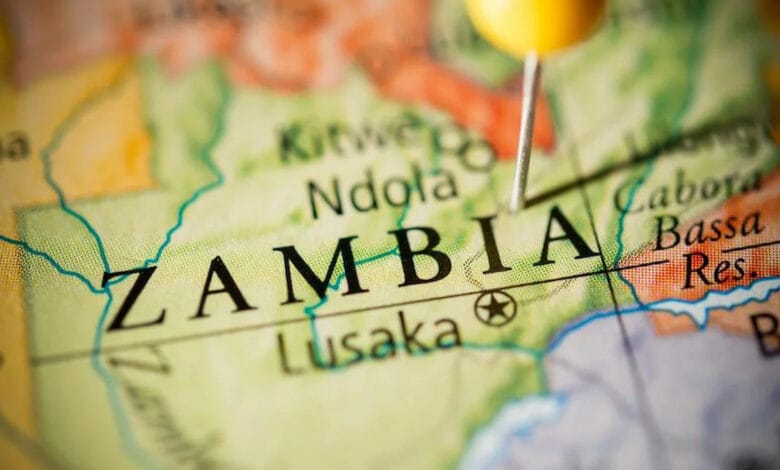
Zambia has spent five years telling investors it wants to triple its copper output. The investment commitments have arrived. The metal, so far, largely has not. President Hakainde Hichilema says the country has attracted close to $10 billion in mining investment since 2021, and the Ministry of Mines and Minerals Development has set a target of 3 million metric tons of annual copper production by 2031 under its National Three Million Metric Tonnes Copper Production Strategy. The ministry puts recent output at an average of around 800,000 metric tons a year.
Zambia produced 890,346 metric tons in 2025, about 8% more than the previous year but short of the government's own 1 million-metric-ton target for that year. Output was roughly 732,580 metric tons in 2023 and, based on subsequently revised official figures, about 825,500 metric tons in 2024. Against a 2021 base of about 800,700 metric tons, the net gain over the period in which the investment was announced is on the order of 90,000 metric tons a year. Using the government's $10 billion figure, that works out to more than $100,000 of announced investment for each additional annual metric ton of production, according to this publication's calculation.
Why the ratio looks so poor
Part of the answer is that mining capital takes years to convert into metal, and several of the largest commitments — including Barrick's Lumwana expansion, Vedanta's plan to spend about $1.3 billion reviving Konkola Copper Mines, and KoBold Metals' more than $2 billion Mingomba project — are still being developed. Judging them against today's output is unfair to the projects and useful only as a measure of where Zambia actually stands.
The other part is electricity, and here the constraint is structural rather than merely temporary. Mining already accounts for roughly half of Zambia's total national electricity consumption, according to the World Bank's May 2026 report on the country's power sector. Industry executives estimate that at least 2,000 megawatts of additional generation capacity would be needed to sustain the expansion implied by the 3 million-metric-ton target. The 2024 drought that crippled hydroelectric output and forced miners to rely more heavily on imported and alternative power demonstrated what happens when that margin disappears.
The Energy Regulation Board said in its 2026 midyear briefing that it had supported 16 utility-scale projects representing more than 1.1 gigawatts of proposed capacity in the first half of the year and approved ZMW19.7 billion, about $1.04 billion, in energy investment. That is progress, but those projects do not yet amount to 1.1 gigawatts of new generation available to the mining sector.
Good prices, hard arithmetic
The commercial backdrop has rarely been better. Benchmark copper was trading around $14,000 a metric ton in early August, more than 40% above a year earlier, and the International Energy Agency still expects a supply gap of about 25% by 2035 under its stated-policies scenario. Copper generates roughly 70% of Zambia's export earnings, while mining and quarrying accounted for about 22% of net tax revenue in 2025. The sector is therefore not simply an industrial issue but a major fiscal and external-accounts issue.
Analysts at the Center for Strategic and International Studies have described the 3 million-metric-ton goal as structurally ambitious and unlikely to be met, citing energy supply, regulatory unpredictability, and investment conditions. From the 2025 base, the target requires compound annual growth of about 22% for six years running. Sustaining that pace across a large national copper industry would be exceptional.
A note on the political context. Hichilema's investment claim was made in the run-up to this month's election. He was subsequently declared reelected by the Electoral Commission of Zambia on August 18. The investment figure itself should still be treated as a government claim rather than as an independently verified total of capital already spent.
Related Articles

Oil prices seesaw as markets weigh IEA reserves re...
11 Mar, 2026 08:40
UN committee urges Ethiopia to address pollution a...
13 Mar, 2026 09:35
Boss Mining urges DRC authorities to tackle illega...
13 Mar, 2026 13:05
Building a responsive skills system for a changing...
16 Mar, 2026 07:36
Integrated water approach sets a benchmark for res...
16 Mar, 2026 07:45
Xylem launches total water treatment solution...
16 Mar, 2026 07:56
Transformation of Nigeria’s mining sector...
16 Mar, 2026 08:05
Dalaroo strengthens West African strategy with key...
16 Mar, 2026 08:15
Strengthening mining value chains to maximise Afri...
16 Mar, 2026 10:27