Energy Markets

QatarEnergy CEO: Hormuz Crisis May Delay North Field LNG Expansions


By: OrePulse
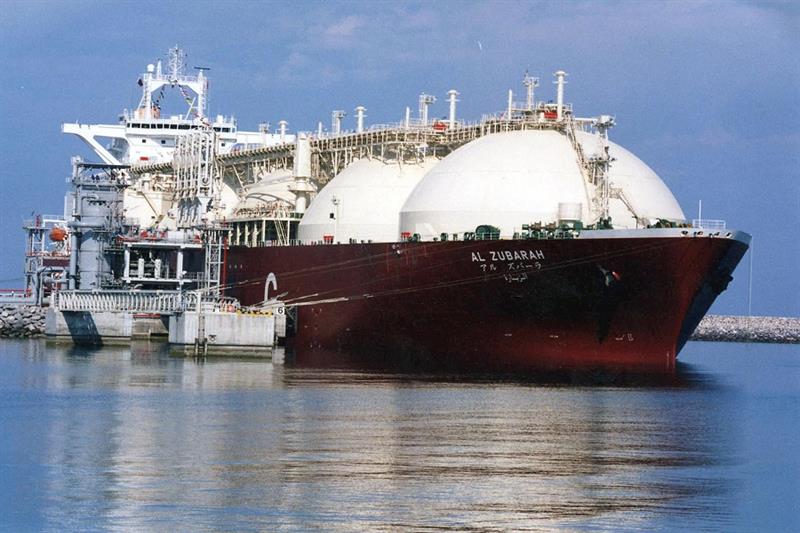
QatarEnergy's chief executive said Sunday that the crisis in the Strait of Hormuz could delay some of the company's liquefied natural gas expansion projects because critical construction equipment cannot be shipped into Qatar while the waterway remains disrupted.
CEO Saad al-Kaabi made the comments while speaking at the Qatar Economic Forum in New York on September 20, 2026. "Critical equipment is unable to reach Qatar," al-Kaabi said, pointing to the disruption as the reason some projects could slip behind schedule.
Al-Kaabi said several LNG trains under the North Field East expansion are scheduled to begin operations in 2027, with the North Field South expansion expected to start production the following year, in 2028. He did not specify which individual projects, beyond that general timeline, could face delays, or by how long.
The QatarEnergy chief also said the company is currently producing only a "very minute" volume of liquefied natural gas, showing how sharply the Hormuz disruption has curtailed output even before any effect on the expansion schedule is felt.
The Strait of Hormuz is the narrow sea corridor linking the Persian Gulf to the Gulf of Oman and the wider Indian Ocean, and it serves as the primary export route for oil and gas produced by Qatar, Saudi Arabia, the United Arab Emirates, Iran and other Gulf states. Disruption to shipping through the strait has direct knock-on effects for producers on all sides of the Gulf, since vessels carrying crude oil and LNG cargoes, as well as ships bringing in construction equipment and materials, must pass through the same chokepoint.
Qatar's North Field, the offshore reservoir underpinning both the North Field East and North Field South expansions, is shared with Iran, which calls its portion South Pars, and ranks among the world's largest natural gas fields. The field has been central to Qatar's position as one of the world's top LNG exporters, and the expansion projects are intended to increase the country's export capacity once substantially completed.
Al-Kaabi's remarks add QatarEnergy to the list of regional energy companies and officials who have pointed to the Hormuz disruption as a factor complicating operations and investment plans in the Gulf. A delay to either the North Field East or North Field South expansion would be significant for global LNG markets, given the scale of new supply the two projects are expected to bring online later this decade.
QatarEnergy did not immediately provide further detail on the specific equipment shipments affected or on contingency plans, such as alternative routing, to keep the 2027 and 2028 start-up targets on track. Al-Kaabi's comments were the company's most direct public acknowledgment to date that the wider Gulf shipping crisis is beginning to affect its project timelines, rather than only day-to-day export volumes.
Large LNG expansion projects like North Field East and North Field South typically depend on specialized components — liquefaction trains, compression modules and related processing equipment — that are manufactured abroad and delivered by sea in stages over several years of construction. That dependence on seaborne freight means any prolonged restriction on vessel movement through a chokepoint such as the Strait of Hormuz can ripple through project schedules long before it shows up in a company's finished output figures.
Al-Kaabi made his comments on the sidelines of a forum focused on regional economic issues, rather than in a dedicated statement on the expansion program, and offered no updated completion dates beyond the 2027 and 2028 targets already associated with North Field East and North Field South, respectively. Market participants and industry watchers are likely to look for further comment from QatarEnergy on the scale of any delay as the situation in the strait develops, given the importance of the two projects to global LNG supply growth over the remainder of the decade.
Related Articles
Oil prices surge to $104.87 as Trump seeks naval c...
16 Mar, 2026 07:48
Oil prices recoup losses, surge to $102.85 as supp...
17 Mar, 2026 08:01
Oil prices contract by 2.21 percent to $101.13 fol...
18 Mar, 2026 11:34
Oil prices rise to $107.34 as investors balance ge...
23 Mar, 2026 08:30
Oil prices rise 4 percent to $99.92 on renewed sup...
24 Mar, 2026 08:50
Oil prices plunge over 4 percent to $95.77 on easi...
25 Mar, 2026 08:12
Oil prices surge 2.37 percent to $107.82 as Strait...
30 Mar, 2026 10:51
Oil prices drop 0.03 percent to $107.36 as markets...
31 Mar, 2026 07:30
Oil prices surge 1.34 percent to $105.36 as market...
01 Apr, 2026 07:07