Mining Other

Pilot plant advances Rainbow's rare earth recovery at Phalaborwa


By: OrePulse
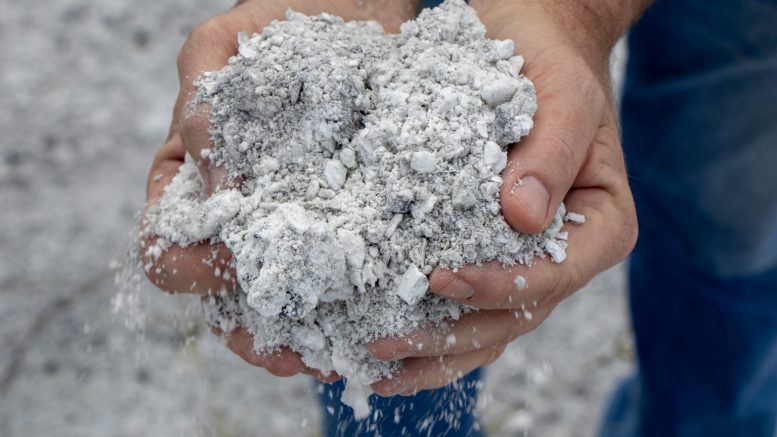
Rainbow Rare Earths said Wednesday that it is on track to become the first company to commercialize a low-cost, capital-light method for recovering rare earth elements from phosphogypsum, the phosphoric acid waste stockpiled at its Phalaborwa project in South Africa's Limpopo province.
The London-listed, South Africa-focused company said it is close to finalizing proprietary intellectual property covering the extraction process, after laboratory testing in Johannesburg progressed far enough to warrant commissioning a pilot plant. Chief executive George Bennett said: "The decision that shaped the year more than any other was establishing our own world-class laboratory in Johannesburg."
Rainbow has partnered with Canada's Neo Performance Materials, which is supplying a solvent-extraction solution intended to produce separated neodymium and praseodymium oxide, along with a samarium-europium-gadolinium carbonate, from material sourced at Phalaborwa. Bennett said initial bench- and pilot-scale trials of that standalone extraction step are under way at Neo's facility in Estonia, using what he described as "high-grade rare earth solution from Phalaborwa."
Rainbow also plans to run an integrated solvent-extraction pilot plant at its Johannesburg laboratory to support engineering and design work ahead of a definitive feasibility study, which the company expects to complete next year. A prefeasibility study, targeted for release in the fourth quarter of 2026, is meant to define the project's final products, processing route and waste streams, information Rainbow says it needs to pursue financing and restart permitting. Permitting is expected to proceed alongside completion of the definitive feasibility study rather than wait for it. "Every month we can bring it forward is a month gained," Bennett said of South Africa's established permitting timeline.
Beyond the rare-earths recovery itself, Rainbow said the project is intended to address long-standing environmental liabilities at Phalaborwa, including an old opencast mine, a dormant phosphoric acid plant owned by Sasol, and two unlined gypsum stacks the company has previously described as environmentally hazardous.
Non-executive chairperson Adonis Pouroulis said rare earth elements are "found in the products we rely on every day," pointing to their use in electric vehicles, robotics, defense systems and the broader energy transition, and described secure supply of the elements as a matter of national security and economic resilience. He said Rainbow's strategy is to develop low-cost, low-capital-intensity projects that recover rare earths from phosphogypsum, a byproduct of phosphoric acid production, using the company's own intellectual property rather than conventional hard-rock mining.
Pouroulis said the company's understanding of the extraction process deepened substantially over the past year. He described the processing flow sheet as the project's key value driver, adding that it could eventually be applied to other phosphoric acid operations elsewhere, and said Rainbow is close to finalizing that flow sheet in order to create unique intellectual property for extracting valuable rare earths from a waste product.
As of June 30, Rainbow reported cash holdings of 12.9 million U.S. dollars, according to the company.
Related Articles

Oil prices seesaw as markets weigh IEA reserves re...
11 Mar, 2026 08:40
Strengthening mining value chains to maximise Afri...
16 Mar, 2026 10:27
Ethiopia's export revenue hits record 5.9 bln USD ...
16 Mar, 2026 13:01
Canadian firm launches feasibility study for Moroc...
16 Mar, 2026 13:15
Harena signs exclusivity agreement to acquire US r...
17 Mar, 2026 07:26
S&P downgrades Botswana as diamond sector faces gl...
17 Mar, 2026 07:36
Botswana Minerals reports significant exploration ...
17 Mar, 2026 07:41
Tantalite prices jump to over two-decade high on C...
17 Mar, 2026 07:44
JSW Steel wins rights to develop coking coal mine ...
17 Mar, 2026 07:45