Energy Other

Oman and Thailand Sign Energy Cooperation Pact in Bangkok


By: OrePulse
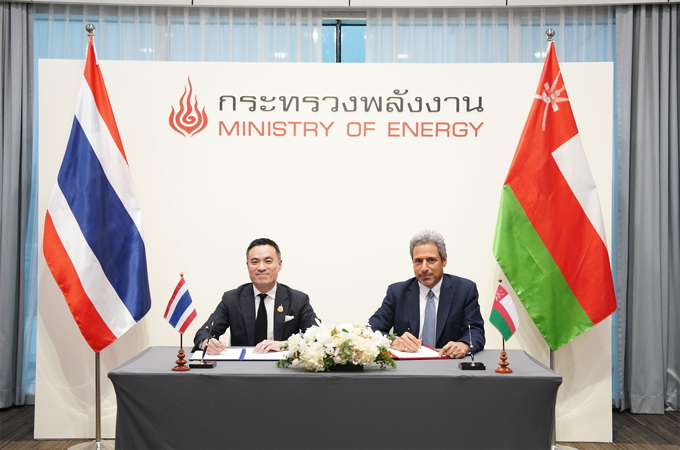
Oman and Thailand have signed a Memorandum of Understanding to strengthen collaboration across their energy sectors, establishing a new bilateral dialogue mechanism to facilitate joint investment opportunities and technology exchange between the two nations.
The signing took place in Bangkok on September 16, 2026, with Oman represented by its Minister of Energy and Minerals, Salim Al Aufi, and Thailand represented by its Minister of Energy, Akanat Promphan.
At the heart of the agreement is the creation of an "Oman-Thailand Energy Policy Dialogue," a platform that brings together private-sector representatives from both countries to identify potential joint ventures and establish lasting cooperation across the energy industry. The framework also allows regular bilateral consultations, giving both sides a way to share experience and knowledge on developing and running energy projects.
The scope of the agreement extends beyond just the policy dialogue itself, encompassing four main areas of collaboration: promoting joint investment and exchanging technology; sharing knowledge and information related to energy policy; developing the workforce through training programs and expert exchanges; and pursuing research cooperation aimed at strengthening the energy capabilities of both countries.
Notably, the MoU does not identify which specific energy subsectors will take priority under this new arrangement, and it includes no financial figures or committed project values. Officials described the agreement as an expression of both countries' shared commitment to deepening their economic partnership and institutional ties.
Rather than tying the agreement to any single project, the two countries instead established a standing dialogue channel—one that could serve as the institutional foundation for future joint ventures between Omani and Thai energy companies. Agreements like this, centered on ongoing policy dialogue, often serve as precursors to more concrete investment announcements down the line, giving government officials and private-sector players a recurring venue to identify opportunities as they emerge.
Oman, a relatively modest but geographically well-positioned oil and gas producer on the Arabian Peninsula, has been working in recent years to diversify its energy partnerships internationally, while also pushing forward with renewable energy growth and downstream investment. Thailand, meanwhile, ranks among Southeast Asia's larger economies and remains a major energy importer, actively seeking to diversify its supply sources and forge technology partnerships as part of its broader energy transition strategy.
Neither government has provided a timeline for the first session of the new Energy Policy Dialogue, nor have they named any specific companies expected to take part in future joint ventures under this framework.
Related Articles
Kuwaiti oilfield comes onstream officially after 1...
22 Sep, 2025 12:56
African Energy Week (AEW) 2025: Unlocking the Pote...
22 Sep, 2025 13:22
South Africa warns illegal car imports threaten ne...
23 Sep, 2025 06:31
South Africa Confronts EU Carbon Border Mechanism...
23 Sep, 2025 12:33
South Africa, China Deepen Investment Ties in Key ...
24 Sep, 2025 07:35
Raysut Cement’s Expansion into Libya and North Afr...
24 Sep, 2025 07:40
Nextchem opens regional office in Abu Dhabi...
24 Sep, 2025 08:10
Ghanaian students win top honours in IAEA’s Female...
24 Sep, 2025 09:32
Key Sectors Linking Mauritania and Gambia...
24 Sep, 2025 09:40