
Sea

IMO chief urges tougher enforcement of safety rules in Strait of Hormuz


By: OrePulse
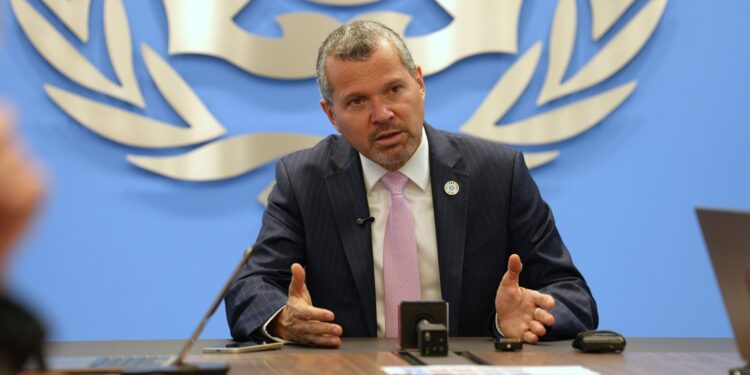
The head of the International Maritime Organization has called on governments to step up enforcement of international safety rules for ships transiting the Strait of Hormuz, as the United Nations agency's confirmed count of attacks on merchant vessels in the waterway passed 130.
IMO Secretary-General Arsenio Dominguez said in a statement that flag states, port states and coastal states should enforce safety and security regulations more strictly on vessels moving through and around the strait. He said rules such as those under the Safety of Life at Sea (SOLAS) convention "must be respected and enforced effectively," warning that ships failing to meet basic safety requirements add to the dangers already facing seafarers in the area.
Dominguez pointed to a specific set of practices he said were compounding the risk: vessels in poor condition being allowed to sail, ships concealing or altering their IMO identification numbers, and vessels operating under fraudulent registrations or false flags. He said states with flag, port or coastal jurisdiction over the area had an obligation under international law to crack down on such violations, and he pressed shipowners to steer clear of any commercial operations in the strait that would put their crews at what he termed an unacceptable level of risk.
According to the IMO's own count, more than 130 attacks on commercial vessels have been verified in the Strait of Hormuz since the conflict there began on February 28, 2026, with at least 25 seafarers confirmed killed and others reported missing or injured. Dominguez's statement, issued in mid-November, followed a meeting of the IMO Council in London held November 2-6, at which member states condemned the attacks on merchant shipping.
Beyond the immediate safety message, Dominguez renewed his appeal for a political solution to the underlying conflict, one that would restore what he described as a single, safe and internationally recognized framework for navigation through the strait. He said the disruption was contributing to higher living costs around the world, given the volume of oil, gas and other cargo that normally passes through the waterway.
The Strait of Hormuz is one of the world's busiest chokepoints for oil and gas shipments, and the IMO's intervention adds regulatory weight behind existing commercial pressures on shipowners and insurers operating in the area. Compliance questions such as flag fraud and concealed vessel identities have become a growing focus for port and flag-state authorities assessing which ships are fit to keep trading through the strait, with implications for insurance terms, routing decisions and the cost of moving cargo to and from the Gulf.
Related Articles

Egypt’s Damietta Port receives its largest bulk ca...
12 May, 2026 08:37
Saudi ports handled over 14.5m tons of cargo in Ap...
12 May, 2026 08:44
Mombasa Port secures $822mln facelift deal...
15 May, 2026 11:08
Transnet Ports raises fuel neutrality charge as in...
18 May, 2026 10:43
AD Ports Group signs agreement to acquire Germany-...
19 May, 2026 08:00
Services account for 58 percent of the world’s $2....
11 Jun, 2026 08:48
Aqaba ports record 38% growth in handled cargo vol...
12 Jun, 2026 11:14
Trial operations start at Safaga terminal...
16 Jun, 2026 12:52
DP World, Arcapita begin work on logistics centre ...
30 Jun, 2026 13:12