Energy Other

How does Aliko Dangote's oil refinery fit into his conglomerate?


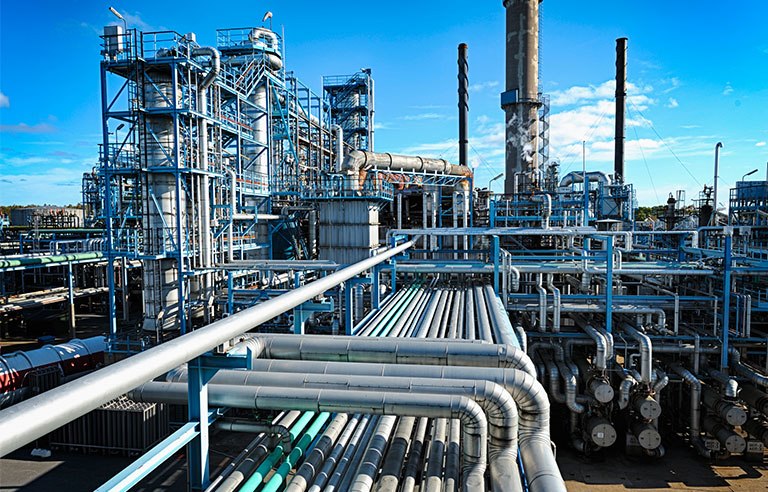
Nigeria's Dangote Group is selling a 3.3% stake in its 700,000 barrels-per-day oil refinery to the public, in what is expected to be the continent's biggest such transaction.
Here are some answers and questions about the business conglomerate owned by Africa's richest man, Aliko Dangote.
WHAT IS THE SIZE OF DANGOTE'S BUSINESS GROUP?
The 69-year old entrepreneur controls Dangote Industries Limited, one of Africa's largest industrial groups, with operations spanning the production of cement, sugar and salt.
It is also engaged in refining crude oil and associated activities, including the production of petrochemicals and fertiliser, power generation, logistics and shipping.
Dangote Industries acts as his main holding vehicle for operating companies, most of which have been privately held.
That changes with the listing of the refinery complex situated near Lagos.
WHICH PARTS OF THE GROUP ARE MOST IMPORTANT?
Dangote Cement is Africa's largest cement producer, with installed capacity of 51.8 million metric tons a year across Africa. Nigeria accounts for 35.3 million tons of that capacity.
The company also operates in Cameroon, Congo Republic, Ivory Coast, Ethiopia, Ghana, Senegal, Sierra Leone, South Africa, Tanzania and Zambia. It aims to raise total capacity to 80 million metric tons annually by 2030.
The refining business, which is the newest in the group, represents its most ambitious expansion.
The refinery began processing crude in 2024 and it produces petrol, diesel, jet fuel, liquefied petroleum gas and by-products for chemicals like polypropylene.
A nearby plant produces fertiliser and has an annual capacity of 3 million tons of urea and ammonia, supplying Nigeria and export markets, including Brazil, India, Mexico and the United States.
The group's consumer businesses include sugar, salt seasonings and other food products.
The activities are supported by marine terminals, storage facilities, pipelines and power plants, which are also part of the Dangote Group.
HOW DID DANGOTE BUILD THE GROUP?
Dangote's strategy has focused on import substitution: offering local production of the goods that Nigeria has traditionally bought from overseas.
Cement was the first major success. Investments in plants, quarries and logistics helped to turn Nigeria from a major importer into a regional supplier.
Dangote later applied the same strategy to his latest venture in fertiliser, refining and petrochemicals, to cut reliance on imports while serving the domestic and export markets.
While the group's investments in logistics, power and gas infrastructure aim to control costs and secure supplies, they come at a substantial capital outlay and with risks such construction delays and substantial debt costs.
(Reporting by Isaac Anyaogu; Editing by Duncan Miriri and Barbara Lewis)
Related Articles
Kuwaiti oilfield comes onstream officially after 1...
22 Sep, 2025 12:56
African Energy Week (AEW) 2025: Unlocking the Pote...
22 Sep, 2025 13:22
South Africa warns illegal car imports threaten ne...
23 Sep, 2025 06:31
South Africa Confronts EU Carbon Border Mechanism...
23 Sep, 2025 12:33
South Africa, China Deepen Investment Ties in Key ...
24 Sep, 2025 07:35
Raysut Cement’s Expansion into Libya and North Afr...
24 Sep, 2025 07:40
Nextchem opens regional office in Abu Dhabi...
24 Sep, 2025 08:10
Ghanaian students win top honours in IAEA’s Female...
24 Sep, 2025 09:32
Key Sectors Linking Mauritania and Gambia...
24 Sep, 2025 09:40