Sea

Durban terminal delays persist; truckers lose up to R7,000/day


By: OrePulse
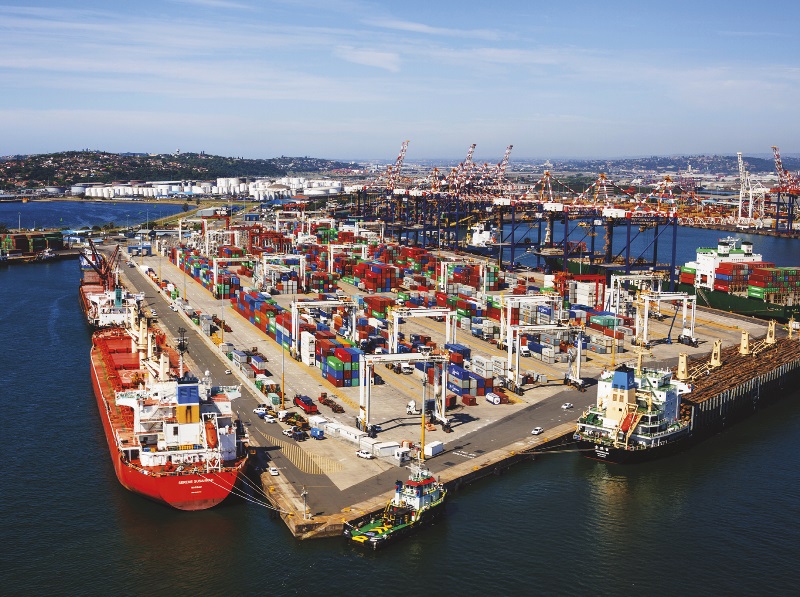
Durban Gateway Terminal, which handles about 46 percent of South Africa's port traffic, is still working through a backlog of vessels and containers more than two months after an August breakdown of its Navis N4 cargo-management system, according to the terminal's chief executive, a road transport industry body and a joint logistics-sector cargo update.
Ships were waiting days at anchor outside the port in early October, compared with roughly 24 hours before the system failure, the reports said. A cargo movement update compiled by the South African Association of Freight Forwarders (SAAFF) and Business Unity South Africa (BUSA), posted October 9, said the number of vessels waiting at anchorage rose from nine on October 5 to twelve by October 8, with two further vessels expected to join the queue.
The update, dated October 4 with Durban Gateway Terminal figures refreshed through October 8, said the terminal's average throughput had risen about 2 percent week-on-week to approximately 4,487 twenty-foot equivalent units a day. Stack occupancy at the terminal rose from 59 percent to 62.3 percent over the same period, and the volume of containers arriving by road increased 12 percent to 3,575, the update said. It estimated the disruption has added between 20 and 24 days to affected supply chains, while noting the delay is not uniform across every shipment.
The update, identified as Cargo Movement Update No. 302, said its figures are drawn from third-party sources and have not been independently audited. For comparison, it said vessels calling at South African container terminals nationally averaged about 63 hours at anchorage and 59 hours at berth that week, with roughly three vessels waiting on average. At Durban's separate Pier 1 container terminal, ships averaged about 216 hours at anchorage and 110 hours at berth over the week of September 28 to October 4, with four vessels waiting, the update said.
Javier Lancha, the terminal's chief executive, said operations have stabilized and that the Navis N4 system is now running steadily. He said Durban Gateway Terminal intends to replace its truck appointment system with a new platform called Navigate.
Gavin Kelly, chief executive of the Road Freight Association, said the delays are costing heavy-vehicle operators between 5,000 and 7,000 South African rand a day. He urged the terminal to adopt clear, transparent planning of available capacity, to guarantee booking-slot availability for truckers, and to build in automatic grace periods when road blockages, severe weather or terminal equipment breakdowns disrupt deliveries. Kelly added that the association supports the terminal's intention to seek industry input before rolling out Navigate.
Transport Minister Barbara Creecy visited the terminal on October 3. In the days that followed, the terminal waived storage charges as an immediate relief measure, according to the report. A separate bulletin citing the SAAFF/BUSA update said Creecy had called for a recovery plan for the terminal following the inspection.
Durban Gateway Terminal began operating in January 2026 under a 25-year concession in which Transnet, the state-owned logistics group, holds a 51 percent stake, with International Container Terminal Services Inc. acting as operator. The terminal exceeded its performance targets by 21 percent in its first six months of operation, before the August system failure, according to the report.
Transnet's role in the concession is limited to governance matters, including board representation and approval of capital expenditure and strategy, rather than day-to-day operations, the report said. Transnet chairman Andile Sangqu said the system "did not work as it should," and he described the failure as a learning opportunity for the company, adding that it would not change Transnet's willingness to work with private partners. Transnet chief operating officer Solly Letsoalo visited the terminal to help identify solutions, and Sangqu was expected to address the matter further later in October, according to the report.
Since the breakdown, freight operators have had to track cargo manually alongside the computer system, a practice the report linked to backlogs and congestion at the terminal. An unnamed industry source quoted in the report said terminal management could have communicated more actively with affected parties during the disruption.
Related Articles
DP World profit climbs as capacity expansion drive...
13 Mar, 2026 09:44
Egypt offers customs relief for Gulf-bound cargo s...
13 Mar, 2026 10:51
Hormuz disruption drives 360% surge in ocean freig...
16 Mar, 2026 08:15
Bypassing Hormuz: The strategic export advantage o...
16 Mar, 2026 08:32
Aqaba Port maintains stable operations despite hig...
16 Mar, 2026 09:10
Saudi Arabia’s Mawani introduces new service to co...
17 Mar, 2026 08:05
MSC, Nigerdock sign long-term development deal for...
17 Mar, 2026 09:40
One in 10 Gulf ships cannot be reliably tracked, a...
19 Mar, 2026 07:55
GCC launches logistics fast track route...
19 Mar, 2026 10:45