Sea

Cargo rerouting helps AD Ports mitigate war disruption


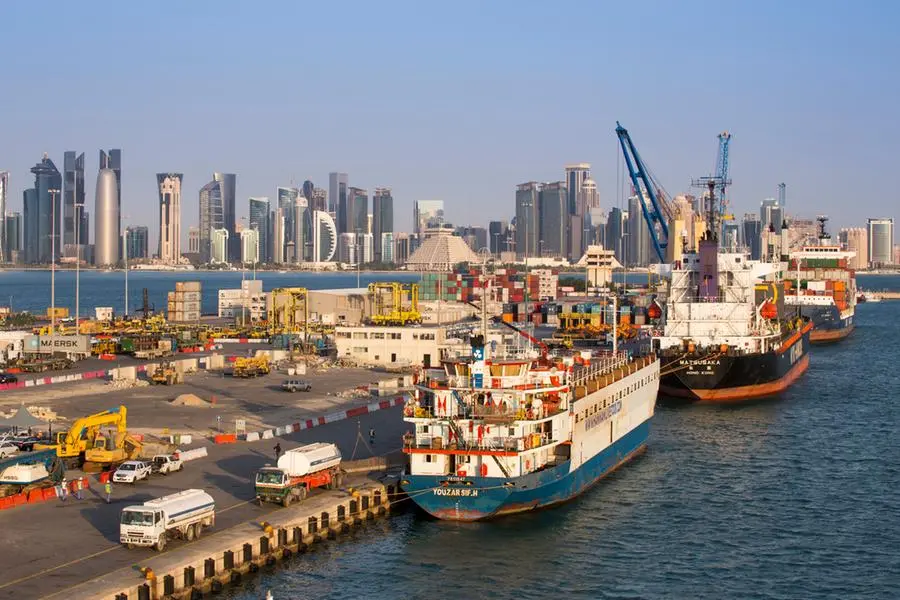
Cargo rerouting through the UAE’s east coast and new feeder services outside the Strait of Hormuz helped state-backed AD Ports Group report strong financial results in the second quarter and the first half of 2026.
New feeder services were introduced to Fujairah Terminals and Khor Fakkan Port on the Gulf of Oman, connecting to Red Sea ports, the upper Arabian Gulf region and India and Pakistan.
A total of 27 container vessels and five bulk vessels served the alternative shipping trade corridors despite the war, AD Ports said in a filing to the Abu Dhabi bourse on Friday.
New land and air bridges, along with additional warehousing and storage facilities, were established to support constant trade flow across the region.
As a result, revenue rose 47 percent to more than AED7 billion ($1.9 billion) from AED5 billion in the second quarter of 2026.
Maritime and shipping cluster revenue, accounting for more than half of the group’s revenue, jumped 62 percent. Contributions from economic cities and free zones and logistics clusters rose 132 percent and 30 percent, respectively.
Half-yearly revenue was up 36 percent.
Net profit climbed 88 percent and 64 percent in the second quarter and first half of 2026, respectively, supported by a high Ebitda margin – earnings before interest, taxes, depreciation, and amortization – a yardstick to measure the profit from core operations.
“We delivered a record financial performance in the second quarter despite operating through perhaps the most significant challenge in our 20-year history,” said group CEO Mohamed Juma Al Shamisi.
In June the company increased its stake in Dubai-based Global Feeder Shipping (GFS) to 81 percent by acquiring an additional 30 percent stake for AED1 billion.
AD Ports is 75 percent owned by ADQ, a unit of L’imad, an Abu Dhabi sovereign investment holding company. Its shares closed 2.5 percent higher at AED5.23 on Thursday, up nearly 10 percent in the year to date.
Related Articles
DP World profit climbs as capacity expansion drive...
13 Mar, 2026 09:44
Egypt offers customs relief for Gulf-bound cargo s...
13 Mar, 2026 10:51
Hormuz disruption drives 360% surge in ocean freig...
16 Mar, 2026 08:15
Bypassing Hormuz: The strategic export advantage o...
16 Mar, 2026 08:32
Aqaba Port maintains stable operations despite hig...
16 Mar, 2026 09:10
Saudi Arabia’s Mawani introduces new service to co...
17 Mar, 2026 08:05
MSC, Nigerdock sign long-term development deal for...
17 Mar, 2026 09:40
One in 10 Gulf ships cannot be reliably tracked, a...
19 Mar, 2026 07:55
GCC launches logistics fast track route...
19 Mar, 2026 10:45