Logistic Other

As Neom slows, new avenues emerge for Saudi logistics


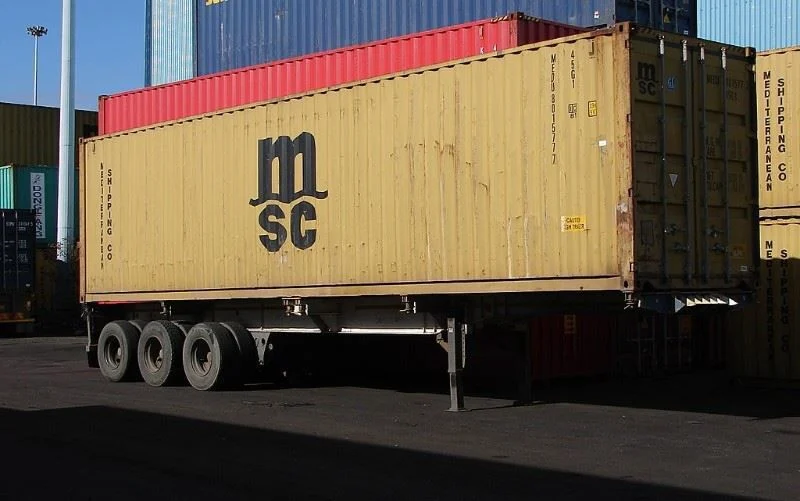
Saudi Arabia’s logistics sector is entering a period of significant transition.
While the kingdom continues to invest heavily in development, the US-Israel-Iran war, the closure of the Strait of Hormuz and strikes on Saudi oil infrastructure have accelerated a broader reassessment of priorities.
With the budget deficit nearing levels not seen since Covid-19, policymakers are taking a more disciplined approach to capital allocation. The emphasis is shifting towards projects with more assured returns on investment.
For logistics providers, the implications are profound. Some of Saudi Arabia’s most ambitious giga-projects are being pared back, while infrastructure investment is increasingly directed towards sectors such as transport, technology and public-private partnerships (PPPs).
In particular, the scaling back of Neom has had implications for global logistics provider DSV. In 2023, the Danish company announced a $10 billion joint venture with Neom to provide end-to-end supply chain management, along with investment in transport and logistics assets, infrastructure, and the movement of goods and materials needed for the project’s development.
Despite earlier assertions that demand would make Neom ”one of the largest customers in the world”, economic reality soon intervened. Less than two years later, DSV’s management acknowledged that the planned JV had yet to begin operations and that no capital had been committed.
Whatever the sector, major construction projects generate substantial demand for logistics
Major elements of Neom have been cancelled or deferred, including the Trojena dam, Trojena Ski Village and a proposed $1 billion tunnel beneath The Line.
For logistics providers, the story is not simply one of retrenchment. Capital is increasingly being redirected beyond traditional giga-projects.
Data centres are expected to attract a growing share of investment. As Saudi Arabia seeks to establish itself as a regional hub for AI and advanced computing, demand for digital infrastructure is rising rapidly.
One example is an agreement between Neom and DataVolt, under which the data centre developer and operator plans an initial $5 billion investment in AI-focused digital infrastructure. The project is expected to become operational by 2028.
While different from traditional giga-projects, such developments still generate substantial demand for logistics, including the transport of specialist equipment, power systems, cooling infrastructure and construction materials.
Meanwhile, Saudi Arabia’s National Centre for Privatisation and PPP aims to sign 220 PPP contracts across 18 sectors by 2030, mobilising more than $64 billion in private sector investment.
The new strategy will focus on “state management” of projects, rather than state funding. Private-sector know-how, discipline and expertise could also make projects more likely to be delivered on time and within budget.
One such project, first mooted in 2008, is the $7 billion Saudi Landbridge, which involves constructing 1,500 kilometres of new railway track between Riyadh and Jeddah. Construction tenders are expected in mid-2026, with project finalisation targeted for 2034.
Once completed, the project would create an east-west freight corridor linking the Gulf and Red Sea coasts, reducing reliance on maritime chokepoints. As an alternative to the Strait of Hormuz, this initiative and similar plans are likely to be accelerated.
Whatever the sector, major construction projects generate substantial demand for logistics. Beyond moving and storing materials within Saudi Arabia, large volumes of equipment, components and construction inputs must be imported, creating opportunities across shipping, ports, air cargo, warehousing and freight forwarding.
The Saudi government recognises that the high demand for logistics services could result in bottlenecks and is establishing 18 new logistics zones as part of a SAR 10 billion ($2.7 billion) initiative to improve supply chain capacity, with the number set to expand to 59 by 2030.
Physical infrastructure is only part of the equation. Equally important is the ability to manage and coordinate increasingly complex material flows. Construction has long struggled with inefficiency and waste, often because the right materials fail to arrive at the right place at the right time.
More than 30 per cent of project delays are directly linked to supply chain inefficiencies, including inaccurate technical documentation and last-mile bottlenecks, according to the Saudi Contractors Authority. Addressing these challenges requires close coordination across the entire supply chain, from procurement and shipment consolidation to on-site delivery and inventory management.
This is an area where sophisticated providers can play a valuable role, helping developers to reduce delays, improve productivity and extract greater value from investment.
While the Middle East conflict remains unresolved and Saudi Arabia reassesses elements of its Vision 2030 strategy, it would be wrong to take an overly negative view of the logistics market.
Even if the mix of investments shifts, demand for complex logistics and supply chain services is likely to remain a central feature of the kingdom’s next phase of development.
John Manners-Bell is CEO of Transport Intelligence Insight and founder of the Foundation for Future Supply Chain
Related Articles
Air freight rates soar as Middle East conflict blo...
13 Mar, 2026 08:35
War fallout hits global air cargo flows in week 10...
17 Mar, 2026 07:56
African LNG exporters pitch Europe gas supply in P...
17 Mar, 2026 08:48
Oman Air Cargo adds fuel and war risk surcharges s...
17 Mar, 2026 08:58
Aramex opens first regional healthcare hub at Duba...
17 Mar, 2026 09:16
New Container User Forum launched to improve effic...
17 Mar, 2026 09:24
AirCairo appoints Aeroprime as cargo GSSA for Indi...
19 Mar, 2026 11:00
Ministry proposes transport measures amid Middle E...
19 Mar, 2026 11:16
Renewables and Grid Upgrades Drive Djibouti’s Ener...
19 Mar, 2026 12:39