
Energy Other

Aramco Posted Huge Profits Amid Strait of Hormuz Closure


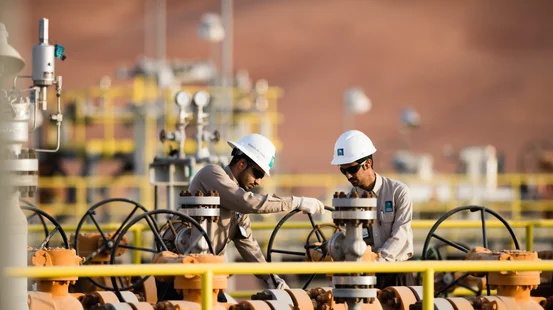
The closure of the Strait of Hormuz in late February 2026 removed a billion barrels of oil from global markets in two months.
Saudi Aramco, which produced 12.4 million barrels of oil equivalent per day in 2024, could no longer use the waterway that normally carries the majority of Middle Eastern oil exports. The company instead maximised throughput on its East-West Pipeline to maintain operations.
Despite supply chain disruption, Aramco posted net income of US$32.5bn for the quarter ending 31 March 2026. This represented a 25% increase compared with the same period in 2025.
The company achieved this by routing crude from eastern production facilities to the Red Sea port of Yanbu, bypassing the Strait entirely.
Pipeline capacity becomes bottleneck
The East-West Pipeline reached maximum capacity of seven million barrels per day during the quarter. Aramco produced 11.1 million barrels per day in the fourth quarter of 2025, which means the pipeline can handle around 63% of normal output at full utilisation.
Amin Nasser, President and Chief Executive Officer at Aramco, addressed the infrastructure constraint during the company's earnings call. "Our East-West Pipeline, which reached its maximum capacity of seven million barrels of oil per day, has proven itself to be a critical supply artery, helping to mitigate the impact of a global energy shock and providing relief to customers affected by shipping constraints in the Strait of Hormuz," he said.
The remaining production volume cannot currently be exported through eastern Gulf ports. Aramco operates refining capacity of 4.1 million barrels per day, making it the fourth largest refiner globally, but this does not absorb the surplus crude trapped by the shipping disruption.
Price volatility offsets volume loss
Brent crude traded above US$100 per barrel during the quarter, a 40% increase from pre-conflict levels in February 2026. The supply shortage created by the Strait closure allowed Aramco to sell reduced export volumes at premium prices.
According to executives from major oil companies, one billion barrels have been removed from global markets since the conflict began. Existing stockpiles have so far prevented immediate shortages, but traders and shipping firms are monitoring duration of the disruption.
Insurance costs for vessels entering the region increased after insurers attached high risk premiums to routes near the conflict zone.
These costs could filter through supply chains to end consumers if the disruption continues. Freight rates for alternative routes also increased as shipping capacity tightened, with vessels that previously transited the Strait now taking longer voyages around Africa or through other channels.
Amin noted that market normalisation depends on how quickly trade flows resume. "If trade flows resume immediately or today through the Strait of Hormuz, it will take a few months for the oil market to rebalance," he says.
"But if trade and shipping remain curtailed by more than a few weeks from today, we anticipate the supply disruption to persist and the market to normalise only in 2027."
Infrastructure underinvestment exposes fragility
The crisis highlighted vulnerabilities in global energy infrastructure that Aramco's leadership has emphasised in previous statements. Years of underinvestment left markets with limited redundancy when the Strait closed.
Aramco operates in more than 50 countries and employs 76,000 people from its headquarters in Dhahran, Saudi Arabia. The company's scale has not insulated it from chokepoint risk in critical shipping lanes.
The disruption exposed the concentration risk inherent in routing approximately 21 million barrels per day through a single waterway.
Alternative infrastructure, including pipelines across the Arabian Peninsula and export terminals on multiple coastlines, exists but cannot fully replace the Strait's capacity. This infrastructure gap affects not only crude oil but also refined products, liquefied natural gas and petrochemicals that move through the same shipping corridor.
Amin says the disruption demonstrates continued dependence on conventional oil supply. "Recent events have clearly demonstrated the vital contribution of oil and gas to energy security and the global economy, and are a stark reminder that reliable energy supply is critical," he says.
He adds that the company would continue to use domestic infrastructure and its international network to manage ongoing disruption: "Despite these headwinds, Aramco remains focused on its strategic priorities and is leveraging both its domestic infrastructure and its global network to navigate disruption."
With Brent crude above US$100 per barrel, no resolution to the conflict in sight and a billion barrels already removed from circulation, the next months could test the resilience of global hydrocarbon supply chains. The ability of producers to reroute cargo through alternative infrastructure may determine how long markets can function under these constraints.
Related Articles
South African rand falls to 3-month low as soaring...
09 Mar, 2026 08:35
Aramco’s 13% rally helps Saudi stocks post second ...
13 Mar, 2026 08:02
IEA Members Coordinate Historic Oil Stock Release ...
16 Mar, 2026 08:24
NamPower warns N$700 million in unpaid bills threa...
17 Mar, 2026 08:20
Middle East oil becomes most expensive in the worl...
17 Mar, 2026 08:43
Libya’s NOC launches Faragh-Brega pipeline project...
17 Mar, 2026 09:32
TotalEnergies’ global output down 15% amid Middle ...
17 Mar, 2026 09:39
Why Ethiopia’s Gas-to-Fertilizer Bet Matters for E...
19 Mar, 2026 12:58
Alake Advocates Regional Hubs to Power Africa’s Mi...
23 Mar, 2026 10:09