Metal Markets

UAE gold prices climb to AED525.75 as global rates hit $4,377; silver rises above $75


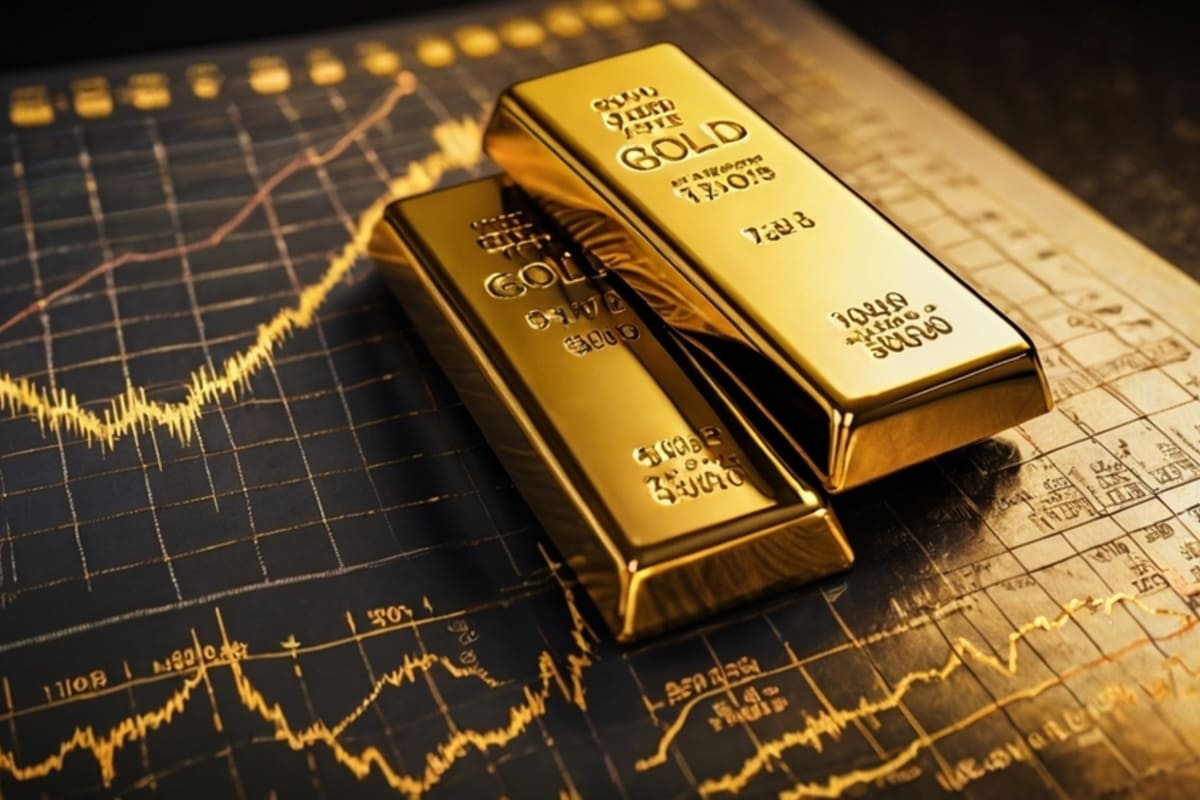
Spot gold advanced 1.16 percent on Tuesday, reaching $4,377.82 per ounce, while silver climbed around 5.38 percent to $75.03 per ounce.
In the UAE on Tuesday, gold rates experienced a slight increase. The rate for 24-carat gold rose by AED4.50, bringing it to AED525.75. Similarly, 22-carat and 21-carat gold prices both increased by AED4.00, reaching AED486.75 and AED466.75, respectively. Additionally, 18-carat gold saw a rise of AED3.75, bringing it to AED400.00.
On Monday, precious metals suffered declines amid profit-taking, with silver falling below $80 after peaking at an all-time high of $83.62.
According to Reuters, platinum prices rose more than 3 percent in spot transactions on Tuesday, reaching $2,175.10 per ounce.
Gold prices retreated sharply on Monday, extending a pullback from record highs as year-end profit-taking dominated trading and tentative progress in U.S.-Ukraine peace talks diminished safe-haven appeal. Spot gold traded around $4,340-$4,350 per ounce, down over 4 percent from recent peaks above $4,500.
Meanwhile, MCX futures in India hovered near INR135,940 per 10 grams for 24K gold, up slightly domestically by 0.69 percent but reflecting global weakness. Despite the correction, gold remains up more than 66-70 percent for the year, driven by central bank buying, ETF inflows, and Fed rate cut expectations.
Spot gold fell to $4,341.60 per troy ounce on December 29, marking a 4.19-4.22 percent daily drop from $4,531.51, its lowest since mid-December after hitting an all-time high of $4,549.98 earlier in the month. U.S. gold futures for February delivery mirrored the decline, slipping 1.9 percent to around $4,467, while broader precious metals like silver plunged 7.82 percent to $72.93 per ounce amid similar profit booking.
In India, domestic prices showed resilience with 24K gold at ₹INR135,940 per 10 grams (up INR930 or 0.69 percent from the prior close) and 22K at INR124,612, influenced by import duties, rupee fluctuations, and steady jeweler demand in cities like Delhi where 24K traded near INR13,924 per gram. MCX gold futures retreated 1.4 percent or nearly INR2,000 to INR137,900 earlier in the session but stabilized amid cautious buying.
The pullback marked gold’s sharpest daily loss since October, with prices hovering near a two-week low after a Friday record of $4,549.71, as investors squared positions ahead of year-end. Trading Economics data confirms the metal’s monthly gain of 2.6 percent but underscores the volatility, with intraday swings reflecting thin holiday liquidity.
Key drivers behind the dip
Profit-taking followed a blistering rally, with gold up 80 percent year-to-date in some metrics, fueled by a weaker dollar, anticipated U.S. monetary easing, and persistent geopolitical risks. President Donald Trump’s comments on December 29 that U.S.-Ukraine talks with President Volodymyr Zelenskiy were “getting a lot closer” to an agreement—despite unresolved Donbas issues—eased immediate safe-haven demand, though Middle East tensions and U.S.-Venezuela frictions provided some offset.
Markets await Federal Reserve December minutes for rate signals, with traders pricing two 25-basis-point cuts in 2026, reducing the opportunity cost for non-yielding gold. Central bank purchases remain a pillar, with reserves like China’s at 2,303 tonnes and India’s at 880 tonnes supporting structural demand, alongside ETF inflows amid inflation cooling to 2.7 percent in the U.S.
A hawkish Fed shift poses downside risks, but low inventories and supply deficits in related metals like platinum bolster the sector. In India, steady enquiries from jewelers tempered declines, though big-ticket buys stayed subdued pending global clarity.
Stellar 2025 performance in review
Gold’s 2025 surge—its strongest since 1979 at over 66-70 percent—stemmed from multiple tailwinds: Fed dovishness slashing rates to 3.75 percent, geopolitical flashpoints in Ukraine, Middle East, and Venezuela, plus aggressive central bank accumulation. Half of global gold use goes to jewelry (led by India and China), 40 percent to investment, and 10 percent to industry, amplifying demand amid economic uncertainty.
ETF holdings rose sharply, while major producers like China, Australia, and Russia faced consumption pressures from top buyers including the U.S., Türkiye, and Saudi Arabia. Digital gold and regulatory shifts added momentum, though silver’s higher volatility—up 152 percent yearly—highlighted industrial drivers like solar and EVs.
The rally broke $4,000 in October on Trump tariff threats against China, with non-yielding assets thriving as U.S. debt concerns mounted. Year-to-date, gold outperformed stocks and bonds, cementing its role as a hedge against fiat erosion.
Analyst forecasts for 2026
Bullish outlooks persist despite the correction. Goldman Sachs predicts $4,000 by mid-2026 on central bank and ETF demand plus Fed cuts, while Bank of America hiked its target to $5,000 (average $4,400-$4,538), citing investment surges akin to 2025. Trading Economics models see quarterly averages at $4,535 and $4,814 within 12 months.
LKP Securities’ Jateen Trivedi eyes MCX volatility in INR135,000-INR142,000 short-term, with supply constraints offsetting any demand softness. BofA notes potential for $60/oz silver upside from deficits, though a hawkish Fed remains the chief risk.
Longer-term, structural factors like green energy demand and de-dollarization trends favor upside, with analysts compiling 2026 averages above $4,400 across firms. Corrections like this week’s are viewed as healthy within a multi-year bull market.
Related Articles

Saudi Arabia champions global partnerships to powe...
21 Oct, 2025 06:51
Can Turkey Become a Rare Earth Element Power?...
23 Oct, 2025 13:24
Orion Minerals Set to Develop Secure, Responsible,...
23 Oct, 2025 14:12
Investing in Platinum Stocks...
24 Oct, 2025 06:56
Copper And Aluminum Prices Climb As Supply Worries...
24 Oct, 2025 07:09
Dubai 24-carat gold prices dip AED3.75 as global r...
24 Oct, 2025 12:06
Bauxite sales up but tariffs on Chinese metal ship...
27 Oct, 2025 13:15
Angola bids for majority stake in De Beers, source...
28 Oct, 2025 07:02
Dubai 24-carat gold price today drops AED479; glob...
28 Oct, 2025 08:15