Sea

Türkiye hosts World LNG Summit


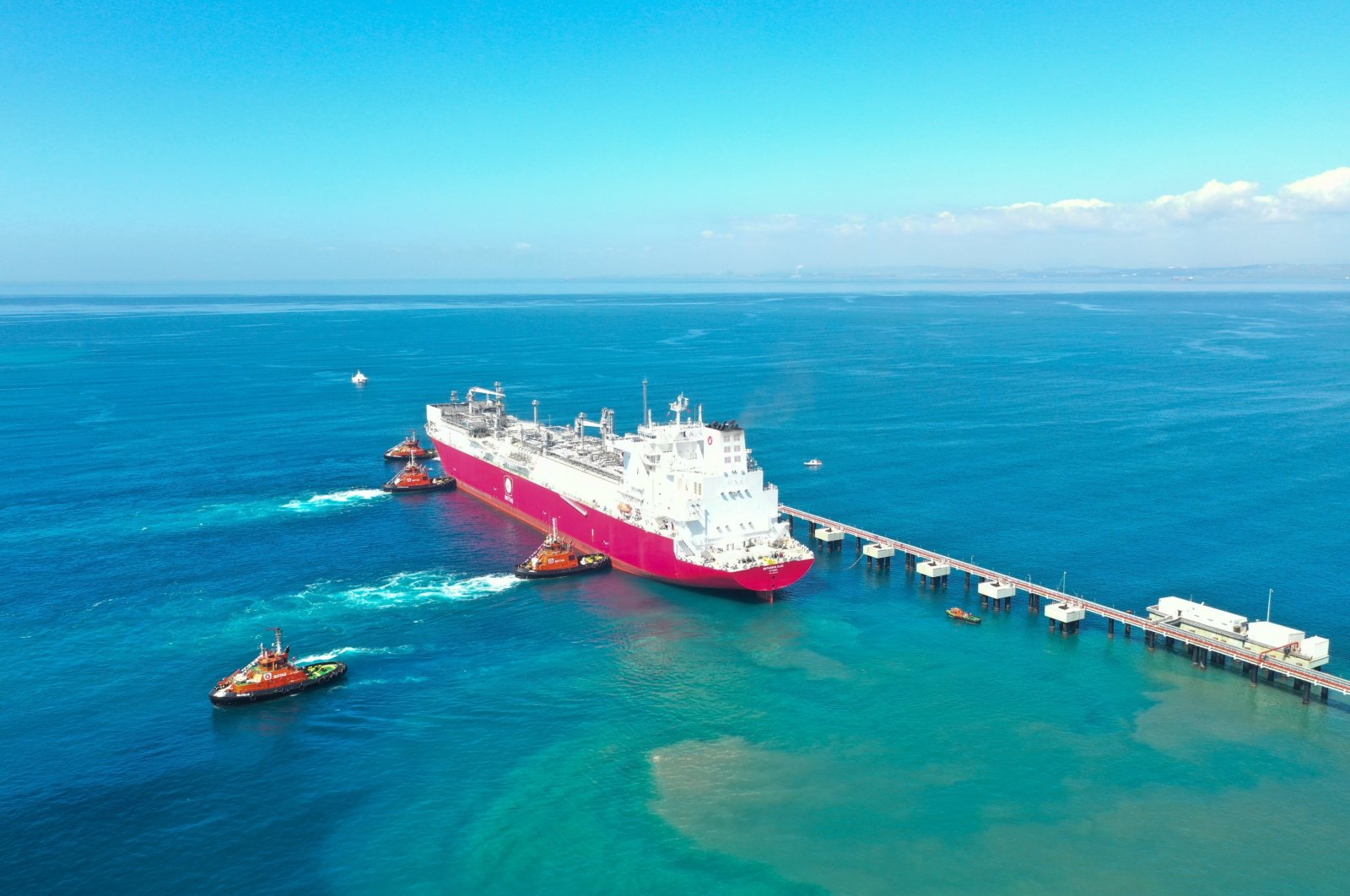
As the global energy order is being reshaped, liquefied natural gas (LNG) emerges as both an economic and geopolitical instrument of power. In a period when the energy supply chain has become fragile and supply security is being redefined, LNG has taken center stage in national strategies and international diplomatic relations. In a rapidly changing world order, countries are reconstructing not only their energy supply but also energy independence and strategic spheres of influence.
The rise of new supply centers is one of the most striking aspects of this transformation. Countries such as the U.S., Qatar and Australia have achieved the status of global superpowers in LNG exports, and this competition has led to a reshaping of energy prices and trade routes. The U.S.’ shale gas revolution, which enabled flexible export capacity, has played a decisive role in reducing Europe’s dependence on Russian gas. Qatar, on the other hand, aims to consolidate its leadership in the global LNG market through the expansion of the North Field projects through the 2030s.
On the demand side, the Asian and European axes play the leading role. Countries such as China, India, Japan and South Korea regard LNG as a strategic resource both for energy security and for achieving carbon reduction targets. In Europe, following the Russia-Ukraine war, LNG has become an indispensable element of energy security. The rapid investment in FSRUs by countries such as Germany, Poland and the Netherlands demonstrates that LNG is positioned not as a temporary but as a permanent energy solution.
Türkiye in the LNG framework
Within this global transformation, Türkiye is also assuming an increasingly strategic role in the LNG market. In addition to the Marmara Ereğlisi and Aliağa LNG terminals, facilities such as the Etki Port Floating Storage and Regasification Unit (FSRU) and Dörtyol FSRU have elevated Türkiye’s LNG storage and regasification capacity to a remarkable level in the region. These investments bring Türkiye closer to its goal of becoming not just an importer but also a regional gas trading hub. Türkiye’s long-term LNG supply agreements serve as a strong insurance mechanism from the perspective of supply security, while also enhancing flexibility in spot markets. Furthermore, LNG infrastructure integrated with pipeline connections such as the Trans-Anatolian Natural Gas Pipeline (TANAP) and Gas Interconnector Greece-Bulgaria (IGB) strengthens Türkiye’s role as an energy bridge between Europe and the Middle East.
The 25th World LNG Summit and Awards, hosted by state-owned Turkish Petroleum Pipeline Corporation (BOTAŞ), will be held in Istanbul this year. The summit serves as a gathering place for the most senior energy leaders from the global value chain to define the role of LNG and natural gas in fulfilling energy security, economic stability and decarbonization commitments. The event acts as a catalyst to explore the impact of geopolitics and the evolving global LNG market on energy security priorities and a decarbonized energy system. Held in Istanbul, at the crossroads of Europe and Asia, the World LNG Summit & Awards 2025 will take place in a city that forms a natural bridge between East and West. Istanbul’s strategic location at the intersection of Europe and Asia connects key energy markets, making it an ideal center for global LNG discussions. The summit reflects the region’s increasing influence in the global energy sector and fosters dialogue, partnerships and solutions regarding the future of LNG.
While Türkiye hosts the World LNG Summit and Awards for the first time, it is progressing both toward becoming a logistics hub for LNG trade and contributing to Europe’s supply security through energy diplomacy. The summit brings together top representatives of the global energy value chain to discuss LNG’s role in energy security, economic stability and carbon reduction objectives. The event hosts nearly 1,000 participants from 500 companies across 50 countries, 90% of whom are C-level executives. With 120 speakers, the summit gathers the world’s leading energy leaders. Speakers include CEOs and executives from major energy companies such as Shell, Cheniere, TotalEnergies, ExxonMobil, SOCAR Türkiye, BOTAŞ, Bechtel Energy, GAIL, Tokyo Gas, NLNG, PetroChina and Mercuria. From Türkiye, BOTAŞ Chairman Abdulvahit Fidan and SOCAR Türkiye CEO Elçin Ibadov are also among the speakers.
The summit will be held on Dec. 2-5, 2025, at the Istanbul Shangri-La Bosphorus. The program will begin with Masterclass sessions on Dec. 2 and continue with the World LNG Awards evening on Dec. 3. One of this year’s themes is "Leveraging the New Geopolitics.” Throughout the summit, topics such as energy security, supply-demand balance, transformation in European LNG markets, the potential of new fuels like Bio-LNG and e-LNG, maritime transport, investment financing and carbon capture technologies will be discussed.
Anatol Feygin, executive vice president and chief commercial officer of Cheniere Energy, emphasizes the importance of the event for the global LNG community: "The annual World LNG Summit and Awards offer is a valuable gathering point for our sector industry. It provides a platform to reconnect with old friends, establish new partnerships and work toward growth and abundance in the energy field. As the U.S. aims to meet the rising demand for reliable natural gas and LNG, the upcoming event in Istanbul will once again serve as a springboard launchpad for the international collaborations that will deliver reliable, flexible and affordable energy for all.”
BOTAŞ Chairperson Abdulvahit Fidan highlights Türkiye’s leading role in the energy transition: "We are proud to host the 25th World LNG Summit and Awards in Istanbul, Türkiye. LNG continues to enhance global energy access, strengthen energy security and reduce emissions. Türkiye stands at the forefront of this transformation. By securing long-term supply agreements and expanding critical infrastructure, including state-of-the-art terminals and interconnectors, we diversify our energy sources and reinforce our position as a regional gas hub.”
The summit reinforces Türkiye’s vision as an energy hub and its strategic role in global LNG markets while also paving the way for new collaborations around energy security and sustainability. This year, Istanbul will serve as the global center for dialogues and decisions shaping the future of LNG. LNG has become more than just an energy source. It is a strategic element in the reconstruction of the global order. The emergence of new supply centers, growing demand blocks and the rise of regional energy hubs such as Türkiye will simultaneously shape energy markets and international relations in the coming period. Energy is the most powerful tool of diplomacy in this era and LNG lies at the heart of this new geopolitics.
Related Articles
Transport & Logistics in Action – Connecting the M...
22 Oct, 2025 08:40
Appeal made for cargo harmonization across the SSA...
22 Oct, 2025 08:46
4 deals signed between Turkiye, Kuwait...
22 Oct, 2025 13:31
Beit Logistics invests $10.50mln to develop Safaga...
23 Oct, 2025 12:18
Khalifa Port rises to 39th position in Lloyd’s Lis...
23 Oct, 2025 12:24
ASCELA awarded Africa Logistics Zone Development P...
23 Oct, 2025 12:49
FG begins procurement for port modernization proje...
23 Oct, 2025 12:56
NZF delay extends unlevel playing field for EU por...
27 Oct, 2025 09:30
DP World Launches $85 Million Logistics Hub in Egy...
27 Oct, 2025 10:48