Energy Other

Singapore’s Destiny Energy to Invest $210 Million in Green Ammonia Plant


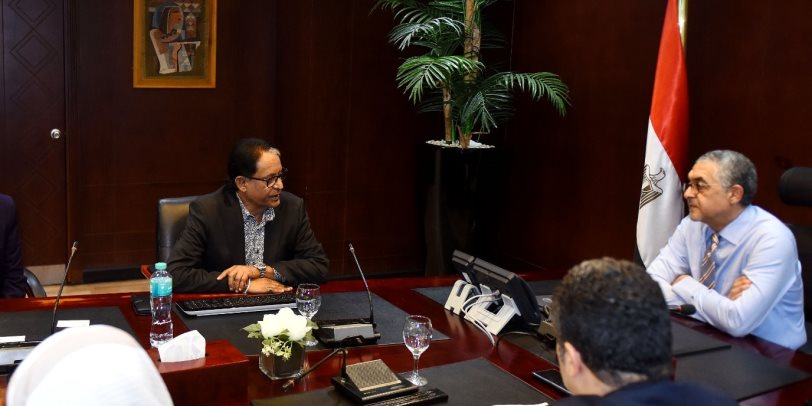
Destiny Energy, a Singapore-based developer of sustainable energy projects, plans to build a green-ammonia plant in Egypt for an investment of $210 million, the Egyptian government said in a 12 November statement.
The company’s CEO, Vijay Sirse, announced the project during a meeting with Hossam Heiba, the head of the General Authority for Investment and Free Zones (GAFI).
Sirse said the plant, which will operate in the Suez Canal Economic Zone (SCZone), will produce 300 tonnes of green ammonia and 53 tonnes of green hydrogen per day, amounting to more than 100,000 tonnes annually. He added that Destiny Energy will rely on renewable-energy capacity provided directly by the company or through partnerships with firms operating in the SCZone.
The project aims to supply local factories with green ammonia and hydrogen to help Egypt meet the European Union’s Carbon Border Adjustment Mechanism (CBAM) requirements.
Heiba reaffirmed the government’s support for clean-energy projects through incentives that cover up to 55% of investment costs via tax deductions over seven years. He also highlighted financing opportunities through Egypt’s Nexus of Water, Food and Energy (NWFE) platform, which targets the development of 10 gigawatts of renewable capacity by 2028 and supports industrial decarbonisation.
Heiba said the plant will “reduce the carbon footprint of exported products and help Egypt comply with EU rules”, improving access to Europe, Egypt’s largest trading partner.
The EU implemented the CBAM on 1 October 2023 with a three-year transition period during which companies must report emissions without paying fees. Payments will start in 2026.
The mechanism—commonly referred to as Europe’s carbon tax—will initially cover seven sectors: cement, steel, iron, aluminium, fertilisers, electricity and hydrogen. It seeks to support the EU’s goal of cutting greenhouse-gas emissions by 55% by 2030 from 1990 levels. It also aims to create fairer competition by assigning a carbon price to high-emission imports.
Related Articles
Kuwaiti oilfield comes onstream officially after 1...
22 Sep, 2025 12:56
African Energy Week (AEW) 2025: Unlocking the Pote...
22 Sep, 2025 13:22
South Africa warns illegal car imports threaten ne...
23 Sep, 2025 06:31
South Africa Confronts EU Carbon Border Mechanism...
23 Sep, 2025 12:33
South Africa, China Deepen Investment Ties in Key ...
24 Sep, 2025 07:35
Raysut Cement’s Expansion into Libya and North Afr...
24 Sep, 2025 07:40
Nextchem opens regional office in Abu Dhabi...
24 Sep, 2025 08:10
Ghanaian students win top honours in IAEA’s Female...
24 Sep, 2025 09:32
Key Sectors Linking Mauritania and Gambia...
24 Sep, 2025 09:40