Generation

Sibanye-Stillwater secures more renewable energy in offtake agreement with NOA


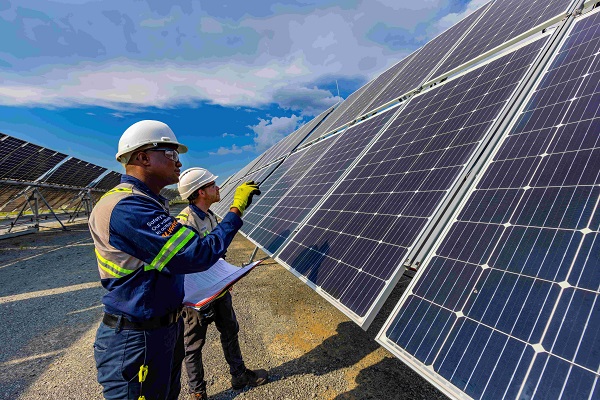
This additional renewable-energy supply to the Johannesburg Stock Exchange-listed Sibanye-Stillwater from NOA, headed by CEO Karel Cornelissen, is expected to reduce greenhouse-gas (GHG) emissions by 433 080 tCO₂e a year from 2028 onwards.
Sibanye-Stillwater CEO Dr Richard Stewart highlighted the renewable energy supply agreement with NOA as “another critical step towards reducing our carbon emissions and achieving our goal of carbon neutrality by 2040”.
“As we further entrench our position as the leading renewable-energy user in the South African mining sector, we continue to demonstrate our commitment to creating shared value for all our stakeholders through commercially attractive, sustainable energy security, while supplying our customers with responsibly produced products,” Stewart added.
By enabling open-market trading, NOA, a renewable-energy generator, aggregator and trader, is helping to transform South Africa’s energy market.
In terms of the latest agreement, Sibanye-Stillwater’s South Africa operations will be supplied from NOA’s portfolio of aggregated solar and wind generation facilities under a flexible ten-year agreement, supplemented by short-term supply on a take-and-pay basis. The additional supply will increase Sibanye-Stillwater's renewable-energy portfolio to 765 MW.
The electricity will be delivered through a national wheeling framework using the Eskom grid.
The transaction reflects the strength of NOA’s growing fleet of renewable energy generation assets and underpins NOA’s execution capability in structuring long-term renewable-energy solutions for energy-intensive customers.
Cornelissen described the transaction as reinforcing the accelerating shift toward large-scale wheeled renewable energy in the mining sector.
“We have scaled to deliver 1.5 TWh per annum of renewable energy to some of South Africa’s leading mining companies,” Cornelissen explained in a release to Mining Weekly.
The agreement is structured to meet Sibanye-Stillwater's additional energy requirements on flexible terms, which mitigate potential variations in the group’s future energy demand.
“Our role is to absorb complexity while delivering bespoke renewable-energy solutions aligned to real operational objectives. This agreement demonstrates what can be achieved when scale, execution capability and long-term strategy converge,” Cornelissen explained.
Sibanye-Stillwater has secured a 765 MW renewable-energy portfolio through off-balance-sheet financing with its various projects financed by independent power producers and other third parties. By 2028, 56% of total energy demand from the South Africa operations of Sibanye-Stillwater will be met by renewable-energy supply.
The annual renewable energy cost is forecast to average 20% to 30% lower than forecast Eskom wholesale annual tariffs, translating into a saving of more than R1-billion a year from 2028.
Through the renewable-energy portfolio, GHG emissions of 2.63-million tCO₂e a year are expected to be avoided from 2028, 41% lower compared with 2024 emissions. The conversion factor used is 1.08 tCO2e per megawatt hour.
Sibanye-Stillwater’s current portfolio of renewable-energy projects comprises 89 MW of wind energy from Castle wind farm, 75 MW of solar power from Springbok solar PV, 103 MW of wind energy from Witberg wind farm, 140 MW from Umsinde wind farm, and 220 MW of solar and wind energy from the portfolio of Etana Energy.
NOA develops, constructs and operates large-scale wind, solar and battery energy storage facilities and provides financed, grid-wheeled solutions.
Related Articles

Parliament Committee says no need to review three ...
10 Sep, 2024 07:57
Zimbabwe’s Biggest Miners Seek $182 Million for So...
12 Sep, 2024 06:57
GreenGo Energy Expands into Namibia with Strategic...
12 Sep, 2024 07:51
OPEC Fund approves $1.2 billion for development pr...
13 Sep, 2024 08:59
Floating solar starts to gather pace in Africa, as...
13 Sep, 2024 13:18
Prominent South African energy company files for l...
16 Sep, 2024 11:00
Libyan Export Decline and Fed Speculation Propel O...
17 Sep, 2024 08:00
South Sudan says it is ready to restart pumping oi...
17 Sep, 2024 13:23
Interest grows in Africa’s oil and gas hotspot...
18 Sep, 2024 10:42