Energy Markets

Oil prices surge to four-month high to $66.91 as winter storm knocks out 15 percent of U.S. production



Crude oil markets entered Wednesday’s trading session with a renewed sense of urgency as supply-side shocks and heightening geopolitical risks collided to push prices toward four-month highs. Investors are grappling with the dual impact of a massive production outage in the United States and a volatile situation in the Middle East, both of which have injected a significant risk premium into energy futures.
Benchmarks rally on supply fears
As of early Wednesday, Brent crude futures hovered around $66.91 per barrel, a slight increase of 0.48 percent, while U.S. West Texas Intermediate (WTI) crude climbed 0.64 percent to reach $62.79 per barrel. These gains follow a dramatic 3 percent surge on Tuesday, the sharpest daily increase in months.
The price action reflects a market that has suddenly shifted its focus from long-term concerns about an oversupplied global market in 2026 to the immediate physical shortage of barrels.
The “deep freeze” disrupts U.S. output
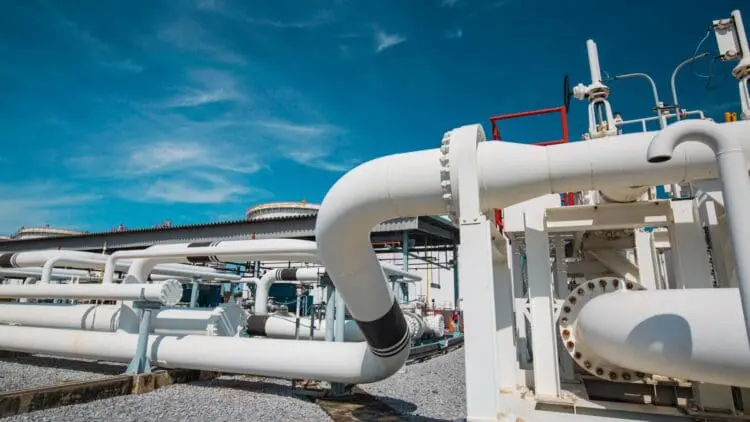
The primary catalyst for this week’s rally is a severe winter storm that has paralyzed the American energy heartland. Over the weekend, extreme cold and icy conditions across Texas, Oklahoma, and Louisiana knocked out an estimated 2 million barrels per day (bpd) of production—roughly 15 percent of total U.S. national output.
Beyond the wellheads, the storm has crippled critical infrastructure. According to ship-tracking service Vortexa, crude and liquefied natural gas (LNG) exports from U.S. Gulf Coast ports tumbled to zero on Sunday as freezing temperatures impacted loading facilities. While some producers have begun the process of “de-icing,” experts warn that restarts will be slow. The lingering wet and soggy conditions in the South are expected to delay a return to full capacity until at least early February.
Rising global geopolitical risks
Compounding the supply worries are rising tensions in the Middle East. Market participants are closely monitoring the arrival of a U.S. aircraft carrier and supporting warships in the region. This deployment, ordered by President Trump, has signaled a more muscular posture toward Tehran, raising fears of potential military friction or a tighter blockade on Iranian oil exports.
Geopolitical risk premiums are being supported by several factors, including supply issues in Kazakhstan and a deadlock in Venezuela. A fire and power outage at the Tengiz field, which is Kazakhstan’s largest, have significantly reduced output, and restorations are not expected to reach even 50 percent capacity until February 7. Meanwhile, continued U.S. maritime blockades on sanctioned tankers have kept Venezuelan exports at historic lows, further thinning the global supply of heavy crude.
API data surprises
In a development that added further fuel to the rally, the American Petroleum Institute (API) reported a surprise drawdown in U.S. crude inventories. While analysts had braced for a build of 1.45 million barrels, the data showed a drop of 250,000 barrels. This unexpected tightening of stocks—even before the full impact of the winter storm was reflected—suggests that domestic demand remains more resilient than previously thought.
Focus shifts to 2026 surpluses and OPEC+ strategy
Despite the current “bull run,” many analysts caution that the relief for producers may be temporary. Both the International Energy Agency (IEA) and the U.S. Energy Information Administration (EIA) have maintained their forecasts for a global oil surplus throughout 2026.
The IEA recently upgraded its demand growth forecast for 2026 to 930,000 bpd, citing a recovery in the petrochemical sector. However, this is still dwarfed by a projected supply increase of 2.5 million bpd from non-OPEC+ producers like Brazil, Guyana, and Argentina.
For now, all eyes are on the upcoming OPEC+ meeting on February 1. The coalition is widely expected to maintain its current policy of pausing production increases, opting to wait for the winter volatility to subside before reintroducing more barrels to the market.
Related Articles

Renewable Energy Storage Market 2025 Forecast - La...
21 Oct, 2025 07:12
Solar power mistake in South Africa costs homeowne...
21 Oct, 2025 07:54
An Investor’s Guide to Africa...
21 Oct, 2025 09:47
Doha Strike Shakes Global Energy Assumptions...
22 Oct, 2025 13:01
GCC and Russia Deepening ties in a multipolar Midd...
23 Oct, 2025 11:59
Tesla prepares first steps into Africa with Morocc...
23 Oct, 2025 13:29
Off-Grid Solar Energy Market to grow at 17.42 GW b...
23 Oct, 2025 13:39
Petroleum Institute Urges Early Take Off of Africa...
23 Oct, 2025 13:45
Algeria inks $5.4 billion energy pact with Saudi M...
23 Oct, 2025 14:03