Energy Markets

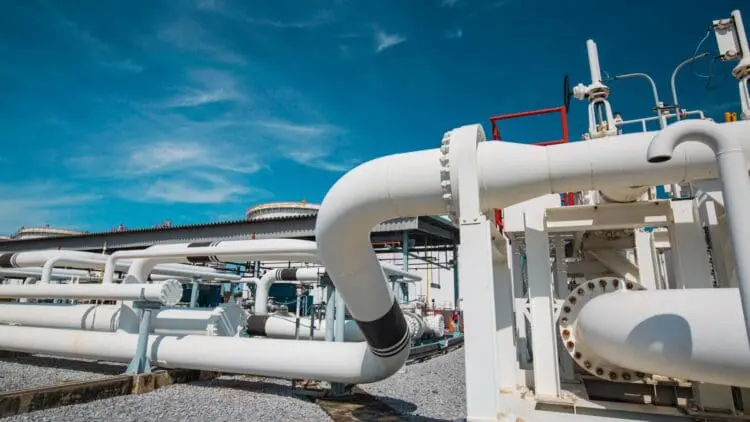
Oil prices rise to $72.15 after hitting six-month high on U.S.-Iran tensions



Oil prices climbed on Friday and were on track for their first weekly advance in three weeks, as concerns mounted over a potential conflict between the United States and Iran after Washington warned Tehran of consequences if it fails to reach a nuclear agreement within days.
As of 5:40 GMT, Brent crude futures rose 49 cents, or 0.68 percent, to $72.15 a barrel, while U.S. West Texas Intermediate crude gained 49 cents, or 0.74 percent, to $66.89.
“Brent crude’s move back above $70 a barrel signals a market strengthening an already notable geopolitical risk premium rather than repricing fundamentals,” said Ole Hansen, Head of Commodity Strategy, Saxo Bank.
U.S.-Iran tensions escalate
Oil prices settled at a six-month high on Thursday after U.S. President Donald Trump warned that “really bad things” would occur if Iran failed to reach an agreement over its nuclear program, which Tehran insists is peaceful but Washington views as having military dimensions. Trump said Iran had 10 to 15 days to comply.
“Reports that any potential U.S. military operation could evolve into a weeks-long campaign, combined with Israeli pressure for an outcome targeting regime change in Tehran, have shifted trader focus from a headline shock to the risk of sustained disruption,” added Hansen.
Meanwhile, Iran is reportedly preparing for joint naval drills with Russia, just days after it temporarily closed the Strait of Hormuz for military exercises.
Iran sits across from the oil-rich Arabian Peninsula along the Strait of Hormuz, a critical chokepoint through which roughly 20 percent of global oil supplies transit. Any escalation in the region risks disrupting flows to international markets and driving prices higher.
“Roughly 19–20 million barrels per day of crude and refined products pass through the narrow waterway — close to one-fifth of global liquids consumption. The bulk originates from Gulf producers: Saudi Arabia exports roughly 6 mb/d through the strait, Iraq about 3.5–4 mb/d, the UAE and Kuwait each around 2–3 mb/d, Iran about 2–2.5 mb/d, and Qatar ships condensates and LNG volumes. Most of these flows are destined for Asia,” he added.
U.S. crude inventories fall by 9 million barrels
Additional support for oil prices came from reports of declining stockpiles and constrained exports among major oil-producing and exporting nations. U.S. crude inventories fell by 9 million barrels last week, according to data from the Energy Information Administration released on Thursday, as refinery utilization and exports increased.
However, concerns over the outlook for U.S. interest rates in the world’s largest oil-consuming economy tempered gains, with tighter monetary conditions potentially weighing on fuel demand.
“Despite geopolitical tensions, oil prices have not collapsed under the weight of a much-talked-about global surplus. Goldman Sachs highlights a key disconnect: much of the surplus has accumulated in sanctioned crude floating at sea rather than in OECD storage hubs that influence pricing,” Hansen added.
He explained that crude on water from Russia, Iran, and Venezuela has, according to their estimates, climbed to roughly 375 million barrels, accounting for a significant share of visible global inventory growth. These barrels do not ease prompt market tightness in pricing centers, helping explain why oil prices remain supported even amid headline oversupply.
“In other words, the market can appear oversupplied on paper while still paying up for immediately deliverable barrels,” he added.
Related Articles

Renewable Energy Storage Market 2025 Forecast - La...
21 Oct, 2025 07:12
Solar power mistake in South Africa costs homeowne...
21 Oct, 2025 07:54
An Investor’s Guide to Africa...
21 Oct, 2025 09:47
Doha Strike Shakes Global Energy Assumptions...
22 Oct, 2025 13:01
GCC and Russia Deepening ties in a multipolar Midd...
23 Oct, 2025 11:59
Tesla prepares first steps into Africa with Morocc...
23 Oct, 2025 13:29
Off-Grid Solar Energy Market to grow at 17.42 GW b...
23 Oct, 2025 13:39
Petroleum Institute Urges Early Take Off of Africa...
23 Oct, 2025 13:45
Algeria inks $5.4 billion energy pact with Saudi M...
23 Oct, 2025 14:03