Energy Markets

Middle East and Africa Generator Market Reaching US$4.7 Billion by 2031


Middle East & Africa Generator Market
The generator market in the Middle East and Africa is witnessing a steady rise as the region undergoes rapid economic transformation. Power generation is one of the most crucial sectors supporting industrialization, construction, and urbanization across the region. With the persistent issue of unreliable grid supply and frequent power disruptions, generators have become essential equipment across residential, commercial, and industrial applications. These machines provide reliable backup power and serve as a primary source of electricity in remote and off-grid locations where grid infrastructure is underdeveloped or unavailable.
Get a Sample PDF Brochure of the Report (Use Corporate Email ID for a Quick Response): https://www.persistencemarketresearch.com/samples/34507
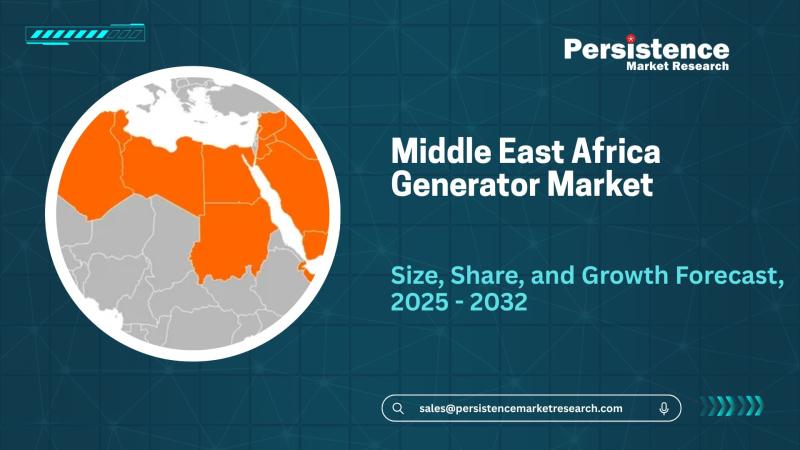
According to Persistence Market Research, the Middle East and Africa generator market is estimated to value at US$ 4.7 Bn by the end of 2031, up from US$ 3.4 Bn estimated in 2024. Generator sales in MEA are expected to surge at a CAGR of 4.6% in the forthcoming years from 2024 to 2031.
This consistent growth highlights the expanding reliance on generator systems as an integral part of the region's energy infrastructure. Despite the global transition toward renewable energy, conventional generator systems continue to serve as an indispensable component in bridging the energy gap across emerging economies within the Middle East and Africa.
Key Market Drivers
The Middle East and Africa generator market is influenced by multiple demand drivers that continue to strengthen the industry outlook.
One of the leading growth drivers is the unreliability of the electricity grid in several parts of the region. Power outages, load shedding, and frequent blackouts are common, especially in parts of Africa where power infrastructure remains underdeveloped. Generators bridge this gap by ensuring a stable power supply for industries, commercial establishments, and households.
The surge in infrastructure and construction projects across the Gulf Cooperation Council countries and parts of Africa also significantly contributes to generator demand. Ongoing megaprojects such as smart cities, airports, industrial zones, and housing developments require temporary and backup power solutions throughout their construction phases. Once operational, these facilities also depend on generators to maintain energy security during grid interruptions.
Market Segmentation
By Fuel Type
Diesel generators dominate the market due to their efficiency, reliability, and wide availability of fuel. They are extensively used for both prime and standby applications, especially in regions with limited access to natural gas infrastructure. However, environmental concerns and rising fuel costs are encouraging the adoption of natural gas and hybrid generators. Gas generators are gradually gaining attention in urban areas and industrial applications because they offer lower emissions and improved operating efficiency.
By Power Rating
The generator market in the Middle East and Africa is categorized by power rating into low, medium, and high-capacity systems. Low-capacity generators, typically under 100 kVA, are primarily used in residential and small commercial establishments. Medium-capacity units ranging from 100 to 350 kVA cater to larger commercial buildings, small industries, and institutional facilities. High-capacity generators above 375 kVA are employed in large-scale industrial operations, mining, construction projects, and data centers. The demand for medium and high-capacity generators is expected to grow rapidly in the coming years due to rising industrialization and the establishment of large commercial facilities.
By Application
Generators in the region serve three primary applications: standby, prime, and continuous power. The standby application dominates due to frequent power interruptions across several countries. Prime and continuous power generators are extensively used in remote areas and industries that require uninterrupted operations. Continuous generator systems are critical in mining, oil extraction, and rural industrial setups where no grid connection exists.
By End User
Industrial users form the largest customer base for generator manufacturers in the region. The industrial sector's dependency on consistent power makes it a significant revenue generator for market players. The commercial sector, including hotels, hospitals, data centers, and educational institutions, represents the second-largest share. Residential usage is also growing steadily, particularly in African countries where urban electrification is still developing.
Dive deeper into the market data: https://www.persistencemarketresearch.com/market-research/middle-east-africa-generator-market.asp
Regional Insights
Gulf Cooperation Council (GCC) Countries
The GCC region, encompassing Saudi Arabia, the United Arab Emirates, Qatar, Kuwait, and Oman, leads the Middle East generator market. Strong economic diversification efforts and large-scale infrastructure projects are key growth enablers. As nations pursue ambitious visions such as Saudi Arabia's Vision 2030 and the UAE's development goals, the demand for reliable backup and standby power continues to expand. Industrial complexes, hospitality projects, and logistics hubs heavily depend on generator installations to ensure operational continuity.
Africa
The African market represents a dynamic landscape with diverse challenges and opportunities. South Africa remains one of the largest markets due to frequent load shedding and the need for backup power in both industrial and residential applications. Nigeria also stands out as a high-potential market, driven by a large population, growing industrial base, and persistent electricity shortages. Other emerging markets, including Kenya, Egypt, and Ghana, are witnessing increased demand for generators in construction, telecommunications, and healthcare sectors.
The African continent's power infrastructure remains fragmented, with many regions lacking consistent grid access. Consequently, generators continue to serve as a primary power source for critical operations and essential services.
Key Trends Shaping the Market
Several trends are shaping the future of the Middle East and Africa generator market. One of the most significant is the increasing adoption of hybrid and gas-based generator systems. With environmental regulations tightening, businesses are shifting toward cleaner and more efficient energy solutions. Hybrid systems that integrate generators with renewable sources such as solar power are gaining popularity for reducing fuel consumption and operational costs.
Digitalization is another major trend transforming the industry. Modern generator systems now feature remote monitoring, predictive maintenance, and smart control technologies. These innovations improve performance, reduce downtime, and optimize maintenance schedules, offering long-term cost savings for users.
Rental and leasing services are also growing rapidly, particularly in Africa, where many businesses prefer flexible and cost-effective access to generator power rather than outright ownership. The pay-as-you-go model allows small enterprises and construction projects to access high-quality generators without heavy capital expenditure.
Additionally, the growing expansion of data centers across the region is creating new demand for reliable backup power systems. With global cloud service providers investing in local data hubs, the need for uninterrupted power supply continues to strengthen.
Challenges and Restraints
Despite positive growth prospects, the generator market faces several challenges. Environmental regulations concerning carbon emissions are becoming stricter, particularly for diesel-based systems. This trend compels manufacturers to invest in cleaner technologies, which increases production costs.
Fuel price volatility remains another concern, especially in regions where diesel is heavily imported. High fuel costs can impact the operating expenses of generator users, especially those relying on generators for continuous power supply.
Competition from renewable energy and battery storage solutions is gradually emerging as a potential threat. With the falling cost of solar power and energy storage technologies, some businesses are exploring alternatives to conventional generator systems. However, due to the region's inconsistent grid infrastructure, generators will likely continue to play a central role in ensuring power reliability for the foreseeable future.
Request for Customization of the Research Report: https://www.persistencemarketresearch.com/request-customization/34507
Competitive Landscape
The Middle East and Africa generator market comprises both global giants and regional manufacturers. Prominent international players such as Caterpillar, Cummins, Atlas Copco, and Honda dominate the market with a wide product range and strong service networks. These companies focus on technological innovation, fuel efficiency, and after-sales service to strengthen their market position.
Local manufacturers and distributors also play a vital role in catering to country-specific requirements. Their understanding of regional market dynamics, fuel logistics, and maintenance needs gives them a competitive edge. The growing popularity of service-based models has also encouraged collaborations between international brands and local firms to enhance product accessibility and customer support.
• Himoinsa
• Perkins Engines Company Limited
• Kirloskar Electric Company Limited
• FG Wilson
• ABB Limited
Future Outlook
The generator market in the Middle East and Africa is poised for steady expansion through 2031. Increasing industrial activity, continued infrastructure development, and the need for resilient power supply will sustain demand. The transition toward cleaner and hybrid generator technologies will shape the next phase of market evolution.
Companies focusing on efficiency, fuel diversification, and digital capabilities are expected to gain a competitive advantage. Moreover, establishing robust service networks and exploring rental business models will be critical strategies for long-term success.
The market's moderate yet stable growth, forecasted to reach US$ 4.7 billion by 2031, highlights the ongoing importance of generator systems in supporting the region's economic ambitions. As nations continue to modernize and expand their energy access, generators will remain indispensable for ensuring continuous power supply across industries and communities.
Conclusion
The Middle East and Africa generator market stands at a pivotal point of transformation. With rising industrialization, infrastructure growth, and ongoing challenges in electricity distribution, generators have become a cornerstone of power reliability. The market's projected expansion reflects a combination of economic growth and technological evolution.
While renewable energy adoption continues to progress, generators will maintain their essential role in ensuring uninterrupted operations for industries and households alike. As innovation drives efficiency and hybrid systems gain momentum, the market is expected to move toward a more sustainable and technologically advanced future.
By aligning with regional needs, focusing on fuel diversification, and leveraging smart technologies, stakeholders can harness the full potential of this growing and resilient market segment through 2031 and beyond.
Related Articles
Renewable Energy Storage Market 2025 Forecast - La...
21 Oct, 2025 07:12
Solar power mistake in South Africa costs homeowne...
21 Oct, 2025 07:54
An Investor’s Guide to Africa...
21 Oct, 2025 09:47
Doha Strike Shakes Global Energy Assumptions...
22 Oct, 2025 13:01
GCC and Russia Deepening ties in a multipolar Midd...
23 Oct, 2025 11:59
Tesla prepares first steps into Africa with Morocc...
23 Oct, 2025 13:29
Off-Grid Solar Energy Market to grow at 17.42 GW b...
23 Oct, 2025 13:39
Petroleum Institute Urges Early Take Off of Africa...
23 Oct, 2025 13:45
Algeria inks $5.4 billion energy pact with Saudi M...
23 Oct, 2025 14:03