Energy Other

Libya resurgence, West African expansion signal Africa’s new LNG investment cycle


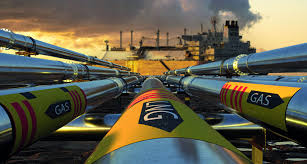
Africa’s liquefied natural gas (LNG) story is entering a decisive new chapter, with North and West African producers advancing expansion plans, fast-tracking floating liquefaction and repositioning major undeveloped discoveries for commercialisation.
At the forefront of that shift is Libya, which is targeting gas production of nearly one billion cubic feet per day in the second half of 2026. The increase is being driven by offshore redevelopment and the rehabilitation of legacy infrastructure, aimed at stabilising domestic electricity supply while restoring export capacity.
Should financing conditions continue to improve and political alignment hold, Libya could re-emerge as a significant Mediterranean supplier later this decade — placing one of North Africa’s most undercapitalised gas markets firmly back on the radar of international investors.
West Africa scales up
Further west, expansion is already underway. The Grand Tortue Ahmeyim development offshore Mauritania and Senegal has achieved first LNG, and attention has now shifted to Phase 2. The proposed expansion could potentially double liquefaction capacity before the end of the decade by leveraging existing floating LNG infrastructure and proven offshore reserves.
With core export routes and infrastructure already established, the project represents one of the continent’s clearer near-term growth opportunities — offering comparatively lower development risk alongside meaningful production upside.
Senegal’s Yakaar-Teranga discovery, meanwhile, remains one of the world’s largest undeveloped gas resources. Still in the pre-final investment decision phase, the project’s commercial structure — particularly the balance between domestic supply and LNG exports — is under negotiation.
Its eventual development could underpin new LNG trains, long-term gas-to-power supply and industrial feedstock, making it a focal point for upstream financiers assessing scalable, long-life reserves.
Nigeria broadens the gas playbook
In Nigeria, gas monetisation is expanding beyond traditional export LNG models. A 2026 gas master plan targets an additional 1.8 billion cubic feet per day of supply, part of wider ambitions to reach 10 bcf/d by 2027 and 12 bcf/d by 2030.
Alongside supply growth, Nigeria is accelerating mini-LNG and small-scale liquefaction projects to serve the off-grid industry, transport and distributed power. The strategy reflects a broader pivot towards integrated domestic gas ecosystems — diversifying revenue streams and creating multiple entry points for midstream investors, technology providers and infrastructure developers.
Congo fast-tracks floating LNG
The Congo LNG development in the Republic of Congo illustrates how emerging producers are shortening timelines to market. Phase 2 began operations in December 2025, adding 2.4 million tonnes per annum and lifting total capacity to around 3 million tonnes annually.
Built around floating LNG units and modular upstream tie-ins, the project demonstrates a replicable, lower-cost commercialisation model compared to traditional onshore terminals — offering investors exposure across upstream supply, processing, shipping and regional infrastructure.
Investment momentum converges in Paris
These developments will form part of the backdrop to the Invest in African Energy Forum in Paris on April 22–23, where governments, operators and financiers are expected to assess where capital will flow across Africa’s next LNG cycle.
With expansion projects advancing, redevelopment underway and large-scale discoveries edging towards commercial decisions, Africa’s gas sector is no longer defined by isolated projects — but by a continent-wide investment reset that could shape LNG supply growth well into the next decade.
Related Articles
Kuwaiti oilfield comes onstream officially after 1...
22 Sep, 2025 12:56
African Energy Week (AEW) 2025: Unlocking the Pote...
22 Sep, 2025 13:22
South Africa warns illegal car imports threaten ne...
23 Sep, 2025 06:31
South Africa Confronts EU Carbon Border Mechanism...
23 Sep, 2025 12:33
South Africa, China Deepen Investment Ties in Key ...
24 Sep, 2025 07:35
Raysut Cement’s Expansion into Libya and North Afr...
24 Sep, 2025 07:40
Nextchem opens regional office in Abu Dhabi...
24 Sep, 2025 08:10
Ghanaian students win top honours in IAEA’s Female...
24 Sep, 2025 09:32
Key Sectors Linking Mauritania and Gambia...
24 Sep, 2025 09:40