Distribution

Aramco targets US in LNG expansion push


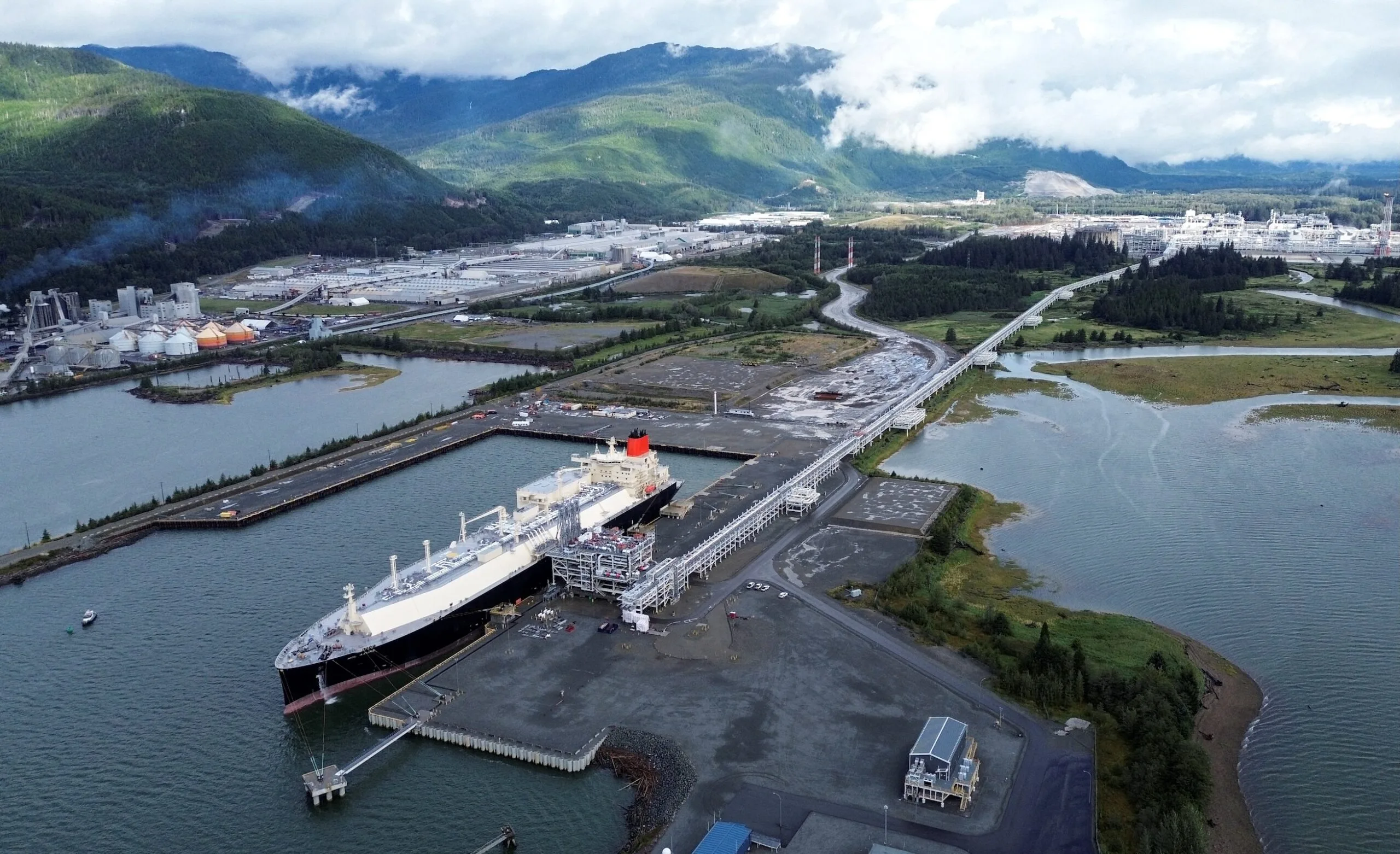
Saudi Aramco’s latest US liquefied natural gas (LNG) tie-up underlies the energy giant’s determination to become a globally significant player in the fast-expanding industry.
At ultra-low temperatures, natural gas liquefies and densifies, enabling maritime, rather than pipeline transport. About 15 percent of global natural gas volumes are exported as LNG.
Saudi Arabia is the world’s eighth-largest natural gas producer, but consumes all its output domestically and so has no LNG facilities. Yet Aramco is spending big in North America to establish itself in an industry where demand will increase by 60 percent by 2040 according to the oil major Shell.
“Through the next 10 years, there will be much more LNG on the water, and expectations are that prices will be lower, which should boost demand growth,” said Bill Farren-Price, head of the gas programme at the Oxford Institute for Energy Studies.
“Aramco wants to be part of growth stories like LNG, and that fits in with this effort to diversify away from solely oil exports. Aramco has become a quite sophisticated energy trader globally.”
Global liquefaction capacity totals nearly 500 million tonnes per annum (mtpa). Qatar (77.1 mtpa) is ranked third worldwide behind the United States (97.5 mtpa) and Australia (87.6 mtpa), the 2025 International Gas Union estimates.
Saudi Aramco’s spending spree began in 2023, when it bought a $500 million, minority stake in US-based LNG company MidOcean Energy. Its latest agreement, concluded last month, is with US liquefied natural gas producer Commonwealth LNG to receive 1 mtpa initially, Reuters reported, citing unidentified sources.
These exemplify Aramco’s two-pronged approach, under which it acquires stakes in liquefaction projects via MidOcean Energy and secures supply deals with the likes of Commonwealth LNG, said Samuel Good, research lead for LNG at London Stock Exchange Group.
In December, MidOcean bought into a Canadian LNG project and in 2024 it acquired a 35 percent stake in a Peruvian LNG company.
MidOcean suffered a setback in December when US pipeline operator Energy Transfer halted work on its Lake Charles project in which it would have received 30 percent of the plant’s LNG volumes – about 5 mtpa – in return for funding 30 percent of building costs.
“It’d be unsurprising if Aramco were to agree more of these deals on both the equity and supply sides, because it is pushing itself into becoming a large trading entity,” said Good.
Amin Nasser, Aramco’s chief executive, told an analysts’ call last year that his company aims to control 20 mtpa of capacity.
“We continue to evaluate a lot of opportunities currently in our pipeline,” he said.
Last year, two LNG projects in Louisiana – one with Commonwealth LNG and another with MidOcean – were among 51 memoranda of understanding that Aramco and its subsidiaries signed with US companies. These have a combined potential value of $120 billion, according to Aramco.
Its most significant LNG supply deal is a provisional 20-year, 5mtpa agreement with Sempra’s Port Arthur project in Texas in which it may also buy a stake. Other deals include a 20-year deal to buy 1.2 mtpa from a separate under-construction LNG plant in Texas.
Aramco re-sells the LNG it buys to end-users.
“We’re currently in the second wave of US LNG capacity growth, so it makes sense for Aramco to build these supply-side portfolios,” said Good.
“A reason for securing US supplies is that US LNG is well positioned as the global arbitrage inflection point – taking free-on-board supply from the US enables you to either sell to Europe or Asia depending on where demand is greatest.”
Aramco’s contracts have no restrictions as to where it can re-sell the gas, aside from other provisions such as sanctions.
“Aramco is increasingly involved in the spot trade, with cargoes sent to the likes of Bangladesh, Egypt and China in recent months,” said Good.
Related Articles
World Bank Backed Fund targets solar energy projec...
09 Sep, 2024 13:34
Libya oil exports plunge as NOC cancels cargoes du...
12 Sep, 2024 08:31
Caterpillar introduces groundbreaking dynamic ener...
18 Sep, 2024 07:42
Saudi Arabia strikes $1 bln deal as aluminum drive...
18 Sep, 2024 09:03
Egypt and Petronas Discuss Expanding LNG Investmen...
19 Sep, 2024 13:00
6 Regional Banks Transforming Africa’s Oil & Gas I...
20 Sep, 2024 13:00
Giyani Metals advances battery-grade manganese dem...
30 Sep, 2024 09:20
Middle East tensions spike oil prices, but surge w...
01 Oct, 2024 07:59
Uganda receives first batch of line pipes for EACO...
01 Oct, 2024 09:21