Generation

70% energy cut by South African SmeltDirect is ‘huge achievement’ – researcher


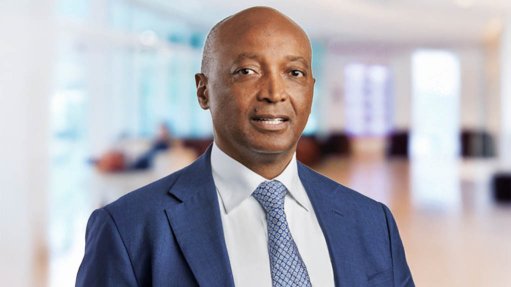
The Proudly South African smelting technology of the Johannesburg Stock Exchange-listed ARM, headed by founder and nonexecutive chairperson Dr Patrice Motsepe, enables three times more product to be produced using the same amount of electricity.
Moreover, using much less electricity for adding value to mined ore is a very practical way of saving money.
“We’re ready for commercialisation. We've done all the testwork, and we're very confident that our technology will work and that we can smelt alloys using up to 70% less electricity,” African Rainbow Metal Technologies (ARMeT) CEO Andre Joubert said in response to Mining Weekly’s request for an update on SmeltDirect, which opens the way for South Africa’s ores to be processed in South Africa, by South Africans for the benefit of South Africans.
Unlike the 4 MW required by conventional systems, only 1.2 MW of electricity is needed to produce a ton of alloy using SmeltDirect, and some 700 jobs are created for every 200 000 t of alloy produced a year. As a result, SmeltDirect has attracted global attention. Mothballed smelters can be converted. SmeltDirect also halves carbon emission and takes users down the cost curve in not only ferroalloy production but also the revival of lost steel opportunities.
The world’s extraordinary times are providing South African mining companies with an opportunity to focus on how to strengthen themselves and local beneficiation will put significantly less pressure on logistics by placing value ahead of volume.
Trade paths are changing and the move from globalisation to multi-polarity accelerating.
Former UK-based globally rated metals and mining analyst and portfolio manager Shamim Mansoor, now based back in South Africa, believes South Africa is at a pivotal juncture. "It can choose to remain a supplier of raw commodities that enrich other countries or become a global leader in mineral‑based industries. Beneficiation is not just an economic strategy – it’s a national imperative to turn the wealth in the ground into wealth for our population,” is Mansoor's standpoint.
In a further written SmeltDirect outline, Joubert reiterated: “As communicated in our previous update, the feasibility study for the commercialisation of SmeltDirect at Machadodorp for the production of 300ktpa of ferrochrome has now been completed, following the successful demonstration of the technology on the smelting of chrome ores.
"However, it should be noted that the projected financial returns are currently constrained by prevailing macroeconomic factors, most notably the exchange rate environment and China's continued dormancy in price formation for chrome ore and ferrochrome markets.
"In the absence of deliberate and targeted government interventions to address these structural challenges, it will remain difficult for any producer to sustainably manufacture ferroalloys in South Africa – even when deploying a breakthrough technology such as SmeltDirect, which will be the lowest cost producer in South Africa.
“Our current demonstration operations at Machadodorp are, in the near term, focused on the production of manganese alloys and a range of specialised steel‑grade alloys. These initiatives are being pursued in collaboration with a number of local and international partners,” Joubert pointed out.
There is known to be significant interest from international partners wanting to partner ARMeT to accelerate the commercialisation of SmeltDirect, which has managed to survive ARM’s strict financial discipline.
Those closest to SmeltDirect emphasise that strong positivity continues to surround it because of the depth of its energy reduction and promise of its better environmental friendliness.
Advantageously, SmeltDirect can also be spread to a return of the local production of high-manganese rail and the introduction of greener steel.
Already bankable, SmeltDirect allows for fossil fuel reductants to be replaced with biocarbon.
The SmeltDirect update arises amid the Glencore-Merafe Chrome Venture having paused a retrenchment process at its ferrochrome smelters by a month to March 31 after Eskom made a 62 cents per kilowatt-hour (c/kWh) tariff offer on the eve of its previous February 28 deadline for the implementation of retrenchments.
Meanwhile, ferrochrome producer Samancor Chrome has issued a retrenchment notice in terms of Section 189 of the Labour Relations Act, which affects 2 400 employees at its smelting operations, which include Dikwena Chrome, Ferrometals, Middelburg Ferrochrome, TC Smelter, Tubatse Alloy and Tubatse Ferrochrome, as well as at its corporate offices. But the company emphasises that no final decision has been made in terms of the retrenchments, and it remains committed to engaging in this process transparently and in good faith.
On the ferromanganese front, Menar MD Vuslat Bayoglu is wanting to bring two furnaces back into production at the old Metalloys in Meyerton, now named Khwelamet, once it gets a viable power price from Eskom.
“We're hoping that we'll be treated the same as the ferrochrome industry, and we'll get the same price from Eskom so that we can start the two furnaces, which will put 250 000 t of ferromanganese into a total world market of about 1.5-million tons,” Bayoglu told Mining Weekly during last month’s Investing in African Mining Indaba.
With four furnaces, the former Metalloys was actually the world’s largest ferromanganese smelting operation, producing 500 000 t/y.
“In South Africa, we’ve got the assets and we’ve got the infrastructure. To give you an idea, Transnet Infrastructure Rail Management company, they gave us a location to move our own manganese from Northern Cape to Meyerton, and then to take our ferromanganese from Meyerton to Durban, so our logistics solution is sorted as well.
“I think we're going to bring all these smelters back, and we're going to re-industrialise South Africa, which we need to do because that's how we create jobs in this country,” Bayoglu added.
South Africa has more than 70% of the world reserves in chrome and manganese ores.
Sustainable industrial growth
The proposed 62 c/kWh tariff for South Africa’s struggling ferrochrome smelters is described as a necessary emergency intervention to prevent mass job losses by Wyzetalk CEO Merel van der Lei.
“Yet, as President Cyril Ramaphosa noted at the 2026 Africa Energy Indaba, the ultimate goal of our energy transition must be sustainable industrial growth, not merely survival,” Van der Lei pointed out in a release to Mining Weekly.
“Heavy industry leaders are already looking beyond temporary relief. Progressive mining organisations are rapidly evolving, with groups like Menar investing in private rail access and developing 50 MW self-generation projects to secure their margins against future volatility. These macro-structural shifts are critical, but they often overshadow the micro-operational realities that dictate daily output.
“When external input costs like electricity and logistics become rigid barriers, internal operational efficiency remains the primary lever for profitability. This efficiency is entirely dependent on the frontline workforce,” Van der Lei stated.
“Historically, heavy industries have treated boardroom strategy and frontline execution as separate silos. When executives pivot production schedules to accommodate grid constraints or new self-generation capacities, that agility must translate instantly to the ground floor.
“A fractured environment, where critical operational shifts take days to filter down to employees, nullifies high-level strategic gains. Financial margins are improved at the margins of dispersed workforces.
“Cheaper electricity will keep the furnaces burning in the short term. However, long-term global competitiveness requires organisations to treat their frontline employees as an integrated, informed component of their operational strategy, capable of adapting to industry shifts in real time. That’s where we can turn interventions seeking better survival tactics into sustainable resilience,” Van der Lei added.
Related Articles
QatarEnergy ceases LNG production following milita...
03 Mar, 2026 08:20
Africa’s expected hydrogen mobility build-out deta...
03 Mar, 2026 09:21
South Africa energy build risks stalling without f...
04 Mar, 2026 12:01
LNG shutdown sinks Qatar stocks but Tadawul reboun...
04 Mar, 2026 12:19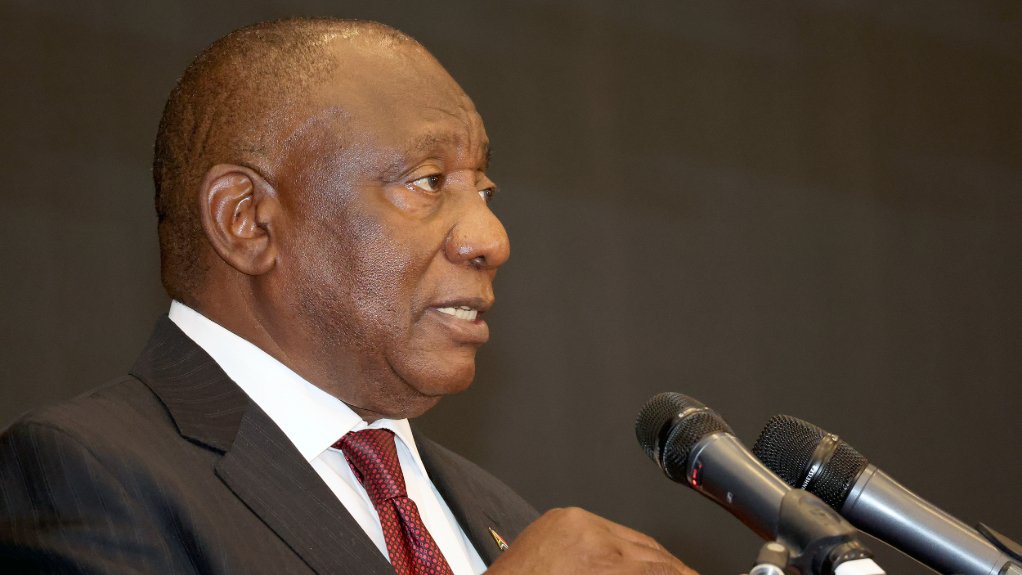
Africa's energy transition must support industrial...
04 Mar, 2026 12:50
Funding for Africa clean energy financing surges d...
04 Mar, 2026 13:09
Kenya: Spenomatic Group Opens Solar Learning Centr...
05 Mar, 2026 08:30
NEDC Backs Solar Mini-Grid Rollout in Niger State...
05 Mar, 2026 09:16
Dr Kgosientsho Ramokgopa frames energy as Africa’s...
06 Mar, 2026 08:17