Logistic Other

Togo Strengthens Strategic Partnership with Afreximbank to Drive Industrial Growth



The government of Togo has moved to reinforce its strategic alliance with the African Export-Import Bank, signalling a fresh push by Lomé to position itself as one of West Africa’s foremost commercial and logistics gateways.
In a high-level engagement between Togolese leader Faure Gnassingbé and Afreximbank executive Dr George Elombi, both sides reaffirmed their commitment to expanding cooperation across trade finance, industrialisation and infrastructure development — sectors now viewed as central to Togo’s long-term economic ambitions.
The meeting underscores the growing importance of Afreximbank in shaping Africa’s industrial and trade architecture at a time when governments across the continent are seeking alternatives to traditional Western lenders and attempting to accelerate intra-African commerce under the African Continental Free Trade Area framework.
For Togo, the partnership is far more than symbolic.
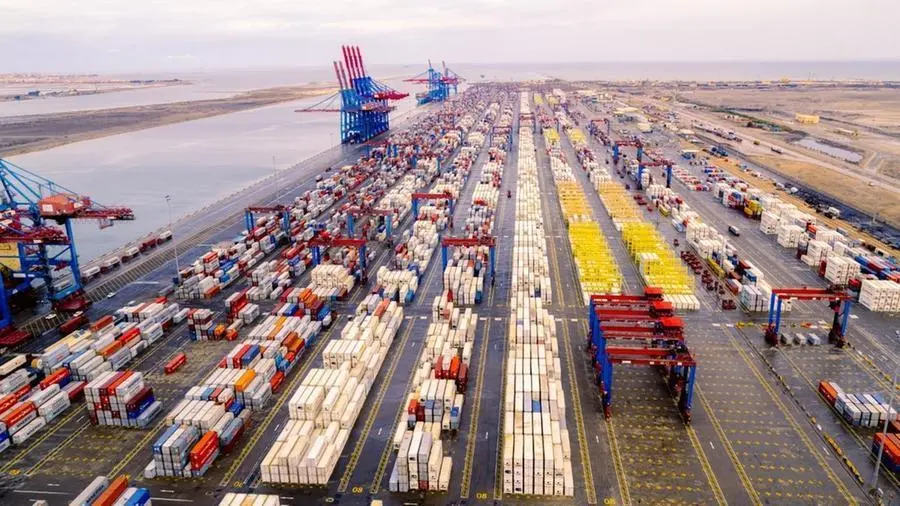
Over the past decade, Lomé has steadily cultivated its reputation as a regional logistics and investment hub, leveraging the strategic importance of the Port of Lomé and pursuing ambitious industrial expansion projects. Afreximbank has emerged as one of the country’s most influential financial backers, supporting initiatives ranging from industrial parks and energy infrastructure to agricultural transformation.
Analysts say the renewed engagement with Dr Elombi comes at a pivotal moment for both institutions.
Afreximbank itself is entering a new era. Dr Elombi’s elevation to the presidency of the Cairo-based lender has been interpreted by markets as a sign that the bank intends to sharpen its focus on industrial growth, energy security and continental trade integration. The institution has already outlined ambitions to evolve into a financial powerhouse with assets and commitments running into hundreds of billions of dollars over the coming decade.
For Togo, closer alignment with the bank could unlock another wave of financing aimed at transforming the country into a manufacturing and distribution corridor serving both coastal and landlocked West African economies.
The relationship between Lomé and Afreximbank has deep institutional roots. Togo became the bank’s 40th participating state in 2016, a move championed by President Gnassingbé as part of a broader strategy to attract industrial capital and deepen regional trade links.
Since then, Afreximbank has backed multiple development programmes in the country, including industrial parks, electricity projects and logistics infrastructure tied to the Port of Lomé.
Officials in Lomé increasingly portray the partnership as central to delivering the government’s economic modernisation agenda, particularly in sectors expected to generate employment and export growth.
Yet the renewed economic diplomacy also unfolds against a politically sensitive backdrop.
While supporters argue that President Gnassingbé has brought stability and investment continuity to Togo, critics continue to raise concerns over democratic governance and constitutional reforms that could further extend his grip on power. Those political tensions remain a factor closely watched by international investors assessing the broader risk environment in the country.
Even so, business sentiment around Togo’s economic trajectory has remained comparatively resilient. Investors continue to view the country as one of the more stable commercial entry points into Francophone West Africa, particularly as geopolitical turbulence and military-led transitions unsettle parts of the wider Sahel region.
For Afreximbank, the strengthening of ties with Togo offers another strategic foothold along the Gulf of Guinea — a corridor increasingly critical to Africa’s trade ambitions.
For Lomé, meanwhile, the calculation is clear: in an era of fragmented global finance and intensifying competition for capital, proximity to one of Africa’s most assertive development lenders may prove a decisive advantage.
Related Articles
South African table grape industry and Transnova A...
22 Oct, 2025 08:25
Spiro Raises US$100 Million in Africa’s Largest-Ev...
22 Oct, 2025 09:33
NXN and SAEED unite within Sharjah’s logistics sec...
24 Oct, 2025 07:48
TAHA Unveils HortiMarket A Digital Platform Revolu...
24 Oct, 2025 08:21
Chinese technology takes center stage at Ghana's t...
27 Oct, 2025 09:17
Kenya Airways flies first African route, from Nair...
27 Oct, 2025 09:23
Madbouly inaugurates $85mln DP World's logistics p...
27 Oct, 2025 12:56
Airbus cargo outlook shows 3.3% annual growth and ...
28 Oct, 2025 08:21
Nominations now open for the Logistics Saudi Award...
28 Oct, 2025 08:27