Precious Metals

PGMs could be the basis of a new industrial strategy


South Africa’s platinum group metals (PGM) endowment is often spoken about as though it is, by itself, a national advantage. It is not. The country has the metals, the mines and much of the technical capability. What remains missing is the industrial strategy needed to turn that advantage into investment, manufacturing capacity and jobs that last beyond the next commodity upswing. of the country’s mining workforce is in the PGM sector. The metals account for more than a quarter of mining’s gross value added. This is one of South Africa’s core economic platforms, yet the country still exports too much value in raw or semi-processed form and captures too little of the industrial activity that follows.
The case for urgency is not that platinum prices are high. It is that they are unstable. The metal rose from an average of about $961/oz in 2024 to a peak of $2,925 in January this year, helped by tactical investment demand and exchange-traded fund buying, before settling at $1,470-$1,500 by mid-year. Strip out investment flows and the physical market looks less exceptional: CPM Group data points to a small surplus of about 92,000oz in 2025, not a structural deficit.
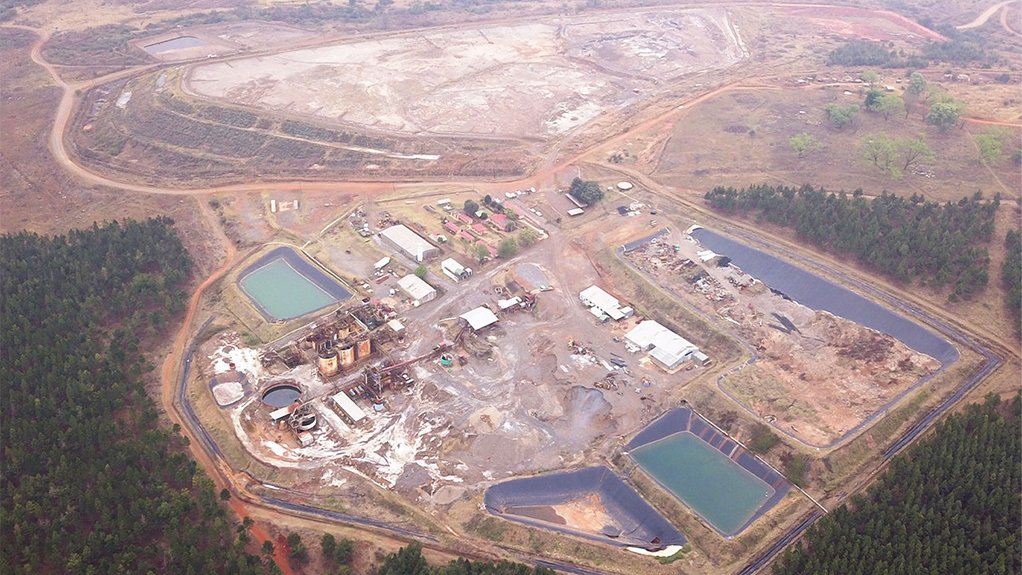
The foundations are substantial. About 44 PGM mines sit within the Bushveld Complex, making South Africa the world’s pre-eminent PGM jurisdiction, spread across three limbs.
The Western Limb, around Rustenburg, Brits and Pilanesberg, remains the densest production area. The Northern Limb, around Mokopane, is gaining weight as large operations such as Valterra Platinum’s Mogalakwena and Ivanhoe Mines’ Platreef expand, with Platreef producing its first concentrate in November 2025.
The choice is not between mining and manufacturing. The more promising route is to make the two mutually reinforcing.
The Eastern Limb, centred on Steelpoort and Burgersfort, retains a significant operating base of five active mines — Two Rivers, Modikwa, Marula, Mototolo and Booysendal — but also holds a concentration of stalled and deferred projects.
The industry itself is relatively concentrated: Implats, Valterra Platinum, Northam Platinum, Sibanye-Stillwater and African Rainbow Minerals operate most active mines, with Tharisa, Eastplats and Ivanhoe Mines adding further production.
The obstacles are familiar: ageing infrastructure, high operating costs, labour restructuring, electricity shortages, declining ore grades and logistics bottlenecks. In 2025 these pressures were visible across South Africa’s mining sector. The Bokoni platinum mine, for example, suspended ore mining and milling operations in June amid cost pressures.
These weaknesses matter internationally. Disruptions to South African output can quickly reverberate through global PGM markets. Power failures, rail inefficiencies, lower grades or labour stoppages can tighten balances and feed volatility in platinum and rhodium prices. That gives South Africa leverage, albeit brittle. Bottlenecks may move global prices, but they do not build domestic competitiveness. Turning scarcity into strategy requires a stronger productive base in South Africa.
Sequenced approach needed
The first priority is prosaic but decisive: keep the industry investable. Reliable electricity, efficient rail and ports, functioning water infrastructure, faster permitting and greater certainty about mining rights are not background conditions for the PGM sector. They are industrial policy in their own right.
The second priority is more strategic use of the PGM base to build downstream industries that can survive beyond the next price cycle. South Africa is not starting from zero. It has mines, processing capacity, technical expertise, research institutions and elements of a manufacturing base that could be rebuilt around its mineral endowment, including experience in vehicle catalytic converters through localised original equipment manufacturer hubs.
This is where the PGM opportunity intersects with a broader national challenge. South Africa’s manufacturing sector has experienced a prolonged decline in competitiveness since 2001 amid increasing competition, particularly from China.
South Africa is the world's pre-eminent platinum group metals jurisdiction, but it remains to be proven whether it has the political and industrial seriousness to build the economy around them.
The choice is not between mining and manufacturing. The more promising route is to make the two mutually reinforcing. PGMs offer a platform for activity in autocatalysts, hydrogen technologies, fuel cells, advanced materials and chemicals. The objective should be simple: capture more value before the metal leaves South African shores.
That will require systematic discipline. Beneficiation cannot be summoned by mandates or isolated pilot projects. It depends on competitive electricity, logistics, skills, research and development, patient capital and predictable regulation. The government, miners and manufacturers should identify the segments in which South Africa can win internationally and concentrate scarce capacity there, not attempt to manufacture everything.
The critical minerals debate is often framed as a race to secure access to resources. For South Africa, access is not the binding constraint. The country already has the resource. Its task is to build the industrial capabilities that make the resource economically transformative.
The risk is familiar. South Africa extracts during the boom, consumes the revenues and discovers after the cycle has turned that little durable productive capacity has been created. A better approach would treat PGMs not as an export commodity alone but as an industrial platform, choosing the parts of the value chain where South Africa’s geology, technical capabilities and existing industrial base create a credible edge.
Mining investment is measured in decades. Industrial policy is too often measured in political cycles. South Africa’s task is to bridge that gap. The prize is larger than the next platinum rally. It is to use an extraordinary mineral endowment to rebuild industrial capability, attract investment into higher-value activity and create globally competitive businesses around the resources beneath South African soil.
South Africa already has the PGMs. What remains to be proven is whether it has the political and industrial seriousness to build the economy around them. Mabasa, a critical minerals strategist, is executive manager in the office of the deputy minister of mineral & petroleum resources.
Related Articles

Investigation uncovers fraudulent identity documen...
10 Sep, 2024 08:08
The Top Five Gold-Producing Countries in Africa in...
10 Sep, 2024 08:46
AngloGold notes ‘enormous geological potential’ in...
10 Sep, 2024 09:29
Awalé Resources expands BBM gold zone at Odienné p...
10 Sep, 2024 11:38
Proposed amendment: Gold mines to be subject to th...
10 Sep, 2024 12:39
Pan African Resources Annual Result Improves; Expe...
12 Sep, 2024 07:42
African countries are joining the sovereign gold-b...
12 Sep, 2024 08:07
Platinum Group Metals Ltd. Announces Positive Inde...
16 Sep, 2024 09:11
At least 20 likely dead in violence near Papua New...
16 Sep, 2024 10:37