Energy Other

Morocco figures in proposed $200 million African clean energy push


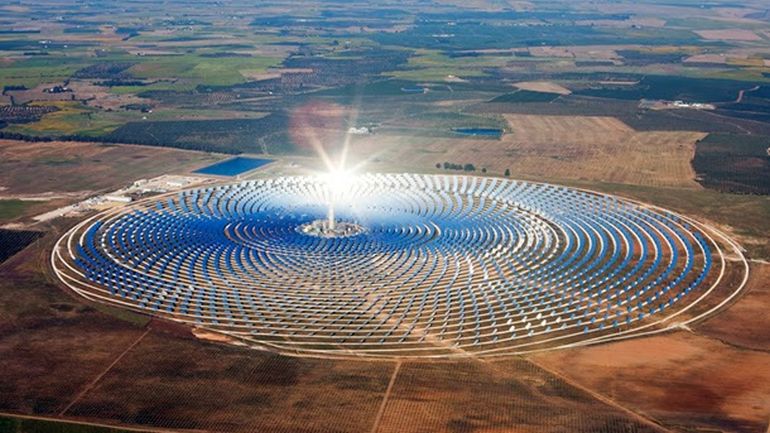
Morocco has emerged as one of the countries most closely watched by investors looking for the next wave of African clean energy projects, as a proposed continent-wide fund prepares to back renewable power, storage and low-carbon transport. The plan, outlined in an assessment by the African Development Bank, places the kingdom among 13 priority markets expected to attract capital from a new vehicle aimed at scaling commercially viable energy transition assets.
A fund built around Africa’s financing gap
According to Morocco World News, the African Transition Acceleration Fund, or ATAF, is being structured with a target size of $200 million, equivalent to about ₹1.85 billion, and a hard ceiling of $300 million, or roughly ₹2.78 billion. The vehicle is expected to be managed by African Infrastructure Investment Managers, better known as AIIM, which has been active in infrastructure investing across the continent.
The African Development Bank’s environmental and social management assessment suggests ATAF is designed to bridge a persistent funding shortfall in sectors where private capital has often stayed cautious. Rather than concentrating only on large utilities or sovereign-backed projects, the fund is intended to channel early-stage development and growth capital into platforms and companies that can expand energy-transition businesses at scale.
Where the money is expected to go
The proposed investment strategy is broad but tightly linked to the continent’s decarbonisation priorities. One pillar centres on renewable power generation, battery storage, transmission systems, energy efficiency and power-to-X technologies, all of which are increasingly seen as essential to making grids more reliable and cleaner.
A second pillar focuses on fuels and molecules that can help hard-to-abate sectors cut emissions. That includes green hydrogen, green ammonia, biofuels, biomethane and biogas, along with related technologies that could support industrial users, transport systems and export-oriented value chains.
The third theme is mobility, with capital earmarked for electric vehicles, fleet electrification and charging networks. For African markets, that segment remains at an early stage, but it is drawing attention as cities face rising transport demand and governments look for ways to reduce fuel imports and urban pollution.
Why Morocco matters in the shortlist
Morocco’s inclusion is significant because the country has already positioned itself as one of Africa’s more advanced clean energy destinations, with a policy framework that has encouraged solar, wind and grid investment over the past decade. Its presence in the ATAF shortlist suggests that the fund is looking not only at frontier markets, but also at jurisdictions where projects can move from concept to bankability more quickly.
Alongside Morocco, the 13 primary markets named in the assessment are Botswana, Côte d’Ivoire, Egypt, Ghana, Kenya, Namibia, Nigeria, Senegal, South Africa, Tanzania, Uganda and Zambia. The spread points to a pan-African strategy rather than a single-region bet, with opportunities likely to vary from utility-scale generation to industrial decarbonisation and transport infrastructure.
Investment horizon and deal size signal a patient approach
ATAF is expected to operate over a 10-year investment horizon, with the possibility of three additional one-year extensions if approved by its Limited Partner Advisory Committee. That structure indicates a long-duration capital base, which is often necessary in infrastructure and energy-transition projects where permitting, construction and revenue stabilisation can take years.
The fund plans to back 10 to 15 projects during a five-year investment period. Individual commitments are expected to range from $10 million to $45 million, or about ₹92.7 million to ₹417.2 million, placing the vehicle in the mid-market infrastructure and growth capital bracket rather than among mega-project financiers.
What the African Development Bank is signalling
The AfDB assessment frames ATAF as part of a broader effort to attract private investment into sectors that have historically been underfinanced despite their climate importance. That is a familiar challenge across African economies, where power shortages, weak transmission networks and high capital costs often make projects harder to close than in more mature markets.
By targeting competitive financial returns while also measuring climate, environmental and social outcomes, the fund reflects the new language of blended infrastructure investing. For policymakers, that approach matters because it can help crowd in commercial capital without relying entirely on concessional finance or public balance sheets.
For Morocco, the development adds another layer to its clean energy story. The country has spent years building credibility as a regional hub for renewable deployment and industrial energy planning, and that positioning may now help it compete for cross-border capital as Africa’s transition finance market deepens.
Whether ATAF becomes a major catalyst will depend on execution, project pipeline quality and the appetite of investors backing the vehicle. But the shortlist alone shows that Morocco remains firmly on the map for capital seeking exposure to Africa’s low-carbon shift, and that the competition for energy transition funds is likely to intensify as more such vehicles come to market.
Related Articles
Kuwaiti oilfield comes onstream officially after 1...
22 Sep, 2025 12:56
African Energy Week (AEW) 2025: Unlocking the Pote...
22 Sep, 2025 13:22
South Africa warns illegal car imports threaten ne...
23 Sep, 2025 06:31
South Africa Confronts EU Carbon Border Mechanism...
23 Sep, 2025 12:33
South Africa, China Deepen Investment Ties in Key ...
24 Sep, 2025 07:35
Raysut Cement’s Expansion into Libya and North Afr...
24 Sep, 2025 07:40
Nextchem opens regional office in Abu Dhabi...
24 Sep, 2025 08:10
Ghanaian students win top honours in IAEA’s Female...
24 Sep, 2025 09:32
Key Sectors Linking Mauritania and Gambia...
24 Sep, 2025 09:40