Energy Other

How IOC Investment Is Returning After a Lost Decade


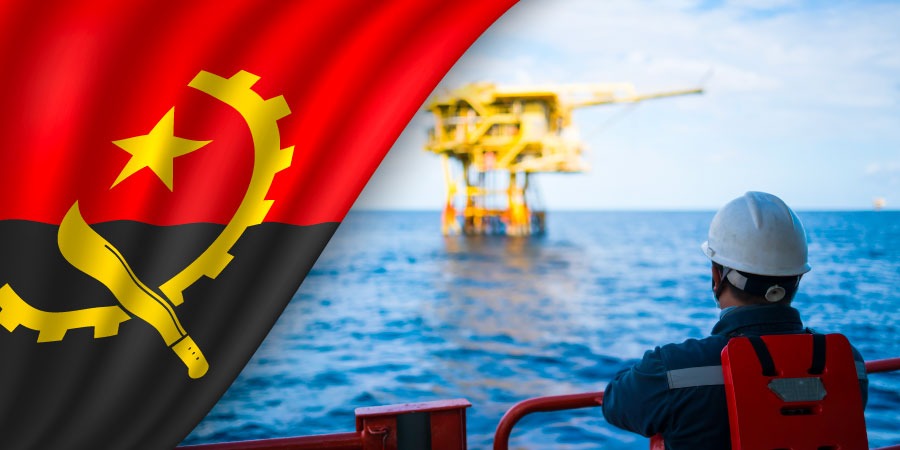
Angola’s upstream sector is once again attracting heavyweight international oil companies (IOCs), but the current wave of investment is best understood as a recovery story shaped by cycles of boom, collapse and reform. NJ Ayuk’s latest book, “Crude Oil: Power, Turnaround and Transformation in Angola,” captures this arc sharply, tracing how the country moved from post-war exuberance to crisis – and now toward a more disciplined, investor-friendly era.
In the early 2000s, Angola’s oil industry entered what Ayuk describes as a “mini golden age.” Foreign investment surged after the end of the civil war, with GDP rising from $17.8 billion in 2003 to $88.5 billion by 2008. Deepwater majors including ExxonMobil, Chevron, bp and Eni poured billions into offshore exploration, betting on what was then one of the world’s most promising frontier basins. As the book notes, West Africa accounted for just 5% of global wells drilled at the time, yet delivered 21% of discoveries – half of them in Angola. Eni’s leadership even described early bids as “crazy,” but strategically essential for long-term growth.
That boom, however, proved fragile. The 2008 financial crisis triggered a sharp decline in oil revenues, forcing Angola into austerity, subsidy cuts and delayed contractor payments. Soon after, OPEC production constraints limited Angola’s output growth ambitions, compounding investor uncertainty. A second shock followed in 2014–2016, when oil prices collapsed by 70% amid a slowdown in Chinese demand and renewed global supply competition. As Ayuk recounts, the result was severe: worried investors scaled back spending, and foreign workers left Luanda in large numbers, hollowing out what had once been one of Africa’s most dynamic oil capitals.
By the time President João Lourenço took office in 2017, Angola was in a prolonged recession, with declining output and rising debt. The COVID-19 pandemic then delivered another blow, slashing government revenues and delaying upstream investment decisions by an estimated $140 billion across Africa’s oil sector.
The turning point has been regulatory reform. Angola’s National Concession Strategy (2019–2025), implemented through the National Agency for Petroleum, Gas and Biofuels (ANPG), introduced a Permanent Offer system that allows continuous licensing – reducing the timing uncertainty that historically discouraged IOC capital allocation. The country also expanded marginal field licensing, strengthened gas monetization frameworks and improved transparency through digital data rooms and structured bidding rounds.
These changes are already reshaping investor behavior. The 2019–2020 licensing rounds attracted majors including TotalEnergies, Eni, bp and Equinor even during a low-price environment, signaling renewed confidence in Angola’s upstream potential.
By 2025–2026, momentum has accelerated. TotalEnergies has committed $3 billion in new upstream investment, anchored by its Dalia Life Extension Project in deepwater Block 17, designed to extend the life of one of Angola’s most prolific offshore assets and unlock additional reserves from mature infrastructure. The company has also advanced the Begonia and CLOV Phase 3 developments, adding 60,000 bpd of new production, while progressing construction of the $6 billion Kaminho project in the Kwanza Basin – Angola’s first major deepwater development in the basin. Meanwhile, Azule Energy has committed around $5 billion over the next five years to expand its operated portfolio, reinforcing its position as a leading upstream player in the country.
New entrants are also reshaping Angola’s competitive landscape. After a two-decade absence, Shell has returned to the market, signing agreements with ANPG, Chevron and Sonangol to assess and develop offshore acreage, including Block 33 in the Congo Basin, while pursuing additional exploration and ultra-deepwater opportunities as part of a broader re-entry strategy. The renewed momentum extends across the South Atlantic, with Petrobras strengthening its engagement in Angola through new upstream partnerships and deepwater opportunities, signaling growing Angola-Brazil cooperation.
These developments reflect a broader structural shift: Angola is no longer competing solely on geology, but on predictability. As outlined in Ayuk’s book, sustained foreign investment remains essential to unlocking the country’s resources, bringing both technical expertise and financing capacity to the sector. That predictability – combined with OPEC independence and pragmatic diplomacy – has repositioned Angola as one of Africa’s most investable upstream jurisdictions.
“Crude Oil: Power, Turnaround and Transformation in Angola” ultimately frames this evolution as more than a cyclical recovery. It is a structural reset of how Angola engages global capital, moving from volatility and constraint toward policy continuity and partnership-driven growth.
For IOCs recalibrating portfolios in an uncertain global energy transition, Angola is once again becoming what it was in its early boom years: a hotspot with long-cycle upside – and a government increasingly aligned with sustained upstream investment.
Related Articles
Kuwaiti oilfield comes onstream officially after 1...
22 Sep, 2025 12:56
African Energy Week (AEW) 2025: Unlocking the Pote...
22 Sep, 2025 13:22
South Africa warns illegal car imports threaten ne...
23 Sep, 2025 06:31
South Africa Confronts EU Carbon Border Mechanism...
23 Sep, 2025 12:33
South Africa, China Deepen Investment Ties in Key ...
24 Sep, 2025 07:35
Raysut Cement’s Expansion into Libya and North Afr...
24 Sep, 2025 07:40
Nextchem opens regional office in Abu Dhabi...
24 Sep, 2025 08:10
Ghanaian students win top honours in IAEA’s Female...
24 Sep, 2025 09:32
Key Sectors Linking Mauritania and Gambia...
24 Sep, 2025 09:40