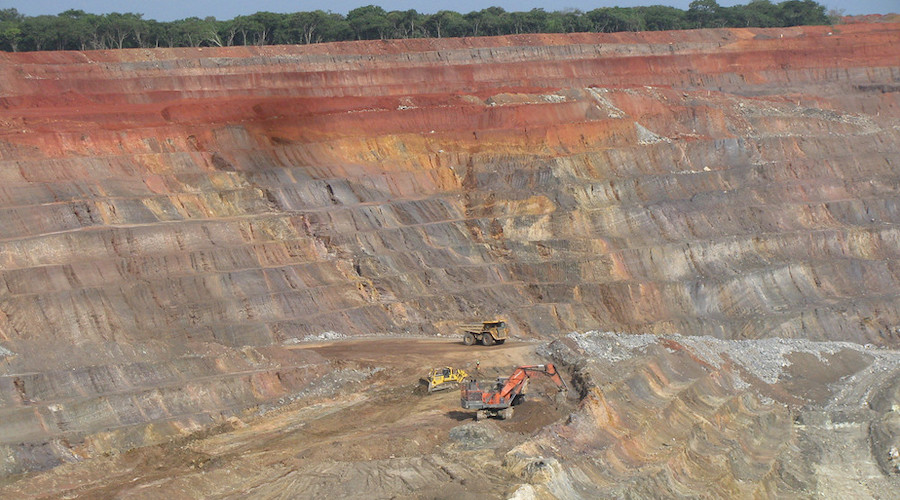
Base Metals

Angola’s Seven-Day Copper Breakthrough Signals Africa’s New Era of Resource Sovereignty


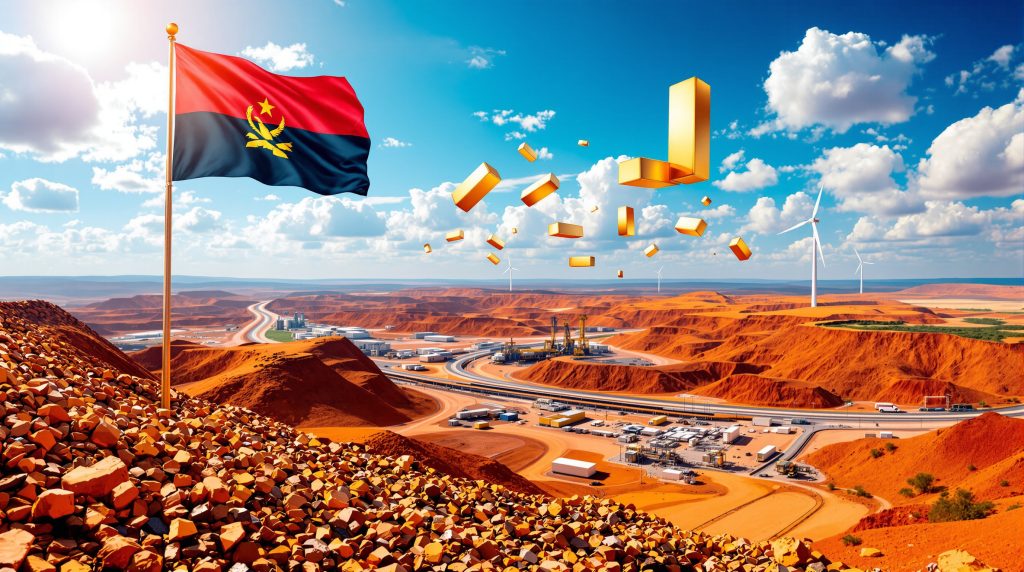
The Lobito Corridor – a 1,300 km railway linking the copper</a> belts of the Democratic Republic of Congo (DRC) and Zambia to Angola’s Atlantic port of Lobito – reached a milestone last month as Canada’s Ivanhoe Mines exported 99.7% pure copper anodes from the Kamoa-Kakula Copper Complex to Europe, cutting transit time to just seven days.
This shipment signals a deeper structural shift in Africa’s mining economy: a move away from exporting raw ore toward producing refined, high-value materials domestically. The central tension – how to close the value-addition gap while scaling infrastructure and energy – frames a broader transformation now unfolding across resource-rich economies.
Africa’s Raw Export Era Faces Policy Shockwaves Africa holds roughly 30% of global mineral reserves, including 70% of cobalt and significant lithium, manganese and graphite deposits, yet exports most resources unprocessed. This model has historically limited industrialization, leaving countries exposed to volatile commodity price cycles and external processing dependencies.
Since 2022, governments have accelerated interventionist policies to reverse this trend. Zimbabwe, Africa’s top lithium producer, banned raw lithium exports and extended restrictions to concentrates in 2026, forcing firms like Sinomine and Huayou to build local refineries exceeding $400 million in combined investments.
The DRC has implemented cobalt export quotas while promoting domestic smelting capacity. Zambia, working closely with the DRC, aims to increase copper production to 3 million tons annually by 2031 while anchoring new industrial zones focused on battery precursor manufacturing.
Ghana’s 2023 Green Minerals Policy mandates in-country processing before export, offering 10-year tax holidays and import duty exemptions. Its Mineral Income Investment Fund takes equity stakes in projects like Ewoyaa, ensuring both local participation and enforcement of beneficiation requirements.
The $170B Bottleneck Despite strong policy momentum, Africa’s beneficiation push faces major structural constraints. Mineral processing requires stable, high-volume electricity and water supply, yet countries like South Africa have seen energy availability decline by 20%, weakening the competitiveness of smelting and refining industries.
Infrastructure deficits compound the challenge, with the continent requiring up to $170 billion annually to close gaps. In South Africa alone, rail and port infrastructure caused an estimated R98 billion in lost export revenue between 2021 and 2023, highlighting logistics as a critical bottleneck.
Strategic projects like the Lobito Corridor are beginning to address this imbalance by providing a direct, efficient export route for processed minerals. By reducing transport times from nearly a month to one week, the corridor significantly improves the economics of refining within Africa.
In West Africa, Ghana’s $3.2 billion Western Rail Line connects inland mineral deposits to the Port of Takoradi, using an innovative financing model backed by Afreximbank. This infrastructure is designed to support bulk transport of processed materials into industrial zones.
Energy reform is also underway. Zambia is introducing tax incentives for independent power producers, while mining companies across the continent are increasingly investing in hybrid and off-grid energy systems to ensure reliability for energy-intensive processing operations.Rise of the SEZ
South Africa’s Northern Cape is emerging as a beneficiation hub through the Namakwa Special Economic Zone (SEZ) and Kathu Industrial Park, both designed to integrate mining with downstream industrial activity. These zones leverage nearby iron ore and manganese deposits to anchor new manufacturing capacity.
These SEZs offer strong fiscal incentives, including a reduced 15% corporate tax rate, VAT exemptions and accelerated depreciation allowances. Planned developments include zinc smelters producing 450,000 tons of sulphuric acid annually, linking mining outputs to fertilizer and chemical industries.
The Musina-Makhado SEZ complements this strategy as a large-scale metallurgical hub near the Belt Bridge border. It includes stainless steel and ferromanganese plants aimed at doubling South Africa’s steel production capacity.
Zimbabwe’s lithium belt represents a more aggressive, policy-driven model of industrialization. Its 2026 export ban forced rapid development of local processing facilities, including the Arcadia Lithium Project, which targets up to 60,000 tons of lithium sulphate annually.
Chinese-backed facilities across Bikita, Kamativi and Sabi Star are accelerating this transition. With tax exemptions on processing equipment and zero export duty on refined lithium sulphate, Zimbabwe is positioning itself as a key supplier of battery precursor materials.
The central question – how Africa closes its value-addition gap – finds its answer in convergence: coordinated policy enforcement, targeted infrastructure investment and energy reform. Together, these elements are enabling a shift toward industrial ecosystems capable of sustaining skilled employment and long-term economic resilience.
Related Articles

Sanu Gold Announces $5 Million Private Placement L...
06 Sep, 2024 13:08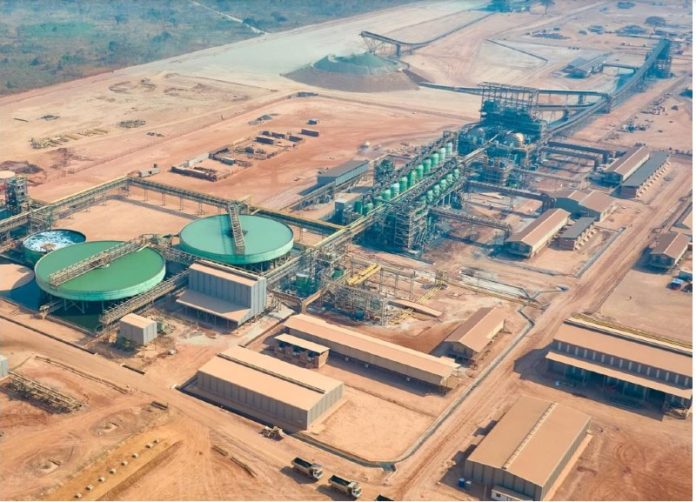
Ivanhoe Mines produces 40,347 tonnes of copper at ...
09 Sep, 2024 09:21
Andrada partners with SQM to develop Namibia lithi...
10 Sep, 2024 08:56
US, Saudi Arabia in talks to secure metals in Afri...
10 Sep, 2024 09:07
DRC: Eurasian Secures $150 Million to Develop a Co...
12 Sep, 2024 06:22
Zambian mines desperate for power turn to a surpri...
13 Sep, 2024 11:18
Africa at the cusp of a critical minerals boom...
17 Sep, 2024 07:40
Coolabah to unite Broken Hill assets, paving path ...
17 Sep, 2024 08:40
Marula Mining completes first manganese exports sa...
18 Sep, 2024 09:05