Mining Other

UN committee urges Ethiopia to address pollution at Lega Dembi gold mine HRW cites child health concerns


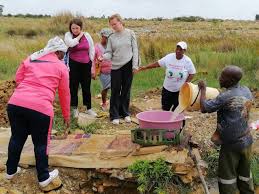
The United Nations Committee on the Rights of the Child has urged the Ethiopian government to “urgently and effectively” address environmental and health impacts linked to the Lega Dembi Gold Mine, following complaints from residents and new findings highlighting harm to children, according to a statement by Human Rights Watch.
Human Rights Watch said the committee, in a decision issued in February, called on authorities to resolve the mine’s “social, health and environmental effects on children,” urging the government to provide compensation to affected families, rehabilitate impacted children, and establish an independent mechanism to ensure transparency and accountability from the mining company.
The call follows reports from residents living near the mine in the Oromia Region, who have for years complained of health problems including miscarriages, stillbirths, and children born with long-term illnesses.
Human Rights Watch cited findings from the Ethiopian civic group Kontomaa Darimu Alliance, which documented cases of child illness, deaths, and pregnancy complications in communities surrounding the mine.
One resident identified as “Elizabeth,” a 28-year-old mother interviewed by the organization, said she lost her two-year-old son several years ago and suffered miscarriages in 2024 and 2025, which she believes were linked to contamination from the mine. “The company’s chemicals have contaminated our land, water, and people,” she said.
Several studies cited in the report found high concentrations of toxic heavy metals—including cadmium, mercury, lead, and arsenic—in areas surrounding the mine.
The mine, operated by Midroc Investment Group, was closed by the Ethiopian government in 2018 following large-scale protests over environmental and health concerns. Authorities said at the time that the facility would only reopen after environmental issues were addressed.
However, the government later signed an unpublished memorandum of understanding with Midroc and allowed the mine to resume operations in 2021.
Midroc said in a 2023 letter to Human Rights Watch that it had taken steps to mitigate the mine’s environmental impacts, including providing compensation to affected residents, improving cyanide waste management, and supplying clean drinking water.
But residents have continued to report health problems since the reopening, according to the report by Kontomaa Darimu Alliance, which documented cases in 2025 involving children’s illnesses, deaths, and stillbirths.
The report also said some residents rely on water from the company’s tailings dams due to insufficient access to safe drinking water.
In response to questions from Human Rights Watch, Midroc denied that its operations had caused human rights impacts, saying its monitoring systems found contaminant levels within “allowable range of international standards.” The company also highlighted its certification under the International Cyanide Management Code and said it had constructed a hospital and provided adequate drinking water for nearby communities.
Human Rights Watch said the findings by the UN committee and the Ethiopian civic group should prompt the government to address pollution concerns at the mine “fully and transparently,” adding that affected families have waited years for a resolution.
Related Articles
Endeavour announces transaction in own shares...
10 Sep, 2024 07:27
Ivanhoe Mines Announces MOU with Government of Zam...
10 Sep, 2024 12:24
Feasibility Study on Lumwana Super Pit Expansion E...
12 Sep, 2024 14:21
Endeavour achieves commercial production at BIOX e...
13 Sep, 2024 08:20
Roscan Gold Announces Changes to the Board of Dire...
16 Sep, 2024 10:40
Minerals Council pays tribute to Pravin Gordhan...
16 Sep, 2024 12:17
Notification of an acquisition of beneficial inter...
18 Sep, 2024 08:39
Newmont on track to get at least $2 billion from a...
18 Sep, 2024 10:49
UAE firm plans to invest $500m in Tanzania...
19 Sep, 2024 08:37