Production

Dr Kgosientsho Ramokgopa frames energy as Africa’s strategic asset


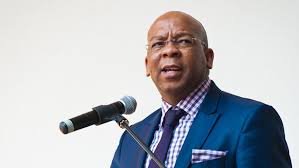
Speaking at the Africa Energy Indaba at the Cape Town International Convention Centre on Tuesday, Ramokgopa said Africa is no longer a peripheral player in the global energy system but a structural anchor in the transition now reshaping global power dynamics.
The minister described the current moment as “a moment of profound historical consequence”, with rising geopolitical tensions, reorganised supply chains and major economies deploying large-scale subsidies to secure clean technology value chains.
“The global order, as we have known it for decades, is not merely evolving; it is being recalibrated in real time,” he said. According to Ramokgopa, energy now sits at the epicentre of this global shift, as countries race to secure the resources needed for decarbonisation.
He pointed out that the world’s push toward cleaner energy systems depends heavily on minerals found in abundance across Africa.
“Without African platinum group metals, the hydrogen economy cannot achieve scale. Without African cobalt, manganese and copper, the battery revolution falters. Without African vanadium, long-duration storage remains constrained. Without African uranium, the renewed global interest in nuclear energy cannot advance at pace,” he said.
However, the minister cautioned that being resource rich does not automatically translate into economic prosperity. Africa has historically exported raw materials while value addition and industrial development took place elsewhere.
“Structural centrality does not automatically yield structural prosperity,” he said, warning that the continent must avoid repeating past patterns where it supplied resources while others captured the industrial benefits.
Instead, he argued that beneficiation and industrialisation must become central to Africa’s development strategy. This will require reliable and affordable electricity systems capable of supporting manufacturing and advanced processing industries.
“Beneficiation is not rhetoric; it is system design,” Ramokgopa said. “Industrial transformation rests on the reliability, affordability and depth of our electricity systems.”
He explained that building a battery precursor facility, producing green steel or scaling hydrogen production all depend on stable energy supply, strong grid infrastructure and advanced manufacturing capability.
To achieve this, the minister called for greater investment in transmission networks, renewable energy infrastructure and local manufacturing capacity for equipment such as transformers, cables and storage systems.
He also emphasised the need to strengthen engineering skills, technical training institutions and research partnerships that embed technological expertise within African economies.
Ramokgopa added that energy infrastructure development should be treated as a key instrument of industrial policy, capable of driving skills transfer, enterprise development and long-term economic growth.
“Africa possesses unparalleled renewable potential, critical mineral wealth and a demographic dividend that positions it uniquely within the global energy transition,” he said.
“If aligned with integration, disciplined planning and fair financing, our continent can emerge not only as a supplier of materials, but as a producer of clean technologies and a centre of green industrialisation.”
Closing his address, Ramokgopa urged African governments, investors and industry leaders to turn ambition into action.
“The African century will not be proclaimed; it will be constructed through planning, financed through discipline, wired through transmission, industrialised through policy and secured through unity,” he said.
Articles similaires
QatarEnergy ceases LNG production following milita...
03 mars, 2026 08:20
Africa’s expected hydrogen mobility build-out deta...
03 mars, 2026 09:21
South Africa energy build risks stalling without f...
04 mars, 2026 12:01
LNG shutdown sinks Qatar stocks but Tadawul reboun...
04 mars, 2026 12:19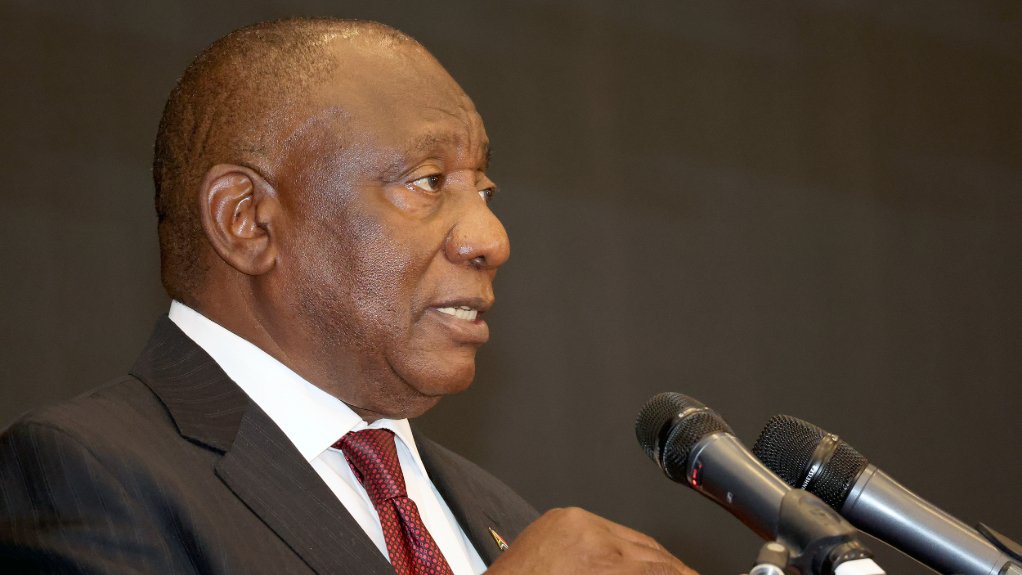
Africa's energy transition must support industrial...
04 mars, 2026 12:50
Funding for Africa clean energy financing surges d...
04 mars, 2026 13:09
Kenya: Spenomatic Group Opens Solar Learning Centr...
05 mars, 2026 08:30
NEDC Backs Solar Mini-Grid Rollout in Niger State...
05 mars, 2026 09:16
Rockefeller Foundation Commits an Additional US$10...
06 mars, 2026 11:52