
Precious Metals

Sudan's gold exports earn $3.5bn as pound keeps falling, report says


By: OrePulse
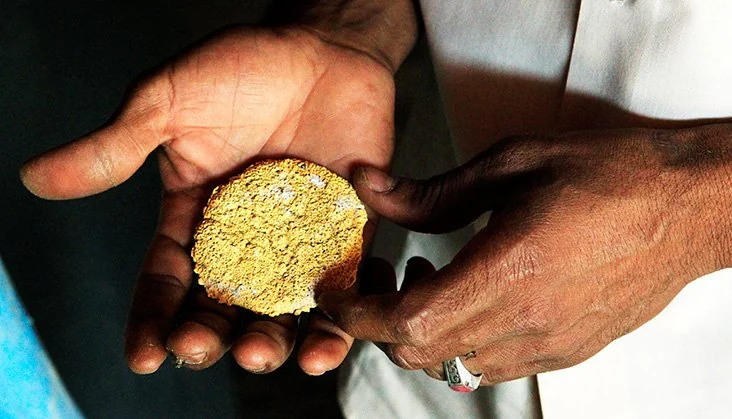
Sudan’s gold export earnings reached $3.5 billion, according to an economic report issued by the Ministry of Minerals in coordination with the Central Bank of Sudan. The report, covering the past ten months, recorded a significant increase in export proceeds repatriated through official banking channels, with officials expecting the share of gold earnings paid into the formal banking system to rise above 80 percent in the coming period.
The Sudanese Mineral Resources Company and the Central Bank regard the export figures as an achievement, though economist Dr. Haitham Mohamed Fathi said the revenues have not yet translated into broader economic stability. The Sudanese pound has continued to weaken against the dollar, and the earnings have not been accompanied by lower market prices, Fathi told Radio Dabanga.
“In my assessment, these measures have not yet had an impact on the economic situation,” Fathi said. “However, increased gold production and the export figures, despite the smuggling, represent an opportunity that has been seized and a lifeline for the Sudanese economy.”
Gold remains Sudan’s top export
Fathi said gold has been the most important source of export revenue in Sudan’s trade balance since South Sudan’s secession. He said the country’s gold production reached 107 tonnes in 2017, before falling to about 42 tonnes in 2018 and to 6.5 tonnes in 2023, the year the current conflict began. Production rose to 64 tonnes in 2024, and export earnings for 2025 reached $3.5 billion. Gold accounts for between 45 and 50 percent of Sudan’s total exports, Fathi said.
He said about 162 companies are involved in mineral exploration in Sudan, including 40 foreign companies, of which 30 are currently operating and 10 have suspended activities. A further 220 companies operate in small-scale and traditional mining, of which around 70 process waste from traditional mining operations to extract additional gold using specialized equipment.
Smuggling and oversight gaps
Fathi said problems facing the sector since 2012, when gold became a major source of state revenue, have included smuggling, environmental damage, security disturbances in mining areas, and frequent changes in government policy. He said large quantities of gold continue to be smuggled out of the country, and that numerous mining markets operate outside state oversight, leaving no reliable data on actual production volumes.
The government has introduced measures intended to bring gold production and export under closer state supervision and tighten controls on smuggling, including restricting the collection, purchase and marketing of gold to government bodies and establishing a single-window system for gold exports. Sudan has also opened new export markets for its gold in Egypt, Saudi Arabia, Qatar and Türkiye, Fathi said.
Fathi called for unified, transparently applied regulatory policies across Sudan’s gold-producing areas, and urged authorities to make greater use of registered foreign companies and to develop large national companies, state-owned or private, to help develop the sector.
Related Articles

African Rainbow Minerals half-year profit up 10% o...
06 Mar, 2026 10:41
Trafigura, Venezuelan mining firm sign deal for up...
18 Mar, 2026 07:05
South Africa's gold producers stay in the shallows...
24 Mar, 2026 12:01
South Africa's gold mines find new life with price...
01 Apr, 2026 14:02
Ghana awards Gold Fields’ Damang mine lease to loc...
08 Apr, 2026 06:44
Malawi sells gold and asked Afreximbank for $120 m...
22 Apr, 2026 10:43
Turkey central bank data shows 31 tonnes of gold r...
24 Apr, 2026 12:52
South Africa's Gold Fields Faces Contractor Claim,...
11 May, 2026 06:51
Caledonia benefits from high gold price, despite l...
12 May, 2026 08:25