Generation

Standard Bank to finance Africa’s renewable energy expansion


Standard Bank is expanding its role in financing Africa’s renewable energy transition, as investment in clean energy continues to significantly outpace funding for non-renewable sources across the continent.
In 2025, the bank reported an 8:1 ratio in favour of renewable energy financing compared to fossil fuel investment, highlighting a structural shift in Africa’s energy landscape. The trend is further reflected in the growing focus of utilities and energy companies on renewable development, including new initiatives from traditionally coal-reliant operators such as Eskom.
The bank has committed to mobilising R100 billion in green finance by 2028 as part of its broader sustainability strategy, aimed at supporting the continent’s energy transition and expanding access to electricity.
Despite progress, nearly 600 million people in Africa still lack reliable access to power, underscoring the scale of investment required in generation, transmission and supporting infrastructure.
Standard Bank’s head of sustainability, Boitumelo Sethlatswe, said the shift toward renewables reflects a structural change in how energy systems are being developed across Africa, with clean energy becoming central to capacity expansion rather than a marginal addition.
She noted that the transition is not solely focused on emissions reduction, but also on improving energy access, supporting inclusive economic growth and building resilience against climate and economic shocks.
The bank’s head of sustainable finance for corporate and investment banking, Sasha Cook, said capital flows are increasingly defining the pace of Africa’s energy transition, with strong fundamentals and improving project economics driving investment into renewables.
Standard Bank reported that it had already mobilised 62% of its R450 billion sustainable finance target by the end of the 2025 financial year, including R47.1 billion in green finance during 2025 alone.
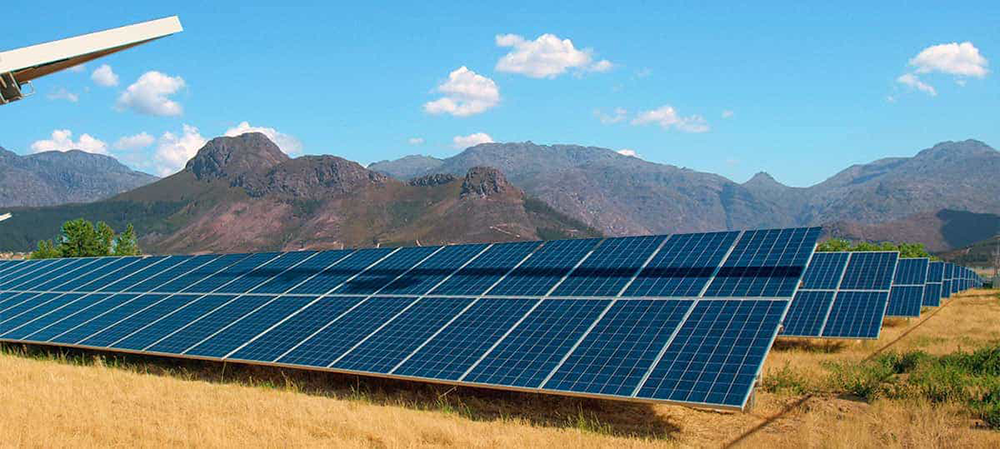
Recent transactions include financing large-scale solar and wind projects in South Africa, such as the 506 MW Khauta South and West Solar projects, the 465 MW Ummbila Emoyeni wind portfolio, and the 400 MW Overberg Wind Farm.
The bank is also involved in supporting hybrid energy systems, storage solutions and energy trading structures, reflecting a broader shift towards integrated energy ecosystems.
According to Standard Bank, renewable energy investment is creating new industrial value chains and supporting wider economic development across the continent, although regulatory and infrastructure constraints continue to limit deployment in some markets.
The institution said that addressing these barriers will require coordinated action between governments, financiers and private sector players as Africa scales up its clean energy capacity.
Related Articles
QatarEnergy ceases LNG production following milita...
03 Mar, 2026 08:20
Africa’s expected hydrogen mobility build-out deta...
03 Mar, 2026 09:21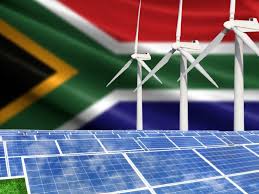
South Africa energy build risks stalling without f...
04 Mar, 2026 12:01
LNG shutdown sinks Qatar stocks but Tadawul reboun...
04 Mar, 2026 12:19
Africa's energy transition must support industrial...
04 Mar, 2026 12:50
Funding for Africa clean energy financing surges d...
04 Mar, 2026 13:09
Kenya: Spenomatic Group Opens Solar Learning Centr...
05 Mar, 2026 08:30
NEDC Backs Solar Mini-Grid Rollout in Niger State...
05 Mar, 2026 09:16
Dr Kgosientsho Ramokgopa frames energy as Africa’s...
06 Mar, 2026 08:17