Sea

South Africa cabinet backs split of ports authority from Transnet


By: OrePulse
South Africa's cabinet has approved splitting the Transnet National Ports Authority (TNPA) away from the Transnet group, turning the country's port landlord into its own state-owned company that will report directly to government rather than through Transnet, according to a cabinet statement issued after a meeting on September 23.
Officials were also told to study whether a South African development finance institution could buy a minority equity stake in the newly independent entity. Before any split takes effect, TNPA must be valued by an independent assessor, Transnet must be compensated, and the two sides must agree on how to divide outstanding liabilities. The government said the restructuring would be guided by several principles: ensuring TNPA's long-term financial sustainability, dividing liabilities equitably between TNPA and Transnet, protecting employees and customers through the transition, and preserving the state's strategic ownership and control of port infrastructure.
Transport Minister Barbara Creecy said the new independent structure would let TNPA reinvest its own revenue in port infrastructure while the state keeps control of the system.
The move extends a restructuring plan first announced in 2021, when President Cyril Ramaphosa said TNPA would become an independent subsidiary inside Transnet, a step intended to separate the ports authority's infrastructure role from the terminal-operating business run by Transnet Port Terminals. That 2021 initiative itself followed years of discussion about corporatizing the ports authority. Five years on, the government is taking the separation further by making TNPA fully independent of the Transnet group.
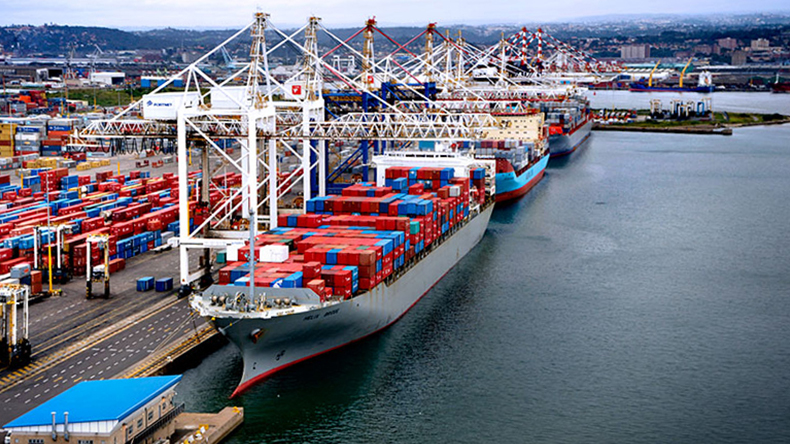
The restructuring follows years of congestion, equipment shortages and maintenance backlogs across South Africa's ports. The World Bank's 2024 Container Port Performance Index ranked Ngqura and Cape Town 404th and 405th out of the ports it assessed — the two lowest positions in the global rankings — while Durban placed 398th. A more recent edition of the index pointed to some recovery, with Durban recording the largest year-on-year improvement of any port measured and Port Elizabeth posting its best gain since 2020.
That recovery has not held steady. Durban fell back into serious congestion in August, with ships waiting eight to 12 days to berth and some carriers reporting delays of up to 20 days after the terminal switched to a new operating system.
Private investment is playing a growing role in the government's approach to the ports. Terminal operator ICTSI took over Durban's Pier 2 container terminal this year under a 25-year concession worth about 11 billion rand (roughly $638 million), after a lengthy legal dispute had delayed the agreement. TNPA has also opened tenders seeking private partners for Cape Town's multipurpose terminal, a new floating drydock in Cape Town, and the Richards Bay dry-bulk terminal. Separately, Transnet last week opened its own process to find a private partner for the Ngqura manganese corridor, a project estimated at between 30 billion and 44 billion rand.
The government has framed the restructuring as part of a broader effort to improve operational performance, infrastructure reliability and competitiveness across South Africa's freight and logistics network, which has come under strain from the port delays and congestion of recent years. Officials said separating TNPA from Transnet is meant to give the ports authority greater financial independence and a stronger ability to invest.
Related Articles
Mawani, Sultan Logistics to build logistics zone i...
03 Mar, 2026 08:39
AD Ports Group confirms business continuity across...
04 Mar, 2026 12:04
AD Ports says rerouted maritime traffic may lift v...
04 Mar, 2026 12:07
Aqaba port maintains operations as cargo vessels d...
04 Mar, 2026 12:43
All Jebel Ali terminals are operating normally...
06 Mar, 2026 09:06
Kuehne+Nagel holds top sea freight rank in 2025...
06 Mar, 2026 10:48
War-risk cover for Gulf shipping may take months t...
06 Mar, 2026 10:58
CMA CGM posts $54.4bn revenue despite volatile shi...
09 Mar, 2026 08:58
DP World handles multi-country shipments for T20 W...
10 Mar, 2026 09:32