Mining Other

OLA Demands Local Control Over Oromia’s Mineral Wealth


(OrePulse) - A rebellion operating in Ethiopia's largest region has drawn a hard line for the mining companies working there, telling them to share power with local communities or risk becoming the next Tulu Kapi.
The Oromo Liberation Army circulated a statement this week addressed to every foreign and domestic operator in Oromia's extractive industry. Its message boiled down to an ultimatum: no gold, no minerals, no exploration — not without the surrounding communities at the table first.
Two conditions, described as fixed
The fighters' notice sets out what it frames as baseline terms for doing business in the region going forward:
- Genuine, documented dialogue with residents near any project site, covering how those residents will share in the project's benefits going forward.
- Environmental safeguards that can actually be checked and verified, not just promised on paper.
Neither term is open to negotiation, according to the statement, and projects that skip these steps altogether should not expect to proceed.
Why Tulu Kapi is the reference point
The group didn't leave the stakes to the imagination — it named Tulu Kapi directly as proof of what happens when its terms go unmet.
That gold project, sitting in the West Wellega zone, was hit by a violent security incident on September 4. KEFI Gold and Copper, the London-listed firm behind the development, confirmed casualties among both its security detail and nearby residents, along with the loss of one staff member. Work at the site has been frozen ever since.
By September 7, KEFI told investors it was in conversation with community leaders, government officials, and security agencies, trying to map out a path back to normal operations. What actually happened on the ground that day remains undisclosed — the company has called the matter too sensitive to detail publicly.
One thing worth flagging: the rebel statement stops short of taking credit for the September 4 violence. It uses Tulu Kapi purely as a warning of consequences, not a confession. No group — the OLA included — has stepped forward to own the attack, and both Addis Ababa and KEFI have stayed silent when asked to weigh in.
The bigger picture
Gold has become one of the country's few reliable hard-currency earners, bringing in $5.65 billion last year, according to the mines ministry — a number that matters enormously to a government that has spent years scrambling for dollars. Tulu Kapi itself has been in the making for over a decade, backed jointly by federal and regional authorities as a flagship of Ethiopia's push into large-scale, modern gold extraction.
The OLA's roots trace to 2018, when it split from the Oromo Liberation Front after the latter chose to lay down arms and re-enter formal politics. Since then, the OLA has kept fighting federal troops across Oromia in a conflict that has run for years largely outside the international spotlight commanded by the war in Tigray. Addis Ababa classifies the group as a terrorist organization, and a 2023 round of talks in Tanzania closed without any breakthrough.
Oromia itself carries outsized weight nationally — it is Ethiopia's biggest region by both population and land area, and home to the country's largest single ethnic group, the Oromo. It has no meaningful oil output, but its mineral deposits, gold chief among them, have turned it into a central battleground for the country's mining ambitions.
Related Articles
Endeavour announces transaction in own shares...
10 Sep, 2024 07:27
Ivanhoe Mines Announces MOU with Government of Zam...
10 Sep, 2024 12:24
Feasibility Study on Lumwana Super Pit Expansion E...
12 Sep, 2024 14:21
Endeavour achieves commercial production at BIOX e...
13 Sep, 2024 08:20
Roscan Gold Announces Changes to the Board of Dire...
16 Sep, 2024 10:40
Minerals Council pays tribute to Pravin Gordhan...
16 Sep, 2024 12:17
Notification of an acquisition of beneficial inter...
18 Sep, 2024 08:39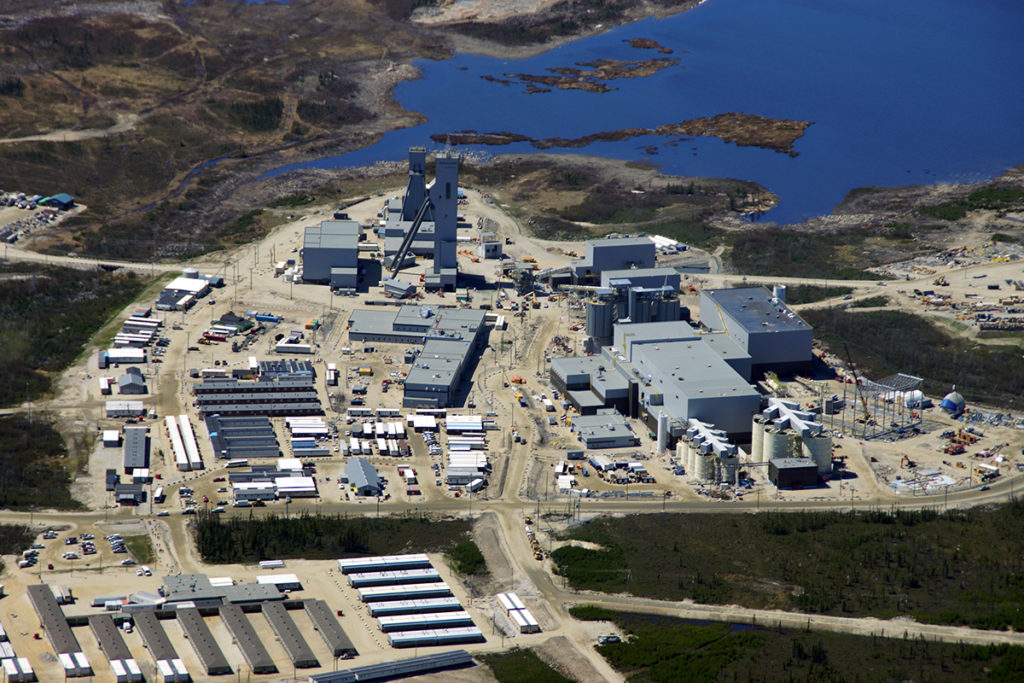
Newmont on track to get at least $2 billion from a...
18 Sep, 2024 10:49
UAE firm plans to invest $500m in Tanzania...
19 Sep, 2024 08:37