Mining Other

Mozambique tightens grip on mining with 15% state stake rule, local processing


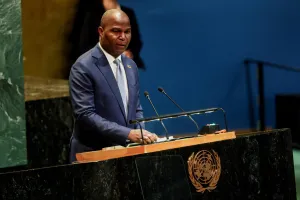
Mozambique's President Daniel Chapo has signed a new law requiring 15% state ownership in all mining ventures and local processing of minerals, tightening control over its resources as demand for battery materials grows.
Mozambique is the world's third-largest graphite producer, a key material used in batteries for electric vehicles and energy storage.
The mining law, approved by Parliament in May, aims to strengthen Mozambique's "management of strategic resources in defence of the national interest," according to a government notice dated June 3.
"The state, through the National Mining Company (ENM), shall have a minimum, free‑carried and non‑dilutable participation of 15% in all mining projects, at any stage of the value chain," reads part of the new law seen by Reuters on Thursday.
It was not immediately clear whether the new rules would apply to existing mines, which are mostly covered by long-term agreements.
The mines ministry was not immediately available to comment.
The move places Mozambique among a growing number of African countries, including top continental lithium producer Zimbabwe and the Democratic Republic of Congo, the world's leading cobalt producer and major global copper supplier, which are tightening control over raw exports for greater economic benefit from their resources.
Mozambique has one of the largest graphite deposits in the world at Syrah Resources' SYR.AX Balama operations in the north of the country. According to the U.S. Geological Survey, China and Madagascar are the top two producers.
The world's largest ruby mine, Montepuez, owned by Gemfields GEMGE.L, is also located in northern Mozambique and the country also has significant coal assets previously owned by Rio Tinto RIO.L and Brazil's Vale.
The new regulations prohibit the export of unprocessed or semi‑processed mineral products, except where they are covered by a specific ministerial authorisation, based on approved plans to eventually process locally.
(Reporting by Custodio Cossa and Manuel Mucari, writing by Nelson Banya;Editing by Elaine Hardcastle)
Related Articles
Endeavour announces transaction in own shares...
10 Sep, 2024 07:27
Ivanhoe Mines Announces MOU with Government of Zam...
10 Sep, 2024 12:24
Feasibility Study on Lumwana Super Pit Expansion E...
12 Sep, 2024 14:21
Endeavour achieves commercial production at BIOX e...
13 Sep, 2024 08:20
Roscan Gold Announces Changes to the Board of Dire...
16 Sep, 2024 10:40
Minerals Council pays tribute to Pravin Gordhan...
16 Sep, 2024 12:17
Notification of an acquisition of beneficial inter...
18 Sep, 2024 08:39
Newmont on track to get at least $2 billion from a...
18 Sep, 2024 10:49
UAE firm plans to invest $500m in Tanzania...
19 Sep, 2024 08:37