Logistic Other

Liberia Advances Port Reforms as Logistics Constraints Weigh on Trade


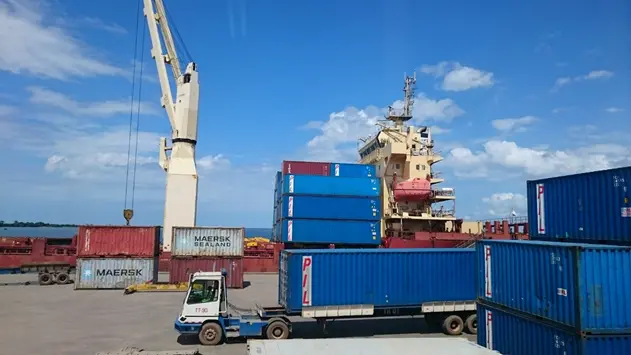
Liberia has recently enacted two laws granting autonomy to its seaports and inland ports, local media reported. Presented as reforms aimed at improving the port sector’s efficiency, the new laws raise a central question for importers and households: can they help reduce the cost of moving goods through ports and, in turn, the cost of imported goods?
The reform comes as Monrovia has accelerated investment in port infrastructure since 2024. The National Ports Authority's 2025-2030 development plan, unveiled last October, includes $550 million for port networks. The country has also recently awarded Marsa Maroc a concession to modernize two berths at the Port of Monrovia.
Those efforts are beginning to be reflected in the operating performance of the country's main port. In a World Bank ranking published in June 2026, Monrovia placed 38th out of 54 African ports, with relatively strong performance in vessel turnaround times.
But operational efficiency depends on other factors. A U.S. Department of Commerce report published in 2024 cited high handling charges and corruption at the port. Those constraints have led some importers to turn to competing ports, including Conakry in Guinea.
Weak inland transport infrastructure adds to those difficulties. In 2022, only 9% of Liberia's road network was paved, according to the National Road Fund. The country's rail network remains limited and is used mainly to transport iron ore. The recent extension of ArcelorMittal Liberia's concession, which includes about $800 million in investment in rail infrastructure and the port of Buchanan, has been presented as a catalyst for the development of the country's logistics network.
Liberia's case highlights a broader challenge facing many African coastal countries: major reforms and large-scale investments are underway to modernize and expand port infrastructure, but weak inland transport networks and governance shortcomings continue to create bottlenecks for shippers, operators and, ultimately, households.
According to the Ecofin Pro report "Ormuz, la route du Cap et le pari portuaire de l’Afrique," published in May 2026, several African ports could see berth capacity go underused between 2027 and 2030, not because of a lack of cargo, but because of insufficient capacity to move goods into the hinterland.
Related Articles
Saudi Arabia opens corridors for receiving contain...
13 Mar, 2026 08:17
Air freight rates soar as Middle East conflict blo...
13 Mar, 2026 08:35
Dubai's DP World sets 2026 capex budget at $3bn...
16 Mar, 2026 08:29
Saudi road freight capacity grows with 500000 truc...
16 Mar, 2026 08:44
Agility reports $5.1bn revenue in strong FY2025 pe...
16 Mar, 2026 08:59
War fallout hits global air cargo flows in week 10...
17 Mar, 2026 07:56
African LNG exporters pitch Europe gas supply in P...
17 Mar, 2026 08:48
Oman Air Cargo adds fuel and war risk surcharges s...
17 Mar, 2026 08:58
Aramex opens first regional healthcare hub at Duba...
17 Mar, 2026 09:16