
Base Metals

Kavango completes 3D model of Botswana's Kalahari Copper Belt


By: OrePulse
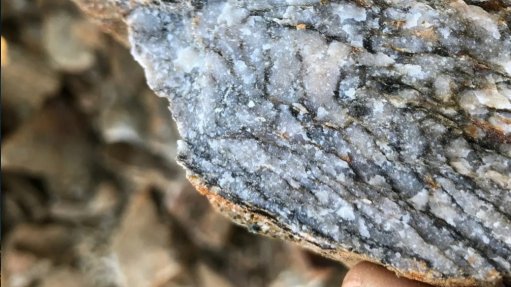
Kavango Resources has completed an independent regional geophysical modelling study across its licence areas in Botswana's Kalahari Copper Belt, the company said on November 17, 2026. Mira Geoscience Asia-Pacific carried out the study and built a three-dimensional model of the D'Kar Formation, mapping its contact with the Ngwako Pan Formation—a geological boundary associated with sediment-hosted copper-silver mineralization.
The model draws on data from more than 7,600 drill holes, combining information collected by Kavango with third-party data and geological maps within the company's area of interest. It extends beneath areas covered by Kalahari sand and captures major synformal troughs and fold structures that could affect how minerals are distributed. Kavango said it is the first consistent regional-scale model of the D'Kar-Ngwako Pan contact produced for a district already known to host several copper-silver deposits and operating mines.
Chief executive Jasper Musadaidzwa said the study "represents a significant step forward in our understanding of the geological architecture of the KCB across our licence portfolio." He said mapping the geometry of the D'Kar Formation and its prospective basal contact at a regional scale had "improved our ability to identify and prioritise drill targets beneath cover."
Kavango said the new model will support drill targeting by mapping variations in the position and geometry of the mineralized horizon across its 16 licences in the belt. The company described the output as proprietary geological information that remains exclusive to it and said it plans to combine the new data with existing geological, geochemical and geophysical datasets to refine its exploration plans. Kavango's strategy centers on the possibility of finding additional copper-silver mineralization beneath cover southwest of the shallow deposits at the Khoemacau and Motheo mines.
The modelling study follows seven years of exploration work by Kavango in the Kalahari Copper Belt, including airborne magnetic and electromagnetic surveys, ground geophysics, soil geochemistry and drilling across its Botswana licences. Earlier this month, the company also completed commissioning of a 50-tonne-per-day pilot gold processing plant at its Hillside Gold Project in Zimbabwe, which is now fully operational.Kenmare Resources has been given more time to conclude takeover talks with Abu Dhabi's International Resources Holding (IRH). The mineral sands miner, listed on Euronext Dublin and the London Stock Exchange, said on November 17, 2026, that the Irish Takeover Panel had agreed to extend to December 15 the deadline by which IRH must either make a firm offer or walk away. Kenmare said the extension was meant to allow discussions with IRH to continue and give the Abu Dhabi company more time to complete its due diligence.
Kenmare confirmed on October 6 that it had received a non-binding proposal from IRH regarding a possible cash offer for the company. Shares in Kenmare eased about 1% in early trading on the news but remain 42% higher than before IRH's interest became public. The company reported an adjusted loss of $23.7 million for its 2025 financial year and is currently valued at about £230.4 million.
Even so, Kenmare's share price remains about 50% below the £5.30-a-share offer made in March 2025 by a consortium that included Michael Carvill, the company's former managing director. Ilmenite, Kenmare's main product, has been in its fourth year of price declines, with Berenberg analysts recently estimating that a recovery would not come before 2028.
Kenmare recovers ilmenite and zircon—minerals used in paint pigments and ceramics—from its Moma mine in northern Mozambique. IRH, a subsidiary of Abu Dhabi's International Holding Company, has spent about $1.5 billion acquiring African mining businesses since it was established in 2022, including a 51% stake in Zambia's Mopani Copper Mines finalized in 2024, and a stake in Alphamin Resources, which owns the Bisie tin mine in the Democratic Republic of Congo.
Kenmare has faced operational setbacks over the past two years, partly because of delays in relocating dredging equipment at Moma. Last month, however, the Mozambican government granted the company a long-sought 20-year extension to export mineral sands from the mine. The new agreement raises Kenmare's royalty rate on gross revenue from the current 1% to 3% for 2025 through 2029, 4% from 2030 through 2034, and 5% for the remaining decade to 2044.
Kenmare managing director Tom Hickey told investors the final terms were "a slight increase" on what had previously been disclosed, when royalties were expected to rise from 2.5% to a maximum of 3.5%. But we felt it was important to get an agreement concluded," he said.
Once an amendment implementing the deal is signed, Kenmare will also be subject to a 20% withholding tax on services provided from outside Mozambique, which Hickey said is expected to cost about $3 million a year and will apply to marketing and consultancy services, though not to interest costs. The company has committed to invest at least $200 million in plant, machinery and infrastructure over the 20-year extension, plus a further $50 million on social projects covering education, health, transport, energy, water and sanitation.
Related Articles
Ivanhoe says revised report cuts 2026 copper outpu...
02 Apr, 2026 09:51
Congo quarterly copper exports down almost 15% as ...
15 Apr, 2026 12:38
US companies eye Congo mining assets, including Ru...
20 Apr, 2026 14:05
ERG expects limited Congo cobalt hydroxide output ...
20 Apr, 2026 14:17
BHP eyes large-scale copper exploration in Zambia,...
21 Apr, 2026 08:45
Copper Intelligence targets untapped eastern Congo...
21 Apr, 2026 08:51
Zambia's Luanshya Copper Mine to restart in August...
23 Apr, 2026 12:59
China's Huayou reports first lithium salt exports ...
28 Apr, 2026 08:05
African Rainbow plans nickel mine restart after of...
28 Apr, 2026 13:50