Metal Markets

Gold slips to $4,091 while futures rise as U.S.-Iran pause cools oil ahead of Fed decision


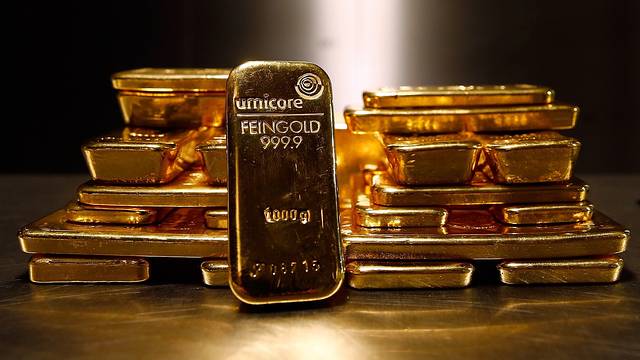
Gold returned briefly above $4,100 per ounce on Monday as a sharp retreat in oil prices and a softer U.S. dollar eased inflation concerns, creating a more supportive environment for non-yielding precious metals ahead of the Federal Reserve’s policy decision.
At the time of checking, spot gold was down 0.02 percent at $4,091.91 per ounce, while spot silver slipped 0.18 percent to $59.38 per ounce. U.S. gold futures rose $25.10, or 0.62 percent, to $4,095 per ounce.
Earlier in the session, Reuters reported that spot gold had climbed 1.4 percent to $4,110.56 per ounce by 02:00 GMT, while U.S. gold futures had gained 1 percent to $4,112.10.
Tim Waterer, chief market analyst at KCM Trade, said gold was benefiting from simultaneous declines in oil and the dollar as hopes grew for de-escalation between the United States and Iran. He added that lower oil prices were reducing inflation concerns.
The U.S. dollar index fell 0.3 percent, making dollar-denominated metals less expensive for buyers using other currencies. Oil prices, meanwhile, dropped more than 4 percent after Washington and Tehran refrained from launching further attacks over the weekend.
A senior Iranian official told Reuters that Iran would stop its attacks as long as the United States also maintained its pause. The development followed a suspension of the U.S. bombing campaign after advisers to President Donald Trump reportedly warned that available targets were diminishing and raised concerns about pressure on American military stockpiles.
Fed decision nears
Since the conflict began earlier in 2026, rising oil prices have intensified inflation worries and strengthened expectations that central banks could raise interest rates. That dynamic has weighed on gold because higher borrowing costs increase the opportunity cost of holding an asset that does not pay interest.
Waterer said he remained constructively bullish on gold over the longer term. However, he said the metal’s immediate direction was closely linked to oil prices and warned that trading would probably remain volatile and heavily influenced by geopolitical headlines until a more durable peace emerged.
Investors are also awaiting the Federal Reserve’s meeting this week. Economists and market participants broadly expect policymakers to leave interest rates unchanged, although traders were pricing in an approximately 80 percent probability of a rate increase in September, according to the CME FedWatch Tool.
Earlier Reuters figures showed spot silver up 2.8 percent at $59.81 per ounce, platinum 2.6 percent higher at $1,629.15 and palladium up 2.1 percent at $1,269.43.
Platinum futures at $1,633.40 per ounce, up 1.83 percent, while palladium rose 2.04 percent to $1,252 per ounce.
UAE gold climbs
Gold rates advanced in the UAE on Monday. The price of 24-carat gold increased by AED5 from the previous day to AED493.50 per gram, while 22-carat gold rose by AED4.75 to AED457 per gram.
Meanwhile, 21-carat gold climbed by AED4.50 to AED438.25 per gram, while 18-carat gold gained AED3.75 to AED375.50. The price of 14-carat gold increased by AED3 to AED293 per gram.
Recent gold swings
Monday’s recovery extended a period of sharp price swings driven by changing expectations for the U.S.-Iran conflict, energy markets and Federal Reserve policy.
On July 21, gold rose 1.6 percent to $4,068.29 per ounce after mediators presented Tehran with a proposal for a 10-day ceasefire. U.S. gold futures gained 1.5 percent to $4,076.40, while traders assigned a 68 percent probability to a September rate increase.
The rally strengthened on July 22, when spot gold advanced 1.7 percent to $4,145.24 after touching a two-week high of $4,165.87. The softer dollar supported bullion, although investors continued to assess how the energy shock could affect the Fed’s policy path.
The market reversed sharply on July 23 as oil approached $100 per barrel. Spot gold fell more than 2 percent to $4,043.14, while U.S. futures declined to $4,050.20 as higher energy prices revived inflation fears and pushed the implied probability of a September rate increase to 83 percent.
By July 24, technical buying around the psychologically important $4,000 level helped gold end a two-week losing run. Spot gold settled at $4,052.98, while futures closed at $4,055.25, with both gaining around 0.9 percent for the week.
Demand supports gold
Longer-term demand indicators have remained supportive despite the recent volatility. The World Gold Council’s first-quarter report showed that total gold demand, including over-the-counter activity, rose 2 percent year on year to 1,231 tonnes. The value of demand increased 74 percent to a record $193 billion as prices remained historically elevated.
Bar and coin demand reached 474 tonnes, up 42 percent and the second-highest quarterly total on record. Central banks bought an estimated net 244 tonnes, 3 percent more than a year earlier, while gold-backed exchange-traded funds added 62 tonnes during the quarter.
Investment flows weakened in June, when global physically backed gold ETFs recorded outflows of $8.9 billion and holdings declined by 74 tonnes to 4,047 tonnes. Even so, first-half flows remained positive at $8 billion, while collective holdings rose by 18 tonnes. Asian funds generated their strongest first-half inflows on record, offsetting heavy North American withdrawals.
The World Gold Council’s 2026 central bank survey found that 89 percent of respondents expected global official gold reserves to increase over the following 12 months. A record 45 percent expected their own institutions to add gold, reinforcing the metal’s strategic role in reserve diversification during periods of geopolitical and economic uncertainty.
Related Articles

Gold prices stabilize near $5,020 as weakening dol...
16 Mar, 2026 07:36
Burundi signs deal with Bezos, Gates-linked miner...
16 Mar, 2026 08:35
Gold prices edge higher to $5,030 as investors wei...
17 Mar, 2026 07:58
Gold prices rise to $5,010 as traders await Fed ra...
18 Mar, 2026 11:47
Spot gold drops over 3 percent to $4,353, its lowe...
23 Mar, 2026 08:35
Silver prices rebound to $69.73 as global markets ...
24 Mar, 2026 08:20
Gold prices extend decline as spot gold drops 0.95...
24 Mar, 2026 08:44
Gold prices surge over 3 percent to $4,558 as weak...
25 Mar, 2026 08:08
Gold prices ease to $4,520.53, silver falls as inv...
26 Mar, 2026 08:33