Metal Markets

Gold prices surge 0.4 percent to $4,394 as weaker dollar cuts Fed hike bets


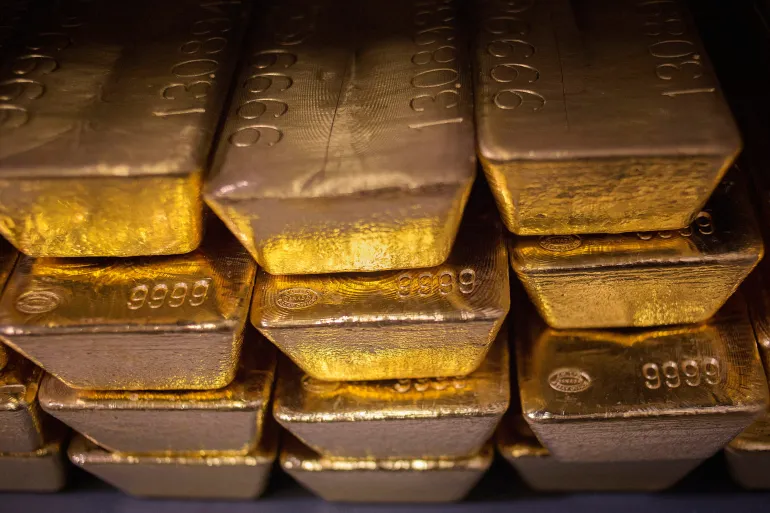
Gold advanced on Monday as the U.S. dollar weakened and recent economic reports reduced expectations that the Federal Reserve would raise interest rates in September. The move carried bullion back toward $4,400 after prices reached their highest level in more than two months during the previous week.
Spot gold increased 0.4 percent to $4,394.52 an ounce by e10:00 UAE time. U.S. gold futures for December delivery gained 0.3 percent to $4,448.10, extending the positive start to the week as traders assessed the outlook for monetary policy, the dollar and geopolitical risk.
In the UAE, gold rates rose, with 24-carat gold gaining AED1.75 to AED529.25 per gram and 22-carat gold increasing AED1.50 to AED490.
In addition, 21-carat gold rose AED1.75 to AED470, while 18-carat gold gained AED1.25 to AED402.75.
Meanwhile, 14-carat gold increased AED1.25 to AED314.25.
The U.S. dollar index declined 0.1 percent against its major counterparts. A softer dollar generally makes dollar-denominated metals less expensive for buyers using other currencies, improving their purchasing power and supporting demand for bullion.
Fed bets recede
The shift in rate expectations followed an unexpected decline in U.S. nonfarm payrolls in July and a moderate consumer-inflation report. Together, those releases encouraged investors to reduce bets on a near-term increase in borrowing costs.
Traders assigned a 30 percent probability to a Federal Reserve rate increase in September, down from 47 percent one month earlier, according to CME FedWatch. Lower interest rates tend to support gold because they reduce the opportunity cost of holding an asset that does not pay interest.
Investors are now awaiting the minutes from the Federal Reserve’s July meeting, due on Wednesday. The record could provide further detail on policymakers’ assessment of inflation, employment, economic growth and the conditions that might justify another adjustment in rates.
Diplomatic and military developments also remained in focus. Envoys for U.S. President Donald Trump met Egyptian, Qatari and Turkish mediators in Cairo on Sunday in an effort to advance a Gaza peace plan, while Israel continued airstrikes during the talks.
Other precious metals also rose. Spot silver climbed 1.43 percent to $65.77 an ounce, platinum added 0.59 percent to $1,767.15 and palladium increased 1.61 percent to $1,337.50.
Policy remains divided
The Federal Reserve entered August with policy divided. At its July 28–29 meeting, the Federal Open Market Committee voted 9–3 to maintain the federal funds target at 3.5 percent to 3.75 percent. Beth Hammack, Neel Kashkari and Lorie Logan favored a quarter-point increase.
The Federal Reserve statement described economic activity as solid but said uncertainty remained elevated partly because of Middle East conflict. It also said inflation exceeded the central bank’s 2 percent goal, with supply shocks, including energy, contributing to price increases. That combination explains why markets have not eliminated September tightening even after softer data.
The latest inflation figures gave bullion investors greater reason for caution on rates.
The July CPI report showed consumer prices rising 0.1 percent from June and 3.4 percent annually, compared with June’s 3.5 percent yearly increase. Core inflation increased 0.2 percent monthly and 2.5 percent annually. Energy prices fell 1.5 percent in July, although they remained 14.7 percent higher over 12 months, while gasoline declined 2.9 percent monthly. Shelter rose 0.1 percent. The figures eased immediate inflation anxiety without resolving pressure from energy costs, leaving gold responsive to shifts in the dollar and rate expectations.
Investment demand holds
Investment flows again provide support, although demand has been uneven.
The World Gold Council showed global investment demand excluding over-the-counter activity at 262.2 metric tons in the second quarter, 46 percent below the previous year. Bar-and-coin purchases reached 307.1 tons, down 3 percent, while gold-backed exchange-traded funds recorded outflows of 44.8 tons. Still, first-half ETF holdings increased by 18 tons and generated $8 billion of inflows. Asian funds added 70 tons during the first half, their strongest opening six months on record, partly offsetting North America’s 61-ton reduction.
The regional contrast clearly shows why gold can rise when headline fund flows appear weak. Asian and physical buying have helped absorb Western selling, while central-bank accumulation provides strategic demand.
The market outlook identified investment as the likely main driver during the second half, supported by over-the-counter activity and Asian purchases. It expected central banks to remain significant buyers, although below 2025 levels, and projected modest supply growth. Jewelry volumes were expected to remain pressured by elevated prices. Dollar direction, real yields and geopolitical risk will help determine whether gold can convert its return toward $4,400 into a durable move above $4,500.
gold prices
Gold gains on uncertainty
Gold’s advance followed rates and geopolitical risk. On July 30, bullion rose 1 percent to $4,104.59 and futures gained 1.6 percent to $4,160.60 as the dollar fell 0.8 percent. The Federal Reserve held rates, while lower June personal-consumption prices reduced September tightening bets.
The July market report said Middle East conflict supported safe-haven demand amid inflation uncertainty.
On August 4, gold added 0.8 percent to $4,086.36 and futures rose 1.5 percent to $4,152.60. Oil had fallen 5 percent, but markets assigned a 57 percent chance to a September rate increase. Silver gained 2.8 percent, while platinum and palladium surged 7.1 percent each, the August market update showed.
Payroll rally builds
On August 7, gold jumped 2.3 percent to $4,336.02, its highest level since June 17. Its 7 percent weekly gain was the strongest since January 19. Futures climbed 2.3 percent to $4,399.70 as payrolls fell 23,000, against expectations for an 80,000 increase. September tightening odds dropped to 43.9 percent from 57 percent, the payroll rally report said.
On August 14, prices rose 0.7 percent to $4,379.95 after falling 1.3 percent from a June 5 high. Bullion gained 0.9 percent weekly, while futures settled 0.4 percent higher at $4,437.30. The dollar fell 0.3 percent and rate odds dropped to 33 percent from 55 percent a week earlier, the weekly gold report said.
Related Articles
Gold prices stabilize near $5,020 as weakening dol...
16 Mar, 2026 07:36
Burundi signs deal with Bezos, Gates-linked miner...
16 Mar, 2026 08:35
Gold prices edge higher to $5,030 as investors wei...
17 Mar, 2026 07:58
Gold prices rise to $5,010 as traders await Fed ra...
18 Mar, 2026 11:47
Spot gold drops over 3 percent to $4,353, its lowe...
23 Mar, 2026 08:35
Silver prices rebound to $69.73 as global markets ...
24 Mar, 2026 08:20
Gold prices extend decline as spot gold drops 0.95...
24 Mar, 2026 08:44
Gold prices surge over 3 percent to $4,558 as weak...
25 Mar, 2026 08:08
Gold prices ease to $4,520.53, silver falls as inv...
26 Mar, 2026 08:33