Metal Markets

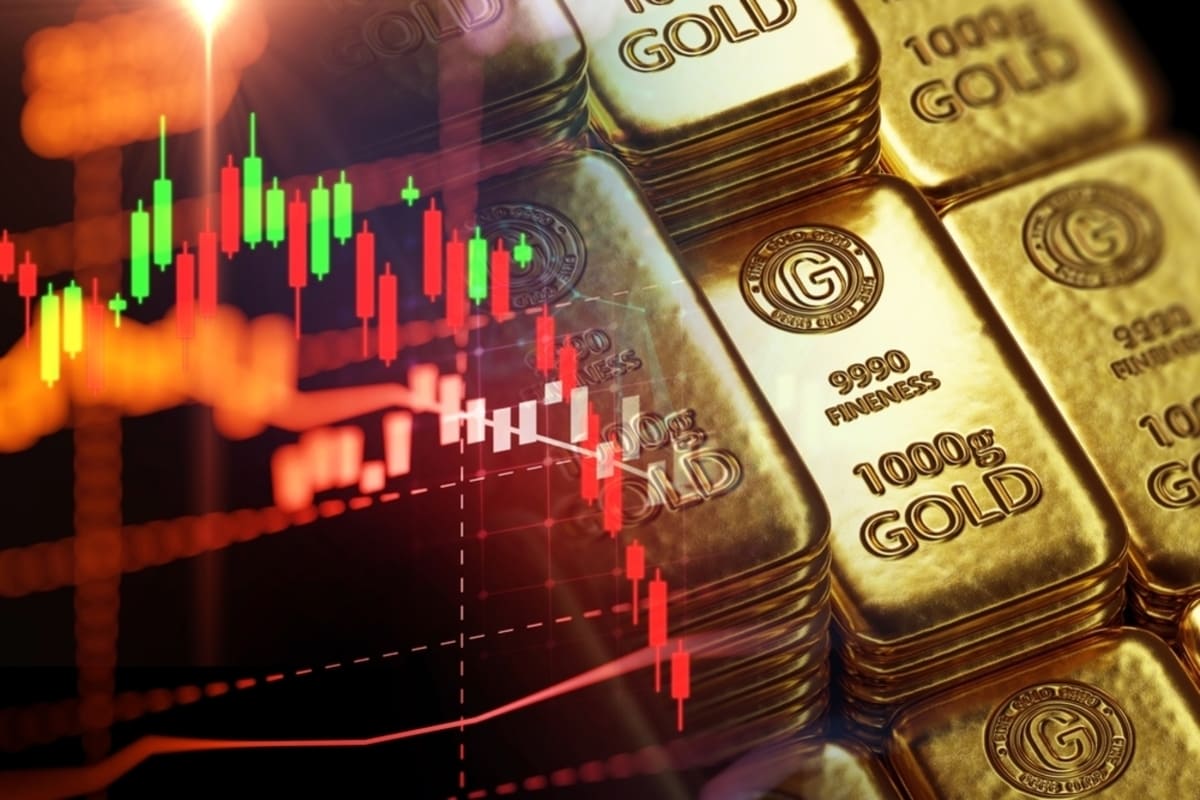
Gold prices fall to $4,469.28 as concerns over rising inflation, interest rates persist


Gold prices declined on Wednesday as investors remained cautious about the inflation risks stemming from the Iran war, despite signs of progress in peace negotiations from U.S. officials. Bullion hovered near its lowest levels since early April, as the yellow metal also remained under pressure amid growing worries over higher inflation and rising interest rates.
As of 5:15 GMT, spot gold was down 0.86 percent to $4,469.28per ounce, while gold futures fell 0.35 percent to $4,469.65 an ounce.
In the UAE, gold rates edged lower, with 24-carat gold losing AED4.5 to AED537.75 and 22-carat gold falling AED4 to AED498.
Additionally, 21-carat gold edged AED3.75 lower to AED477.5 and 18-carat gold eased AED3.25 to AED409.25.
Meanwhile, 14-carat gold lost AED2.5 to AED319.25.
Strong inflation data fuels interest rate concerns
Gold prices fell as a series of strong inflation data from major economies underscored the inflationary fallout from the Iran war in recent weeks, as global energy prices surged sharply.
The trend is likely to keep major central banks on a hawkish path in the months ahead, a development that typically weighs on gold prices, given that higher interest rates raise the opportunity cost of holding non-yielding assets.
“Gold continues its week-long consolidation phase after a historic rally that carried bullion to a January peak near $5,595 before correcting sharply to a March low near $4,100. At around $4,550, bullion still trades up roughly 5 percent year-to-date and 40 percent over the past year, but it remains near the lower end of the approximately $1,500 correction range established during the first quarter,” said Ole Hansen, Head of Commodity Strategy, Saxo Bank.
U.S. makes progress towards peace deal with Iran
U.S. President Donald Trump and Vice President JD Vance said on Tuesday that progress had been made toward a peace agreement with Iran. However, gold prices saw little support from the remarks, particularly as disruptions to Middle East oil supplies persisted.
The precious metal was also pressured by a sharp rise in global bond yields over the past two weeks, driven by mounting concerns over inflation and higher interest rates that triggered a broad selloff in bonds.
Although the selloff showed signs of easing this week, bond yields continued to hover near multi-year highs.
“The current environment highlights an increasingly important distinction between what traders are focusing on in the short term and what investors continue to monitor over the longer term. While the structural investment case for gold remains largely intact, shorter-term macro developments have created a more challenging backdrop for prices,” said Hansen.
Gold eases as U.S. dollar firms
The U.S. dollar also extended its gains this week, adding further pressure on gold prices and the broader metals market.
“From a trader perspective, attention remains centered on energy prices, inflation expectations, bond yields and the dollar. The Middle East crisis and associated disruptions across energy markets have lifted inflation expectations at a time when markets had been preparing for lower interest rates. Higher energy prices feed directly into inflation and, by extension, government bond yields, while also lending support to the U.S. dollar,” he added.
Other precious metals
As gold prices declined, the precious metals market saw mixed movement on Wednesday. Spot silver gained 0.08 percent to $73.89, while platinum fell 0.14 percent to $1,919.65. In addition, palladium rose 0.97 percent to $1,366.47.
Related Articles

Gold prices edge higher to $5,030 as investors wei...
17 Mar, 2026 07:58
Gold prices rise to $5,010 as traders await Fed ra...
18 Mar, 2026 11:47
Spot gold drops over 3 percent to $4,353, its lowe...
23 Mar, 2026 08:35
Silver prices rebound to $69.73 as global markets ...
24 Mar, 2026 08:20
Gold prices extend decline as spot gold drops 0.95...
24 Mar, 2026 08:44
Gold prices surge over 3 percent to $4,558 as weak...
25 Mar, 2026 08:08
Gold prices ease to $4,520.53, silver falls as inv...
26 Mar, 2026 08:33
Gold prices fall to $4,670.2, silver slips as Fed ...
02 Apr, 2026 08:17
UAE gold prices rise to AED563.5 as global markets...
03 Apr, 2026 08:24