
Metal Markets

Gold prices fall 0.95 percent to $4,321.69 as investors lock in inflation-driven gains


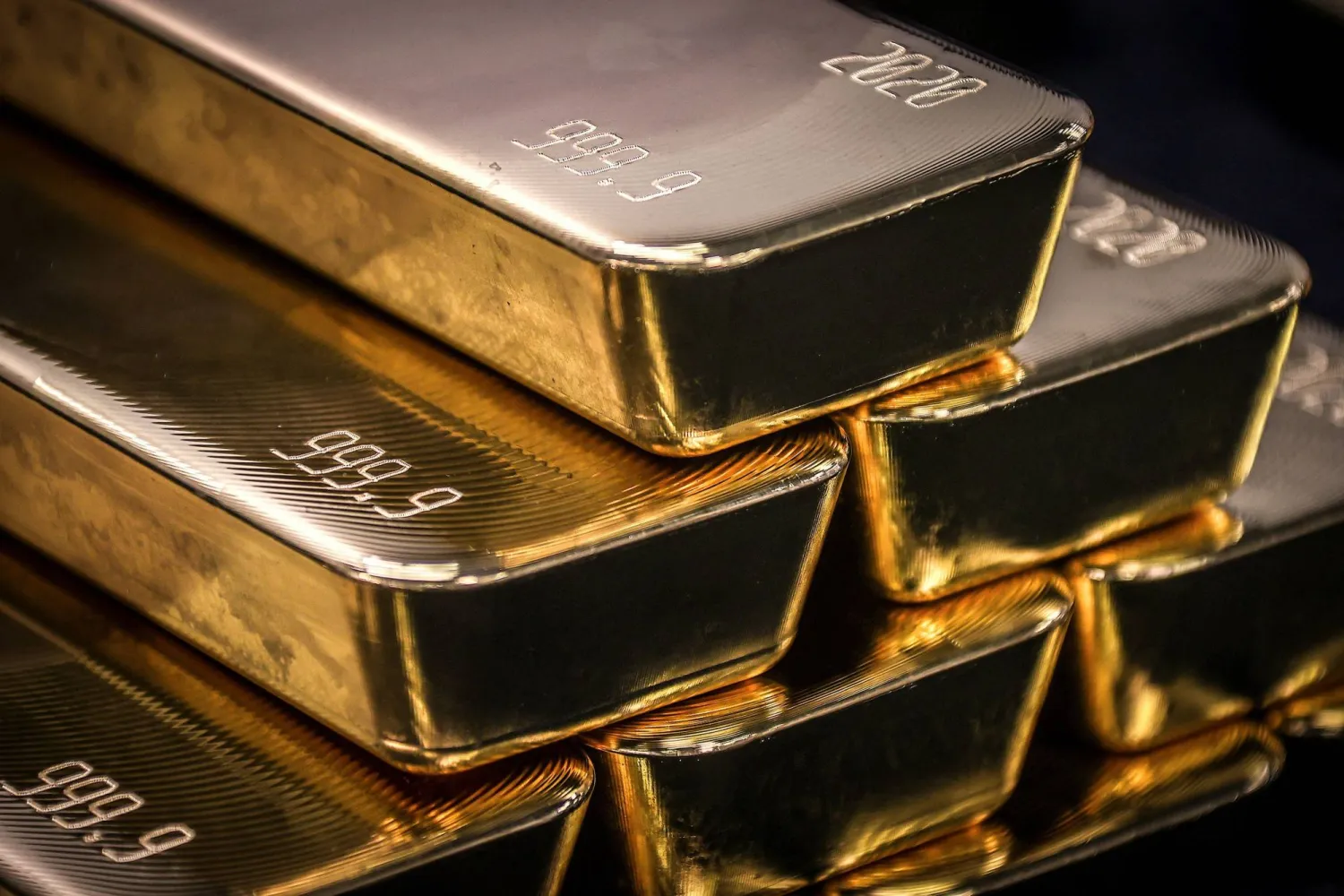
Gold moved lower on Friday, as investors secured profits following an inflation-driven rally that had carried bullion to its strongest level in more than two months. The pullback left the precious metal heading toward a weekly loss, although softer U.S. economic data continued to reduce expectations of an imminent Federal Reserve interest-rate increase.
Spot gold declined 0.5 percent to $4,326.75 per ounce by 9:51 UAE time. U.S. gold futures for December delivery fell nearly 0.84 percent to $4,383.05.
Bullion reached its highest level since June 5 during Thursday’s session before settling 1.3 percent lower. The reversal shifted gold toward a weekly decline as investors unwound part of the advance generated by mild U.S. inflation readings and weaker employment data.
The non-yielding metal had gained support after U.S. nonfarm payrolls unexpectedly declined in July. Softer consumer and producer inflation readings subsequently reduced expectations that the Federal Reserve would raise rates at its September meeting.
U.S. producer prices were unchanged in July after a revised 0.1 percent decline in June. Consumer prices increased only slightly during the month as gasoline costs fell for a second consecutive month, reinforcing signs that some inflation pressures were easing.
In the UAE, gold rates declined, with 24-carat gold falling AED2.25 to AED521.25 per gram and 22-carat gold dropping AED2.25 to AED482.50.
In addition, 21-carat gold fell AED2 to AED462.75, while 18-carat gold declined AED1.75 to AED396.75.
Meanwhile, 14-carat gold dropped AED1.50 to AED309.25.
Rate expectations ease
Traders assigned a 35 percent probability to a September interest-rate increase, down from approximately 55 percent one week earlier, according to the CME FedWatch Tool. Lower interest rates generally support gold because they reduce the relative advantage offered by interest-bearing assets over bullion, which does not generate a yield.
Geopolitical uncertainty continued to provide a separate source of support. Washington warned on Thursday that it could maintain a naval blockade of Iran indefinitely and intensify economic pressure on Tehran as negotiations toward a ceasefire remained stalled.
Other precious metals also weakened. Spot silver fell 0.8 percent to $64.00 per ounce, while platinum declined 0.23 percent to $1,720.25. Palladium also fell 0.32 percent to $1,307.75. Platinum and palladium touched their lowest levels since August 4 earlier in the session, and both were heading toward weekly losses.
Fed patience supports gold
The July CPI report showed that U.S. consumer prices increased 0.1 percent from June and 3.4 percent from a year earlier. Annual inflation eased from 3.5 percent in June, while core inflation, excluding food and energy, rose 0.2 percent monthly and 2.5 percent annually. Energy prices declined 1.5 percent during July, including a 2.9 percent fall in gasoline, while shelter increased 0.1 percent and accounted for approximately two-thirds of the overall monthly rise.
The official producer-price data provided another moderating signal, although the composition remained mixed. Final-demand prices were unchanged in July because a 0.7 percent decline in goods offset a 0.2 percent rise in services and a 2.2 percent increase in construction. Final-demand energy prices fell 3.1 percent, led partly by a 5.7 percent drop in gasoline. However, producer prices remained 4.7 percent higher than one year earlier, preserving reasons for Federal Reserve caution.
The labor market strengthened the case for patience. The July employment report recorded a 23,000 decline in nonfarm payrolls, compared with an average monthly gain of 34,000 during the preceding year. Unemployment was little changed at 4.1 percent, representing 6.9 million people. Labor-force participation remained at 61.4 percent, while the employment-to-population ratio held at 58.9 percent. The combination of softer hiring and moderating monthly inflation reduced pressure for an immediate rate increase, supporting gold despite Friday’s profit-taking.
Investment demand strengthens
Broader investment demand remained constructive before the latest pullback. Global physically backed gold exchange-traded funds attracted $3 billion in July, reversing two consecutive months of outflows, according to the World Gold Council. Holdings increased by 23 metric tons to 4,068 tons, while assets under management rose 1 percent to $530 billion. Year-to-date inflows reached $11 billion, equivalent to an increase of 39 tons, with Asian-listed funds making the largest regional contribution.
Official-sector purchases provided another source of structural demand. Central banks acquired a net 289 tons during the second quarter, five times the revised first-quarter total and a record for a second quarter, according to the council’s demand assessment. First-half net demand reached 345 tons, its lowest first-half level since 2022 but still reflecting broad reserve diversification. Total gold supply held steady at 1,269 tons during the quarter as higher mine production offset reduced recycling. These conditions preserve long-term support despite volatile short-term price movements. This demand indicates that strategic buyers still view gold as a reserve asset and portfolio diversifier during periods of economic and geopolitical uncertainty.
Gold’s volatile August
Gold entered August after a volatile period in which inflation expectations repeatedly outweighed its traditional safe-haven appeal. On July 17, bullion was heading for its largest weekly decline in six weeks as higher oil prices strengthened inflation and interest-rate concerns. Spot gold traded at $4,011.29 and was down approximately 2.6 percent for the week, while Brent had climbed about 16 percent. Traders then assigned a 58 percent probability to a September rate increase.
Momentum changed in early August. On August 10, gold rose 0.4 percent to $4,356.79 after weak employment data and stronger Chinese central-bank buying supported demand. It remained close to a seven-week high as investors awaited inflation figures. By August 11, spot gold briefly reached $4,434.84, its strongest level since June 5, before easing 0.3 percent to $4,376.31. U.S. futures nevertheless settled 0.5 percent higher at $4,441.10.
The inflation releases then produced a rapid rise and reversal. Gold advanced 0.9 percent to $4,406.64 on August 12 after consumer prices increased in line with expectations, reinforcing the case for unchanged September rates. On August 13, bullion touched $4,449.39 before investors secured gains and spot prices fell 1.2 percent to $4,354.58. The two-month peak established the technical backdrop for Friday’s decline, when the absence of another immediate catalyst encouraged further profit-taking despite lower rate expectations.
Related Articles

Gold prices stabilize near $5,020 as weakening dol...
16 Mar, 2026 07:36
Burundi signs deal with Bezos, Gates-linked miner...
16 Mar, 2026 08:35
Gold prices edge higher to $5,030 as investors wei...
17 Mar, 2026 07:58
Gold prices rise to $5,010 as traders await Fed ra...
18 Mar, 2026 11:47
Spot gold drops over 3 percent to $4,353, its lowe...
23 Mar, 2026 08:35
Silver prices rebound to $69.73 as global markets ...
24 Mar, 2026 08:20
Gold prices extend decline as spot gold drops 0.95...
24 Mar, 2026 08:44
Gold prices surge over 3 percent to $4,558 as weak...
25 Mar, 2026 08:08
Gold prices ease to $4,520.53, silver falls as inv...
26 Mar, 2026 08:33